
In This Article
Fall is the cheapest season to heat your home — mild days mean your furnace doesn’t need to run constantly the way it will in January. But it’s also the season where the most energy gets wasted, because most homeowners never bother adjusting their summer thermostat schedule once the AC season ends. Here’s how to actually dial it in.
⚡ Quick Answer: Fall Thermostat Settings
The Right Fall Temperature Settings
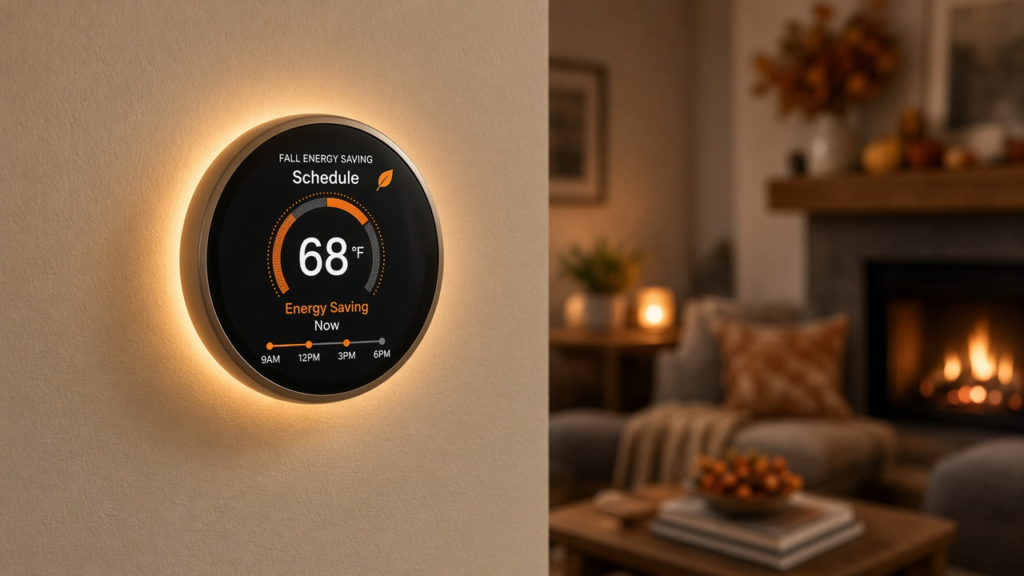
There’s no single “correct” temperature — comfort is personal — but the Department of Energy’s long-standing guidance of 68°F while home and awake, with setbacks of 7-10 degrees while away or asleep, is a genuinely good starting point for fall in Denver. Each degree you lower your thermostat over an 8-hour period saves roughly 1% on your heating costs; a consistent 8-hour, 8-degree nightly setback can add up to meaningful seasonal savings without any sacrifice in comfort, since you’re asleep for most of it anyway.
Building a Practical Fall Schedule
Here’s a schedule template that works well for a typical Denver household with standard daytime work hours:
If someone is home during the day (remote work, retired, young kids), skip the daytime setback or make it smaller — comfort matters more than squeezing out marginal savings, and the furnace cycling more frequently to recover from a deep setback can offset some of the gains anyway.
Smart Thermostat vs. Manual Programming
A programmable (non-smart) thermostat can absolutely achieve the schedule above — the savings come from the setback itself, not from the thermostat being “smart.” That said, smart thermostats like Ecobee and Nest add real value in fall specifically:
- Geofencing automatically sets back the temperature when your phone leaves a set radius around your home, which covers you on days your schedule doesn’t match the programmed routine
- Learning algorithms adjust recovery time automatically, so the system starts heating back up at exactly the right time to hit your target temperature when you walk in, rather than guessing
- Remote sensors (Ecobee specifically) let you average temperature across multiple rooms, which helps in homes where the thermostat’s location doesn’t represent the whole house well — a common Denver two-story issue
Why Denver Homes Need a Slightly Different Approach
Two Denver-specific factors affect fall thermostat strategy. First, our intense daytime sun exposure means south and west-facing rooms can stay noticeably warmer than the thermostat reading even as outdoor temperatures drop — don’t be surprised if your schedule needs adjusting room by room, especially in homes without zoning. Second, Denver’s dry air means the same indoor temperature often feels cooler than it would at higher humidity, so you may find you’re comfortable at a degree or two lower than you’d expect, especially once your furnace starts running and bringing in dry air.