
In This Article
If your furnace ignites for a few seconds, then shuts back off, then tries to ignite again in a repeating pattern, there’s a very good chance the culprit is a dirty or failing flame sensor. This is genuinely one of the most common furnace repairs we perform every fall and winter in the Denver metro — and understanding how it works helps explain why.
⚡ Quick Answer: Flame Sensor Basics
What a Flame Sensor Actually Does
A flame sensor is a thin metal rod, usually located just behind the burner assembly, that serves a single critical safety function: confirming that the burner has actually ignited before allowing the gas valve to stay open. It works via a principle called “flame rectification” — when the sensor is in contact with an actual flame, it generates a tiny electrical signal that the control board reads as “yes, there is fire here.” No signal means no confirmed flame, and the control board shuts the gas valve as a safety measure within seconds.
This is a critical safety system, not a minor component — without it, gas could theoretically continue flowing into the combustion chamber even if ignition failed, which is a real hazard. The flame sensor’s job is to prevent exactly that scenario.
Signs Your Flame Sensor Is Failing
This failure pattern — “short cycling” specifically tied to brief ignition followed by shutoff — is different from a furnace that won’t ignite at all (which more often points to the igniter itself, the gas valve, or a control board issue). A flame sensor problem is specifically “it lights, but then thinks it didn’t, and shuts off.”
How a Flame Sensor Is Tested and Cleaned
A technician tests a flame sensor using a microamp meter connected in-line with the sensor wire while the furnace is running. A healthy flame sensor typically produces a reading in the 2-6 microamp range (exact spec varies by manufacturer); a reading below roughly 1-2 microamps usually indicates the sensor isn’t reading the flame reliably and needs cleaning or replacement.
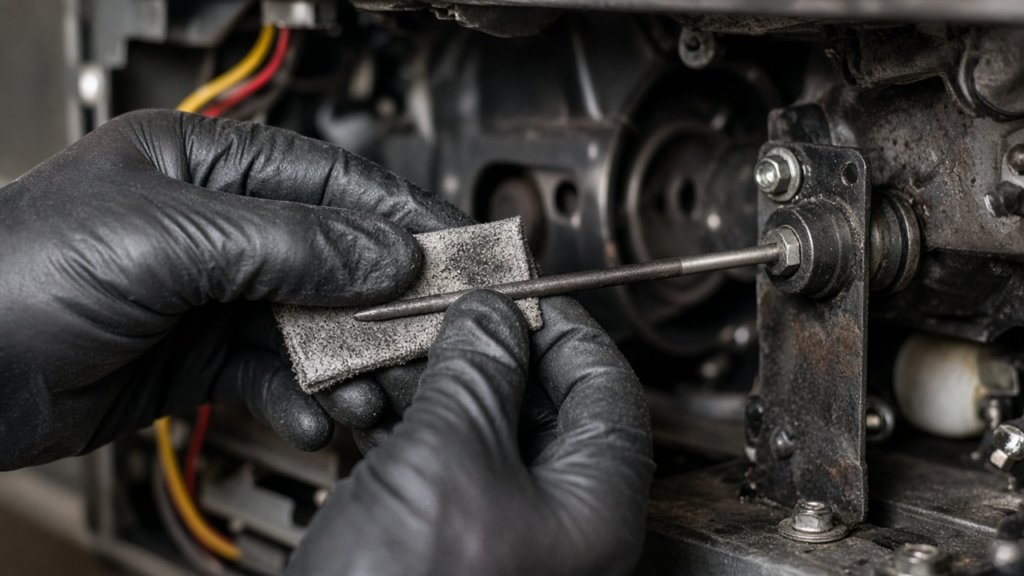
Cleaning involves removing the sensor (usually one or two screws), gently cleaning the carbon/corrosion buildup off the metal rod with fine emery cloth or steel wool (not sandpaper, which can leave an insulating residue), reinstalling it, and retesting. In most cases, cleaning alone restores normal function. If the sensor still reads low after cleaning, or shows physical damage/cracking in the ceramic insulator, replacement is the next step — the part itself is inexpensive, typically $20-$40, with labor bringing a full replacement to $100-$200.
Should You Attempt This Yourself?
Flame sensor cleaning is one of the more DIY-approachable furnace repairs, if you’re comfortable safely accessing the burner compartment and know your specific furnace model’s sensor location. That said, there are a few reasons many homeowners still call a professional for this specific repair:
If you do want to attempt it: turn off power to the furnace at the switch and shut the gas valve, locate the sensor (consult your furnace’s manual — it’s usually a thin rod near the burners with a single wire connector), remove it carefully, clean gently, and reinstall snugly but without overtightening. If you’re not confident in any part of this process, it’s a quick and inexpensive professional visit.