
In This Article
If you’re replacing a furnace in Denver, you’ll almost always be comparing gas to gas — but occasionally a homeowner asks whether electric makes more sense, especially in homes without existing gas service, or those focused on eliminating combustion appliances. Here’s an honest comparison specific to our climate and utility rates.
⚡ Quick Answer: Gas vs. Electric in Denver
How Gas and Electric Furnaces Actually Differ
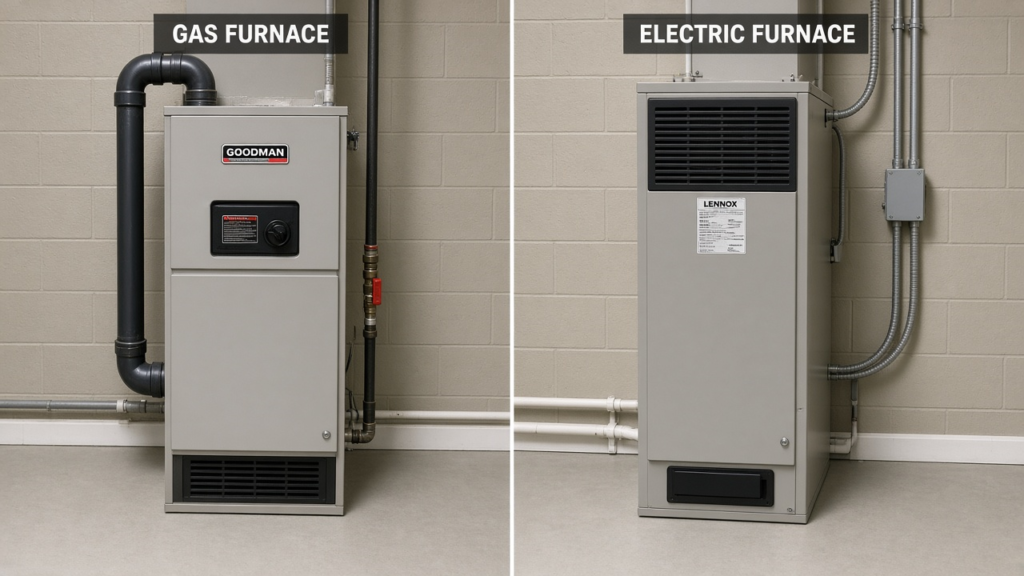
A gas furnace burns natural gas to heat air passing over a heat exchanger, then distributes that heated air through your ductwork via a blower. An electric furnace uses electric resistance heating elements (similar to a giant toaster coil) to directly heat the air passing through, with no combustion process at all.
The practical implications: gas furnaces require venting (a flue for exhaust gases) and a gas line, but heat air much faster and at a lower per-BTU operating cost in most climates. Electric furnaces require no venting or gas line, install more simply, and eliminate any combustion-related safety considerations (no carbon monoxide risk, no gas leak risk) — but typically cost more to operate per BTU of heat produced, especially in colder climates like Denver’s.
Cost Comparison: Upfront and Operating
These figures vary based on home size, insulation quality, and specific usage patterns, but the general pattern holds consistently across Xcel Energy’s current gas and electric rate structures: gas is typically 40-60% cheaper to operate for heating in our climate, which is why gas furnaces remain the dominant choice across the Denver metro.
How Altitude Affects Each Type
Gas furnaces need altitude-specific calibration — adjusted gas orifice sizing and manifold pressure — to burn efficiently and safely at 5,280 feet, since combustion air is less oxygen-dense here than at sea level. This is a standard, well-understood part of proper installation, but it does mean gas furnace installation quality matters more in Denver than it would at sea level.
Electric furnaces are essentially unaffected by altitude since there’s no combustion process involved — electric resistance heating works identically regardless of elevation. This is a genuine (if minor) advantage for electric in terms of installation simplicity, though it doesn’t offset the higher operating costs for most Denver households.
Which Makes Sense for Your Home
Choose Gas If:
- You already have gas service to your home (the overwhelming majority of Denver metro homes do)
- You’re prioritizing lower long-term operating costs
- You want faster heat recovery, especially useful during Denver’s genuinely cold winter stretches
Consider Electric If:
- Your home has no existing gas line and running one would be costly or impractical
- You’re specifically avoiding combustion appliances for safety, environmental, or personal preference reasons
- Your home is small, well-insulated, or in a situation where heating demand (and therefore operating cost difference) is relatively low
- You’re pairing it with solar or a specific electric utility plan that changes the cost calculus in your favor