✓ Licensed & Insured ✓ 20+ Years Experience ✓ Same-Day Service ✓ Family Owned

Furnace Maintenance Checklist: What to Do Every Month This Winter

📖 Table of Contents ▾

In This Article

  1. Quick Answer
  2. Monthly Checklist (December Through March)
  3. Warning Signs to Watch for All Winter
  4. Once-Per-Season Tasks
  5. When Monthly Checks Reveal a Problem
  6. FAQ

Written by Lance Fredrickson — ICC Certified HVAC Specialist | EPA 608 Universal

20+ years serving the Denver metro • Blue Collar Heating & Air, Northglenn CO

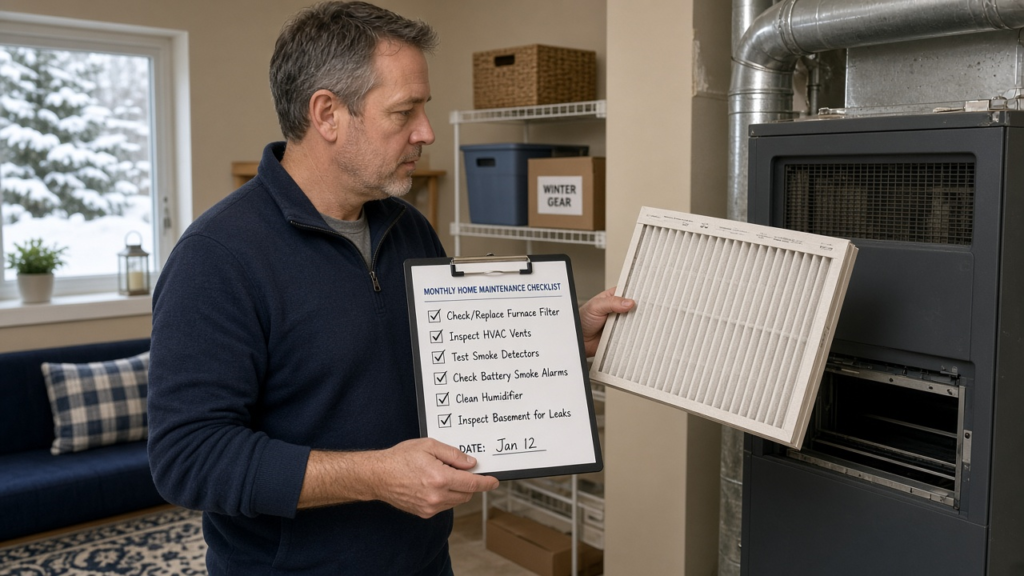
A fall tune-up covers the big annual inspection, but your furnace still benefits from brief monthly attention throughout the entire heating season — especially during Denver’s coldest stretches, when the system is running the hardest and most consistently. Here’s a simple, realistic monthly checklist that doesn’t require any special tools or expertise.

⚡ Quick Answer: Monthly Winter Checklist

Filter check frequency — Peak heating seasonEvery 30–45 days
CO detector test — Press test buttonMonthly, 10 sec
Vent/register check — Clear of furniture, rugs, drapesMonthly, visual
Outdoor vent/intake check — Clear of snow after stormsAfter each snowfall

Monthly Checklist (December Through March)

Check and Replace the Filter

During peak heating season, when the furnace is running daily, filters load up faster than the typical 60-90 day off-season recommendation suggests. Check it monthly and replace when visibly dirty — a quick visual check against a bright light is usually enough to tell if it still allows light through clearly.

Test Carbon Monoxide Detectors

Press the test button on every CO detector in your home monthly. This takes seconds and is especially important during the months your furnace runs most heavily, since combustion appliances are the primary source of home CO risk.

Check Supply and Return Vents

Confirm nothing has shifted to block vents — holiday decorations, furniture rearranged for guests, or rugs moved during winter cleaning are common culprits for accidentally blocked airflow.

Clear Snow From Exterior Vents (High-Efficiency Furnaces)

If you have a modern high-efficiency furnace, it likely vents through a PVC pipe on an exterior wall rather than a traditional chimney flue. After any significant snowfall, check that this exterior vent and intake aren’t blocked by snow or ice — a blocked vent can cause the furnace to shut down as a safety measure, or in rare cases pose a safety risk if not addressed.

Listen for New or Unusual Noises

Once a month, spend 30 seconds near the furnace during an active heating cycle and listen for anything new — banging, squealing, grinding, or unusual rattling that wasn’t there before. Catching a new noise early, before it’s a full comfort complaint, often means a smaller, cheaper fix.

Warning Signs to Watch for All Winter

  • Yellow or flickering burner flame instead of a steady blue flame (visible through the furnace’s viewing window, if present)
  • Increased condensation or frost on windows, which can sometimes indicate a ventilation or humidity imbalance
  • Unexplained headaches or fatigue that improve when you leave the house, which can (rarely) indicate a carbon monoxide issue and warrants immediate attention
  • A sudden increase in gas bills without a corresponding increase in usage or especially cold weather
  • Rooms that have become noticeably colder than they used to be relative to the rest of the house
  • The furnace cycling noticeably more or less frequently than it has in previous winters
  • A yellow burner flame (instead of blue) or any symptom combined with headaches/fatigue that improve away from home should be treated seriously. Leave the house, ventilate if safe to do so, and call for an emergency inspection — these can indicate a carbon monoxide safety issue.

    Once-Per-Season Tasks (Beyond the Fall Tune-Up)

    • Mid-winter visual inspection: A quick look at the furnace area for anything unusual — moisture, unusual smells, visible wear
    • Humidifier maintenance: If you have a whole-home humidifier, check the water panel/pad mid-season; it may need replacement before next fall depending on usage and water hardness
    • Condensate drain check (high-efficiency furnaces): Confirm the condensate drain line isn’t clogged or showing signs of a slow leak, since high-efficiency furnaces produce condensation as part of normal operation

    When Monthly Checks Reveal a Problem

    Most of what this checklist catches are early warning signs rather than full breakdowns — which is exactly the point. Catching a new noise, a yellow flame, or a blocked vent in week one is a much smaller problem (and usually a much smaller repair bill) than discovering the same underlying issue after it’s progressed into a full system failure in the coldest part of winter.


    Ready to Fix Your HVAC Issue?

    Call Blue Collar Heating & Air for expert service in the Denver Metro area. Same-day appointments available.

    ✓ Licensed & Insured ✓ 20+ Years Experience ✓ Transparent Pricing

    Frequently Asked Questions

    How often should I check my furnace filter during winter?

    During peak heating season, check monthly rather than the typical 60-90 day off-season schedule. Daily operation loads filters up faster, and a dirty filter restricts airflow and reduces efficiency.

    What does a yellow furnace flame mean?

    A healthy gas burner flame should be steady and blue. A yellow or flickering flame can indicate incomplete combustion, which may produce excess carbon monoxide. This should be treated as a priority issue and inspected promptly.

    Do I need to clear snow away from my furnace vent?

    If you have a high-efficiency furnace that vents through an exterior PVC pipe (rather than a traditional chimney), yes — check it after significant snowfall. A blocked exterior vent can cause the furnace to shut down or, in rare cases, pose a safety risk.

    Why would my gas bill suddenly spike without unusually cold weather?

    This can indicate declining furnace efficiency, a duct leak, a thermostat issue, or in some cases a developing mechanical problem causing the system to run longer than necessary. Worth noting and mentioning at your next service visit if it continues.

    Is monthly furnace checking really necessary if I already get a fall tune-up?

    A fall tune-up is the comprehensive annual inspection, but brief monthly checks catch new issues that develop mid-season — filter loading, shifted vents, new noises, or blocked exterior vents after snowstorms — between those annual visits.


    Free estimates • Licensed & Insured • ICC Certified

    Table of Contents

    Family-Owned, Community-Trusted

    Verified On

    Not ready to call? We'll reach out to you.

    Fill out the form and we'll get back to you as soon as possible during business hours. Free quote, no obligation.

    Family Owned Licensed & Insured Same-Day Service

      Call Now Schedule