
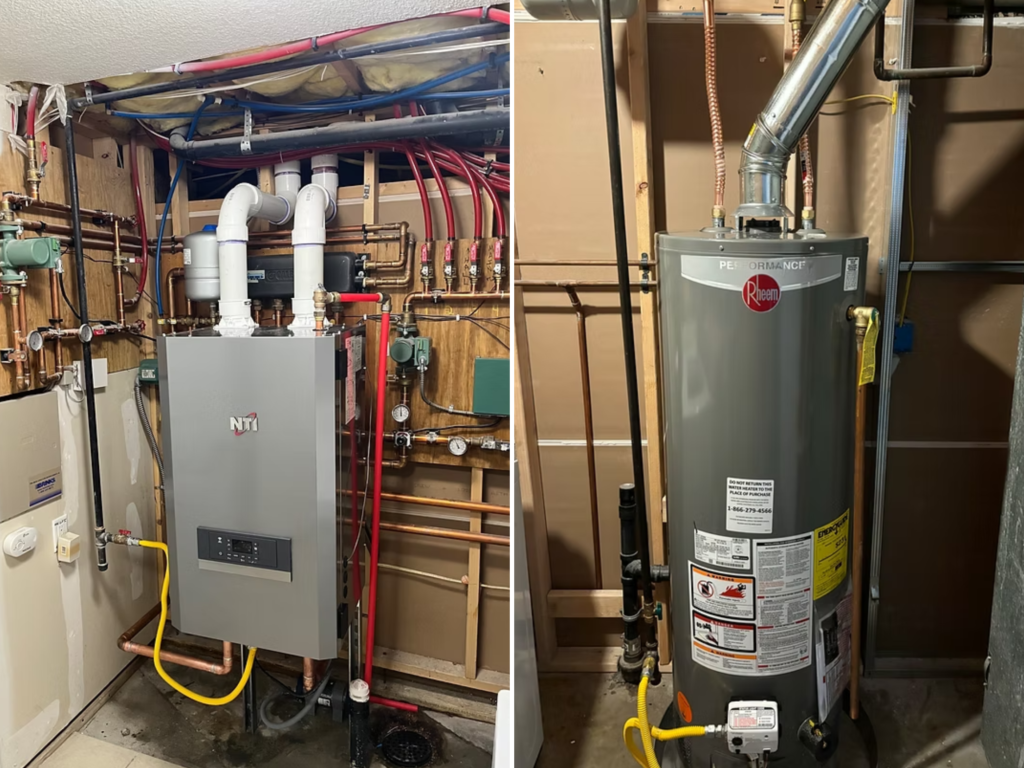
Quick answer: Neither is “best” for every home. A tank water heater is usually simpler and lower upfront cost for steady, predictable hot water. A tankless (on-demand) unit can save floor space, reduce standby energy, and deliver long continuous flow when sized and installed correctly—but may require gas line upgrades, specific venting, and maintenance (descaling in hard-water areas). For Denver metro homes, the right choice depends on peak hot water demand, fuel type and capacity, and how long you plan to stay in the home.
Tank water heaters (storage)
Pros
- Lower installed cost for most replacements
- Simple operation; widely understood by homeowners
- Power outage note: gas tanks with no electric blower may still heat with a standing pilot or simple controls (model dependent)
Cons
- Standby losses (energy to keep the tank hot)
- Limited total gallons—heavy back-to-back use can run the tank down until it recovers
- Footprint—takes floor space
Best fits: budget-focused swaps, moderate demand families, rentals, and homes without gas capacity for a large tankless.
Tankless water heaters (on-demand)
Pros
- Wall-mounted—frees closet or basement space
- No tank rupture flood in the same way as a failed tank (still has water in pipes; condensing models have condensate)
- Long service life potential with maintenance
- Efficient when usage is intermittent (not reheating a tank 24/7)
Cons
- Higher upfront equipment and labor
- Gas line sizing and venting must match BTU load
- Flow rate limits—too many simultaneous draws without adequate unit or staging = lukewarm surprise
- Hard water accelerates scale—manufacturers expect periodic flushing/descaling
Best fits: space-constrained homes, long showers + never enough hot water when the tank recovers too slowly (if gas can support it), and owners who will maintain the unit.
Colorado considerations
Incoming water temperature in winter affects tankless rise—colder inlet water means the heater works harder. Sizing must use real winter groundwater, not summer assumptions.
Many Front Range homes have hard water—plan on water treatment or disciplined descaling for tankless longevity.
How we help you choose
We ask about fixtures, family size, simultaneous use, and fuel availability. We inspect gas meter/pipe, vent route, electrical for electric tankless, and code clearances. Then we give two paths with total cost of ownership in plain English.
Ready to Fix Your HVAC Issue?
Call Blue Collar Heating & Air for expert service in the Denver Metro area. Same-day appointments available.
FAQ
Will tankless save money every time?
Not guaranteed. Low gas bills on tankless often exist, but payback depends on usage, utility rates, and install complexity.
Can I replace my tank with tankless in one day?
Sometimes. If gas upsizing or new venting is needed, it can take longer.
Do electric tankless units work in Colorado?
They can for point-of-use or small loads; whole-house electric often needs very large electrical capacity—evaluate carefully.
What maintenance does tankless need?
Manufacturer-dependent flush/descale and periodic inspection of filters and condensate (condensing models).
Blue Collar Heating & Air installs and services tank and tankless water heaters across the Denver metro. (303) 351-1667