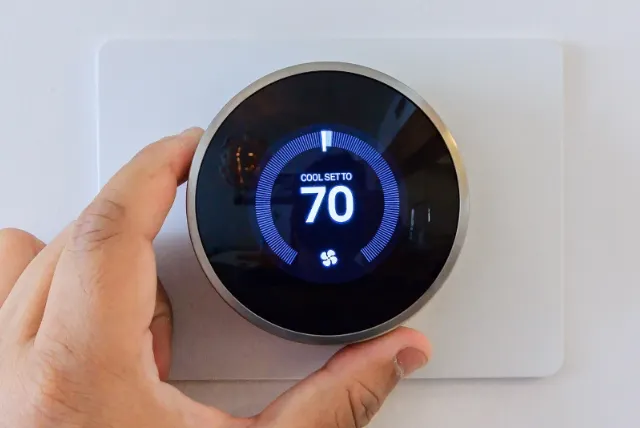
Quick answer: For most Denver-area homes, 74–78°F while you are home and 80–85°F while away is a practical balance of comfort, humidity removal (when the coil runs long enough), and energy use. There is no single “perfect” number—your home’s insulation, solar gain, and system sizing matter—but aggressive “icebox” setpoints strain equipment and often do not feel better in our dry climate.
Comfort is more than the number on the wall
Dry air at altitude makes evaporative cooling from your skin work well—so a 78°F house here often feels like a 72°F house at the beach. That is why local setpoints run a few degrees higher than national averages without complaints.
What actually drives comfort:
- Runtime — Very short cycles may cool air quickly but handle latent load (humidity) poorly when moisture is present (monsoon weeks, cooking, lots of plants).
- Airflow balance — Hot rooms are often duct or solar issues, not thermostat magic.
- Equipment health — Dirty coils or weak airflow force you to crank the stat down to feel okay.
Sensible summer programs
Home and awake: Try 76°F for a week. If you feel fine, you save money. If not, nudge 1° at a time.
Away 8+ hours: +4 to +8°F setback saves meaningful energy; modern equipment recovers in reasonable time if the system is sized correctly.
Sleep: Many families go +2 to +4°F overnight with ceiling fans on low (fans cool people, not rooms—turn them off when you leave the room).
Extreme heat days: If the system is right-sized, it may run near continuously during late-afternoon peaks. That can be normal. If it never reaches setpoint, you may have a maintenance or sizing issue—not a thermostat issue.
What not to do
- Do not set the stat to 60°F hoping to “cool faster”—AC delivers cooling at roughly its designed rate; super-low setpoints increase wear and can contribute to coil icing when combined with other problems.
- Do not close too many registers trying to “force” one room—backpressure can harm ducts and blower.
Smart thermostats
Geofencing and schedules help if you actually maintain them. If your schedule is chaotic, a simple consistent program often outperforms a smart stat that fights you.
Ready to Fix Your HVAC Issue?
Call Blue Collar Heating & Air for expert service in the Denver Metro area. Same-day appointments available.
FAQ
What is the “best” AC temperature for sleeping?
Whatever lets you sleep—often 72–76°F locally; add bedding instead of overcooling the whole house.
Does every degree matter?
Roughly each 1°F upward in summer setpoint saves a few percent on cooling energy (your mileage varies with equipment and home).
Should I turn the AC off when I am gone all day?
Large setbacks yes; full off in a heat wave can mean hours to recover and may stress some systems—moderate setback is usually better.
Why does my AC struggle at 95°F outside?
Design conditions, dirty condenser, refrigerant issues, or undersizing—we can measure performance and tell you which it is.
Blue Collar Heating & Air helps Denver metro homeowners tune comfort and efficiency. Call (303) 351-1667.