
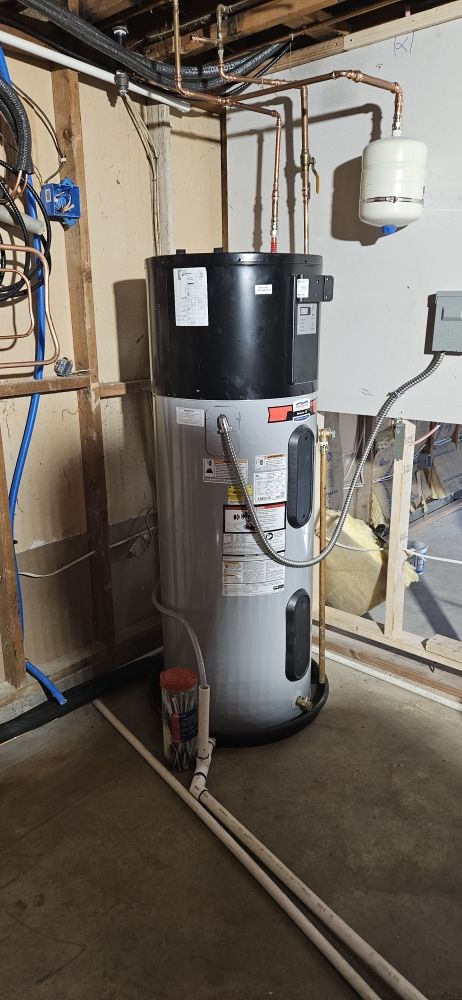
Quick answer: Hot water that dies after one shower or never quite gets hot usually traces to a tank that is too small for demand, a failed lower element (electric), gas burner or control problems, sediment reducing usable volume, a broken dip tube mixing cold into the hot outlet, or a tempering/mixing valve stuck partially open. Cross-connected plumbing (rare) can also hide hot water. Diagnosis starts with fuel type, tank age, and whether the problem is sudden or gradual.
Tank water heater: volume vs recovery
A 40-gallon tank does not deliver 40 gallons of shower-temperature water—it delivers stored hot until the burner or elements recover. If recovery is weak, you feel “out” quickly even though the tank is large on paper.
Sediment
Hard water areas (common along the Front Range) precipitate scale on the bottom of gas tanks or around electric elements. That reduces heat transfer and steals tank volume.
Dip tube
The dip tube directs cold inlet water to the tank bottom. If it cracks or breaks, cold water can short-circuit toward the hot outlet—lukewarm water that “runs out” almost immediately.
Electric elements / thermostats
Dual-element tanks use upper and lower elements in sequence. A dead lower element often shows up as short hot water—only the top of the tank heats.
Gas-specific
Flame sensor, gas valve, thermocouple/pilot assembly (model dependent), or dirty burner can all reduce usable output.
Tankless “running out”
Usually means demand exceeded capacity—too many gallons per minute for the unit’s temperature rise, or scale slowing heat exchange. Gas pressure or filter screens on the unit also matter.
Whole-house mixing / recirculation
A mixing valve at the tank or a recirc pump mis-set can cap temperature or blend cold in ways that feel like “no hot water.” These are not guesswork fixes—we test temperatures at points of use and at the tank.
When replacement is the answer
If the tank is beyond typical service life, leaking, or undersized for a growing family, right-sizing a new tank—or moving to tankless with correct gas and flow math—fixes the problem at the source.
Ready to Fix Your HVAC Issue?
Call Blue Collar Heating & Air for expert service in the Denver Metro area. Same-day appointments available.
FAQ
Why did this start overnight?
Suspect element, control, mixing valve, or dip tube—not gradual sediment.
Can I flush sediment myself?
Partially—improper draining can disturb debris and clog lines; we can flush safely and check anode condition.
Is a bigger tank always the fix?
Not if recovery is broken—a 50-gallon tank with a dead element still feels small.
Could plumbing be crossed?
Rare, but yes—single-handle valve cartridges sometimes cross hot/cold; we rule it out methodically.
Blue Collar Heating & Air diagnoses water heater complaints across the Denver metro. (303) 351-1667