Quick answer: If your AC is running but not cooling, the most common causes are a failed start capacitor, tripped breaker or blown fuse at the outdoor disconnect, a very dirty filter, low refrigerant, or a compressor or fan motor that is not actually running—even when the indoor fan is blowing. In the Denver metro at altitude, electrical components like capacitors and contactors often fail sooner than at sea level, so a professional electrical check on the outdoor unit is one of the first things we do after confirming airflow and thermostat settings.
First checks you can do safely (about five minutes)
Before you assume the worst, confirm what is actually running:
1. Thermostat — Mode set to Cool, setpoint below room temperature, fan on Auto (unless you are intentionally drying the coil after ice).
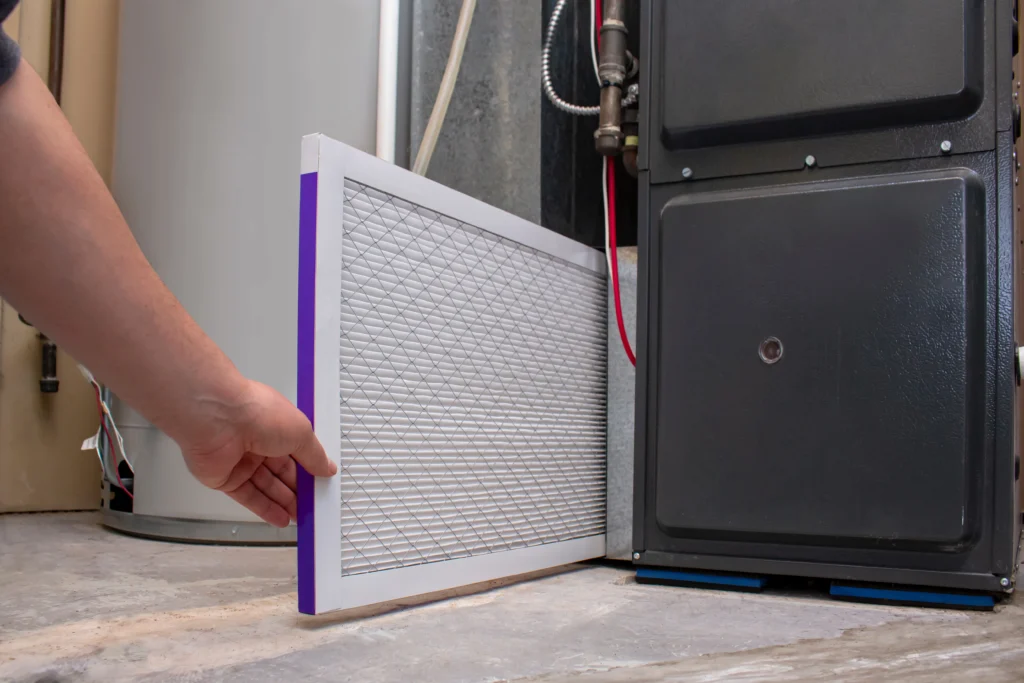
2. Filter — A plugged filter chokes airflow; the system may run but barely cool. Replace or clean if it is gray or loaded with dust.
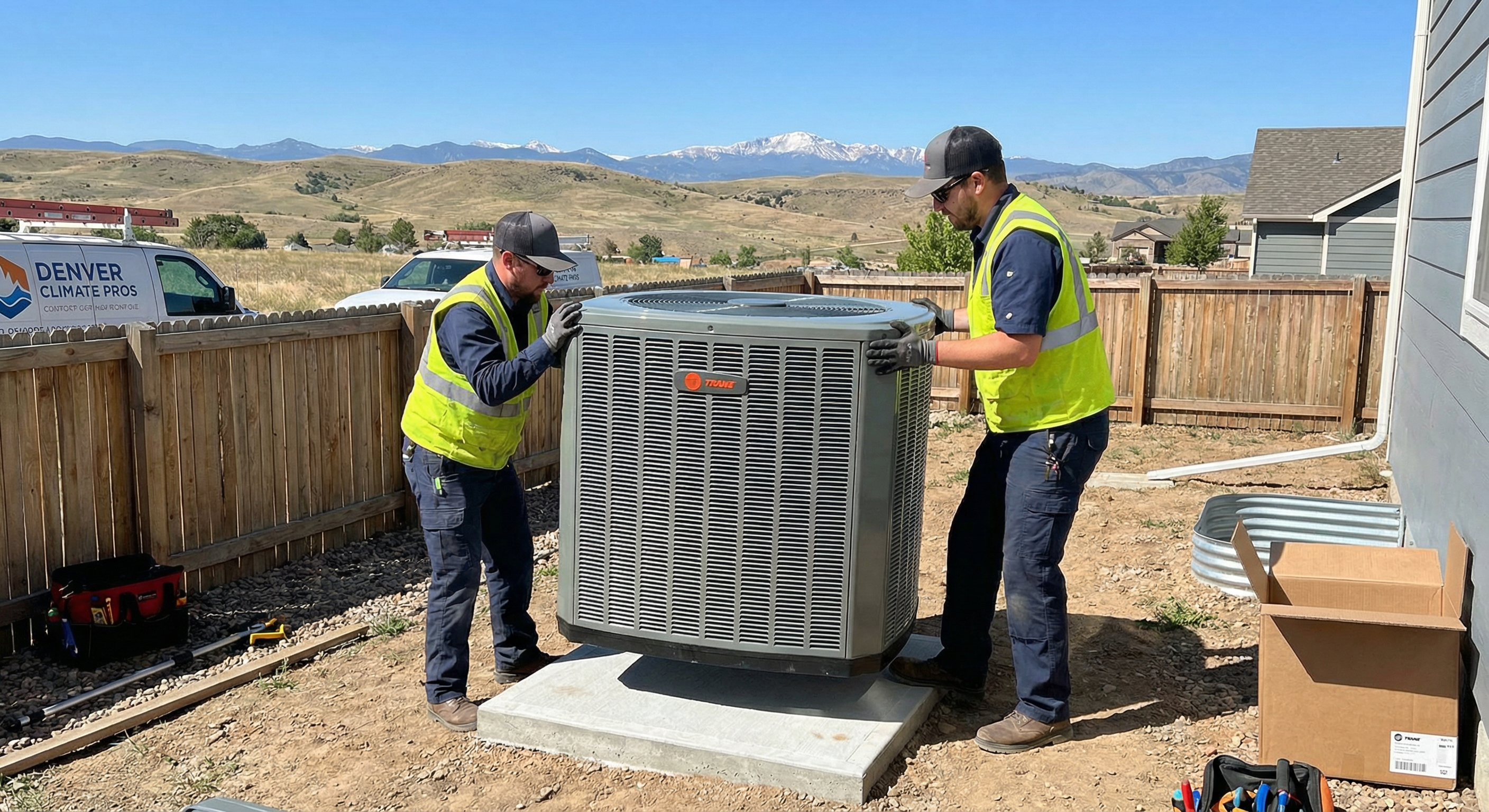
3. Outdoor unit — Walk outside. You should hear the compressor (low rumble) and the condenser fan. If only the indoor blower is running, you may be moving warm house air while the outdoor section is dead—often capacitor, contactor, power, or a safety switch.
Safety: Do not open the outdoor electrical compartment unless power is properly disconnected and you know what you are touching. Capacitors can hold a charge.
Why “it sounds like the AC is on” but the house stays warm
Many homeowners hear airflow from supplies and assume the AC is on. The furnace or air handler blower can run while the outdoor condenser is off. If the outdoor unit is not removing heat, you will not get real cooling.
Other frequent causes our techs see on Denver jobs:
- Bad capacitor — Hard to start the fan or compressor; unit may hum or shut off on internal protection.
- Blown fuses or loose disconnect — Power present at the panel but not at the unit.
- Dirty condenser coil — Rejects heat poorly; head pressure rises and performance tanks. Cottonwood season and dust at altitude make this common.
- Refrigerant leak — Gradual loss until the system cannot move enough heat. EPA-certified technicians must handle refrigerant.
- Duct leakage or a disconnected duct — Cooled air never reaches living space (we have found large leaks in attics after inspections).
- Thermostat or control wiring — No Y call to the outdoor unit, so it never starts.
Denver altitude and your AC
Thinner air at roughly 5,280 feet means heat transfer and system behavior differ from sea-level installs. That does not change the troubleshooting order (airflow, electrical, charge, mechanical), but it does mean components work harder. If someone sized the system without accounting for altitude and duct losses, you may be marginal on the hottest days.
When to call Blue Collar Heating & Air
Call a licensed HVAC company if:
- The outdoor unit never starts, starts and stops quickly, or makes loud buzzing.
- You see ice on the refrigerant line or evaporator coil (see our article on freezing systems—do not keep running the AC in that state).
- You suspect low refrigerant or any leak.
We diagnose systematically: verify the temperature split, inspect electrical components, assess coil cleanliness, and use proper tools and certification for refrigerant work. Our goal is to restore safe, efficient cooling—not to sell you parts you do not need.
Ready to Fix Your HVAC Issue?
Call Blue Collar Heating & Air for expert service in the Denver Metro area. Same-day appointments available.
FAQ
Why is my AC blowing warm air?
Often the indoor fan is running without adequate cooling—outdoor unit off, low charge, severe coil fouling, or a failed compressor. A measured supply/return temperature difference helps narrow it down.
Can a dirty filter cause no cooling?
Yes. Extreme restriction can freeze the indoor coil or trip safeties; at minimum it kills capacity.
How fast can a capacitor be replaced?
Many replacements are under an hour on site if the part is in stock—often same day in peak season for stocked trucks.
Is low refrigerant always a leak?
Systems are sealed; if charge is low, a leak search and repair should be part of the fix, not only “topping off.”
Should I pour water on the outdoor unit to cool it?
No. If the unit is overheating, you need diagnosis—water can damage electronics and does not fix root causes.
This article is for general education and is not a substitute for an in-home diagnosis. Blue Collar Heating & Air provides professional HVAC service throughout the Denver metro.