AC Not Turning On? Denver HVAC Expert Explains 10 Common Causes
Written by Lance Fredrickson, ICC Certified HVAC Specialist | 20+ years serving Denver
Quick Answer
If your AC won’t turn on at all, start by checking your thermostat batteries, circuit breakers (both indoor and outdoor), and air filter. In the Denver metro area, the most common culprits are failed capacitors ($325 to replace), tripped breakers, or dead thermostat batteries. At Blue Collar Heating & Air, we handle hundreds of “AC won’t start” calls every summer across Northglenn, Thornton, and Westminster – here’s how to diagnose the problem.
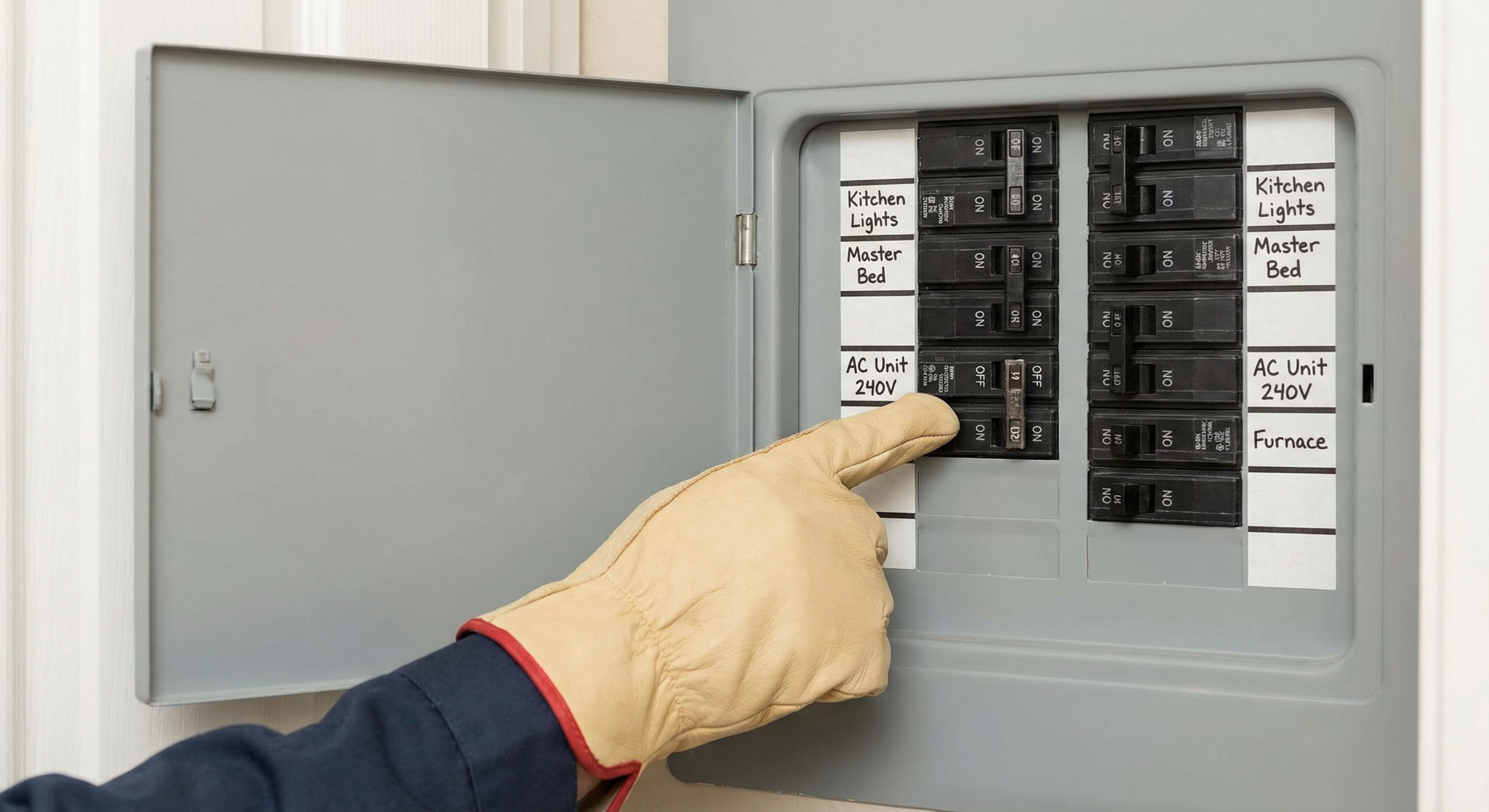
Check both indoor and outdoor breakers first
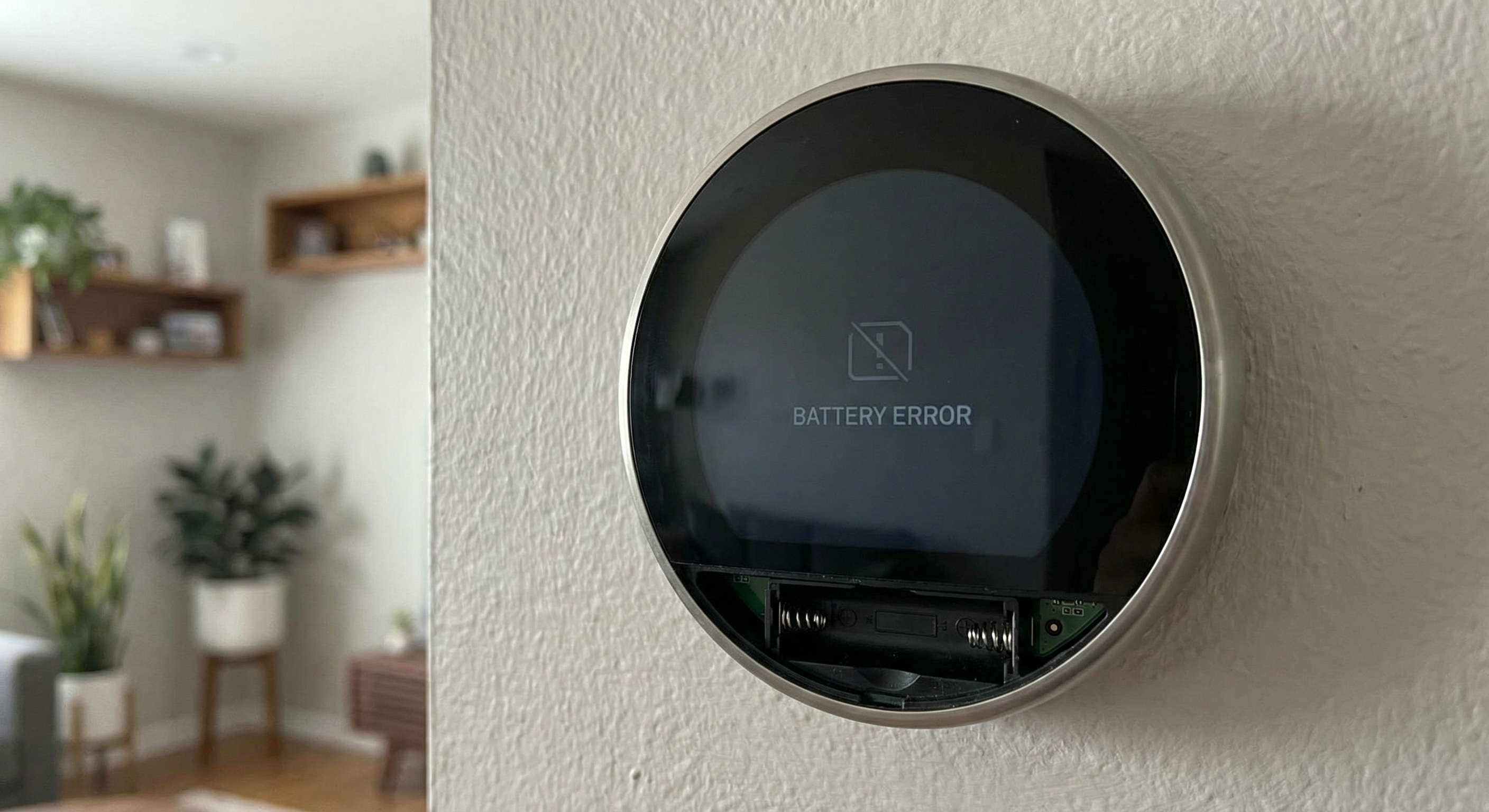
Dead batteries are the #1 easiest fix
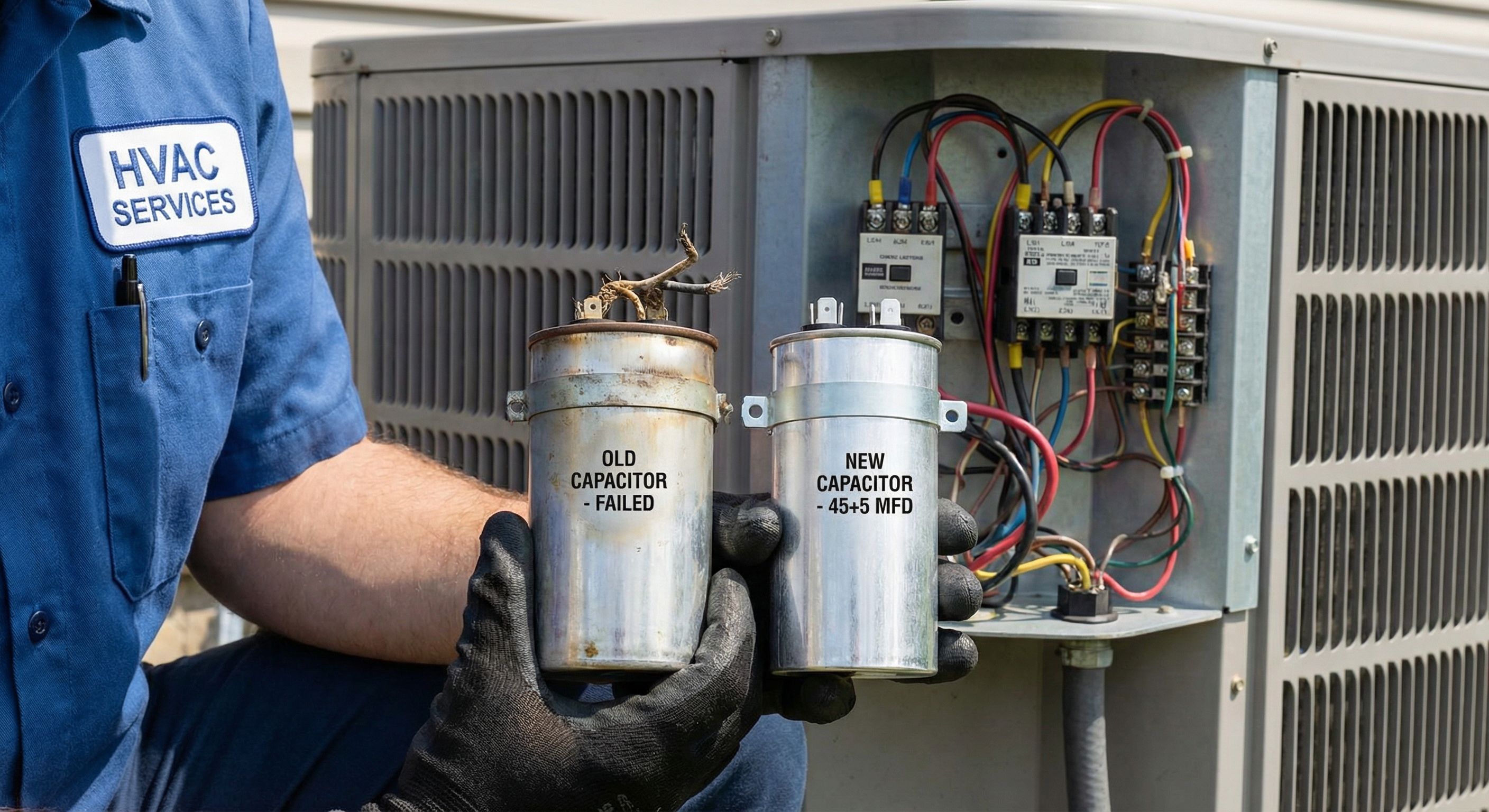
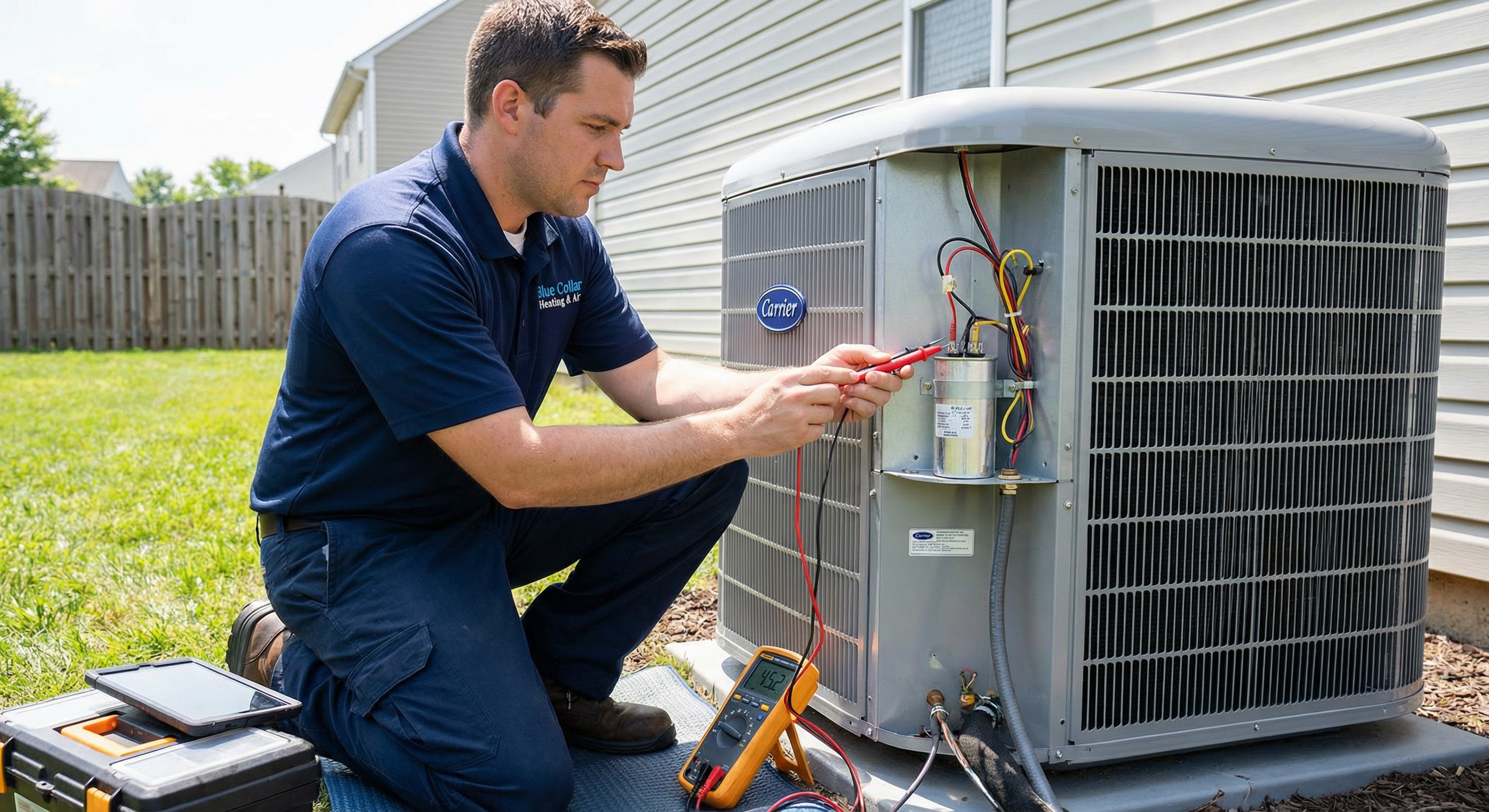
Failed capacitor – most common professional repair ($325)
Severely clogged filter can trigger safety shutoff
When Your AC Won’t Turn On
You’ve set your thermostat to cool, bumped the temperature down, and… nothing. No hum from the outdoor unit, no air from the vents, just silence. It’s 90 degrees outside in Thornton, and your air conditioner is completely unresponsive.
After two decades fixing air conditioners at altitude in the Denver metro, I can tell you this: “AC won’t turn on” calls spike every May and June when homeowners fire up their systems for the first time. The good news? About half the time, it’s something simple you can check yourself. The other half requires a professional.
In this guide, I’ll walk you through 10 common causes – from the simplest fixes to issues that need immediate professional attention.
5 Things You Can Check Yourself (Safely)
Check your circuit breaker first – simple 2-minute fix
1. Thermostat Batteries Are Dead
This is embarrassingly common, but it’s the first thing I always check. If you have a battery-powered thermostat and the screen is blank or dim, pop in fresh batteries. Even if the screen shows something, weak batteries can prevent the thermostat from sending the signal to turn on your AC.
Denver tip: Our dry climate drains batteries faster than humid areas. Replace them every spring.
2. Circuit Breakers Are Tripped
Your AC system has TWO breakers – one for the indoor air handler and one for the outdoor condenser unit. Check your electrical panel for tripped breakers (they’ll be in the middle position, not fully ON or OFF).
Important: In older Northglenn and Westminster homes, I frequently find undersized breakers that trip during startup. If your breaker trips repeatedly, call a professional – this indicates a serious electrical issue.
3. Air Filter Is Completely Clogged
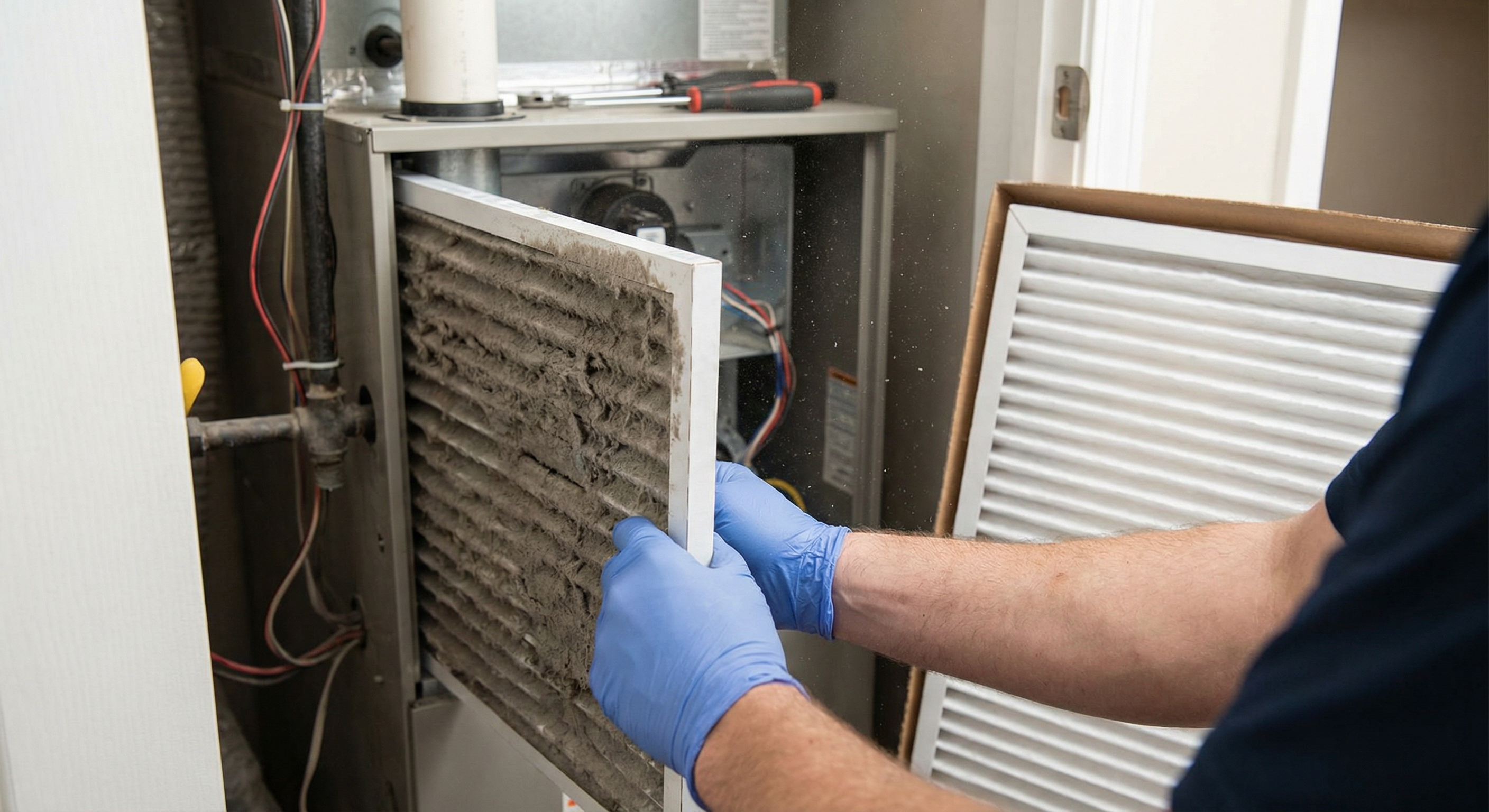
A severely clogged filter can cause your system’s safety switch to shut everything down. Check your filter (usually located in the return air vent or furnace). If you can’t see light through it, it needs replacement.
At altitude in Denver: Dust accumulates faster due to our dry air and wind. Check filters monthly during cooling season, not just quarterly.
4. Outdoor Disconnect Switch Is Off
Walk outside to your condenser unit. Look for a metal box mounted on the wall nearby – this is the disconnect switch. Pull it out and make sure it’s fully seated. Sometimes these get bumped or pulled during yard work.
5. Door Switch on Air Handler Is Not Engaged
Your indoor air handler (furnace) has a safety switch that prevents operation if the panel door isn’t fully secured. This is easy to overlook after filter changes. Push the door firmly until you hear it click.
5 Problems That Require Professional Help
6. Capacitor Has Failed
This is the number one callout I get for “AC won’t start” in Westminster, Thornton, and Northglenn. The capacitor provides the electrical jolt needed to start your compressor and fan motor. When it fails, nothing happens.
Why capacitors fail faster in Colorado: Our altitude, intense UV exposure, and temperature swings stress capacitors. I’ve seen capacitors rated for 10 years fail in 5-6 years here.
What it costs: Capacitor replacement runs around $325 including parts and labor at Blue Collar Heating & Air.
Safety Warning
Capacitors store electrical charge even when power is off. Never attempt to test or replace one yourself – it can cause serious injury or death.
7. Contactor Is Stuck or Failed
The contactor is an electrical relay that closes to send power to your compressor. After years of use, these can stick in the open position or burn out completely. You might hear a clicking sound but the unit won’t start.
Typical cost: $200-350 for contactor replacement in the Denver area.
8. Compressor Has Failed
If your compressor fails (the heart of your AC system), the unit won’t turn on or may make a humming sound without starting. Compressor failure is more common in systems over 12-15 years old.
Typical cost: $1,500-2,500 for compressor replacement, but at this price point, most homeowners opt for full system replacement ($5,500-12,000 depending on size and efficiency).
Decision point: If your system is over 10 years old and the compressor fails, replacement usually makes more financial sense than repair.
9. Low Voltage Transformer Problem
Your thermostat runs on 24V power supplied by a transformer in your air handler. If this transformer fails, your thermostat won’t be able to signal the system to start. This requires testing with a multimeter.
10. Condensate Float Switch Is Tripped
Modern systems have a safety switch in the condensate drain pan. If the pan fills with water (due to a clogged drain), the float switch trips and shuts down your AC to prevent water damage. A technician needs to clear the clog and reset the switch.
What To Check First: The 5-Minute Diagnostic
Here’s the order I follow when diagnosing a no-start AC in Denver:
Check thermostat – Fresh batteries, set to COOL, temp set below room temp
Check both breakers – Indoor unit and outdoor unit
Check air filter – Replace if clogged
Check outdoor disconnect – Make sure it’s fully engaged
Check door switches – All panels fully closed
If all five check out and your AC still won’t turn on, it’s time to call a professional. The issue is likely electrical, a failed component, or a refrigerant problem.
When To Call Blue Collar Heating & Air
Thermostat issues are the #2 cause of AC failures
Call us immediately if:
You hear buzzing or humming from the outdoor unit (capacitor or compressor issue)
Circuit breakers trip repeatedly when AC tries to start
You smell burning or see smoke
System is over 10 years old and won’t start (may need replacement assessment)
You’ve checked all 5 DIY items and still no luck
Our service area: Northglenn, Thornton, Westminster, Broomfield, Brighton, Firestone, Dacono, Arvada, Commerce City, Erie, Longmont
Service call: We provide transparent pricing with no hidden fees. Most “won’t turn on” repairs range from $325 (capacitor) to $600 (multiple components).
Same-day service available – We know Denver summers don’t wait. Call (303) 351-1667 for emergency service.
How To Prevent “Won’t Turn On” Problems
Annual maintenance is essential – especially at altitude. During our $150-200 tune-up, we:
Test and measure capacitor
Clean contactor connections
Check all electrical connections
Test startup sequence
Verify refrigerant levels
Inspect condensate drain
Spring startup tip: In Colorado, don’t wait until the first 85-degree day to test your AC. Turn it on in April when temps hit 70. If there’s a problem, you’ll discover it before the heat wave hits.
Filter changes: Check monthly during cooling season in Denver’s dusty climate. Replace every 1-3 months depending on usage.
What Our Customers Say
Failed capacitor – most common AC repair ($325)
“We were really impressed with the incredibly quick response time from Blue Collar Heating and Air during an emergency HVAC service call during the dead heat of summer. Lance made it out right away and worked hard for hours into the night (even on a Friday) to diagnosis the issue and find a solution to our very unique issue. His attention to detail and honesty are very apparent and despite this being our first time using Blue Collar HVAC, I felt I could trust Lance almost immediately. He did quality work for a very fair price.”
— Nick W., Denver Metro
Google Review | 2024 | Click to see all 67 reviews
FAQ: AC Won’t Turn On
Dirty filter blocks airflow – change every 1-3 months
Q: Why won’t my AC turn on but the fan works?
If your thermostat fan setting works but cooling doesn’t, the problem is likely with the outdoor unit – often a capacitor, contactor, or compressor issue. This requires professional diagnosis.
Q: Can I run my AC if it won’t turn on properly?
No. If your AC is trying to start but failing (buzzing, humming, clicking), continuing to attempt startup can damage the compressor. Turn off the system and call for service.
Q: How much does a service call cost in Denver?
Most HVAC companies charge $89-150 for a diagnostic service call. At Blue Collar Heating & Air, our service call is included if you proceed with the repair. Simple fixes like capacitor replacement run around $325 total.
Q: Is this covered by my home warranty?
Many home warranties cover HVAC repairs, but check your coverage terms. Some don’t cover capacitors or require higher deductibles. We work with most warranty companies in Northglenn, Thornton, and Westminster.
Q: Should I replace my AC if it won’t turn on?
If your system is under 10 years old, repair usually makes sense. Over 12-15 years old with a major component failure (compressor, coil), replacement is often more cost-effective. We provide honest assessments – no high-pressure sales.
Q: Why does my AC work fine all summer then won’t start next spring?
This is extremely common in Colorado. Months of sitting idle allows lubricants to settle, capacitors to weaken, and contactors to corrode. Annual spring maintenance prevents most of these startup failures.
Conclusion
When your AC won’t turn on in the Denver metro area, start with the simple checks: thermostat batteries, circuit breakers, air filter, outdoor disconnect, and door switches. These five items solve about 40% of no-start calls and cost nothing to check.
For everything else – capacitors, contactors, compressors, and electrical issues – call Blue Collar Heating & Air. We’ve been serving Northglenn, Thornton, Westminster, and surrounding areas for over 20 years. We know how altitude and Colorado’s climate stress HVAC systems, and we provide transparent pricing with no surprises.
Don’t suffer through Denver’s summer heat. Call (303) 351-1667 for same-day service.
How Much Does AC Repair Cost? (Denver HVAC Expert Explains)
Written by Lance Fredrickson, ICC Certified HVAC Specialist | 20+ years serving Denver
Quick Answer
In the Denver metro area, AC repair typically costs between $150-$600 depending on the issue. Simple fixes like capacitor replacement run around $325, while compressor repairs can reach $1,500-$2,500. At Blue Collar Heating & Air, we’ve handled hundreds of AC repairs across Northglenn, Thornton, and Westminster – here’s exactly what you can expect to pay.
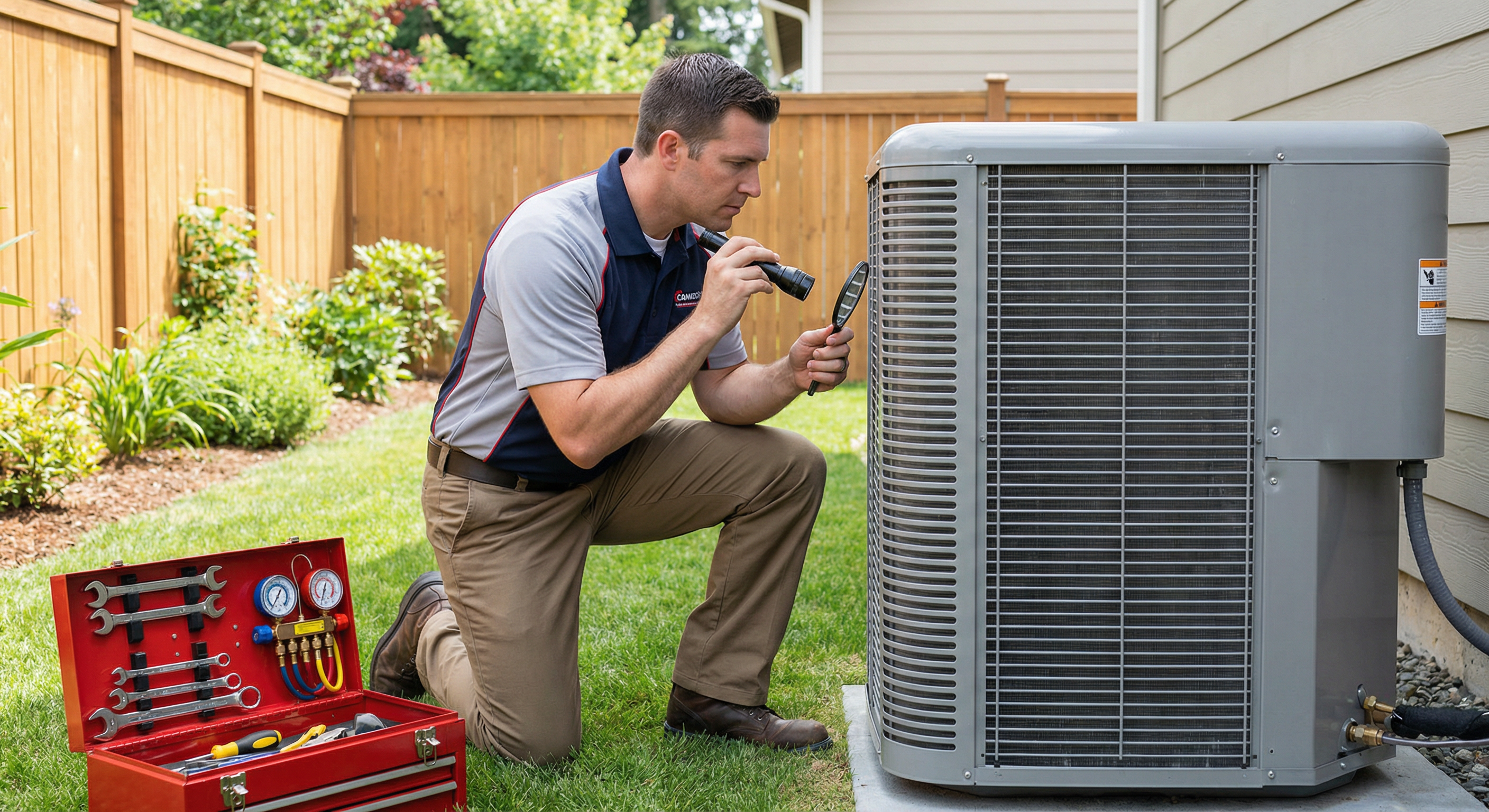
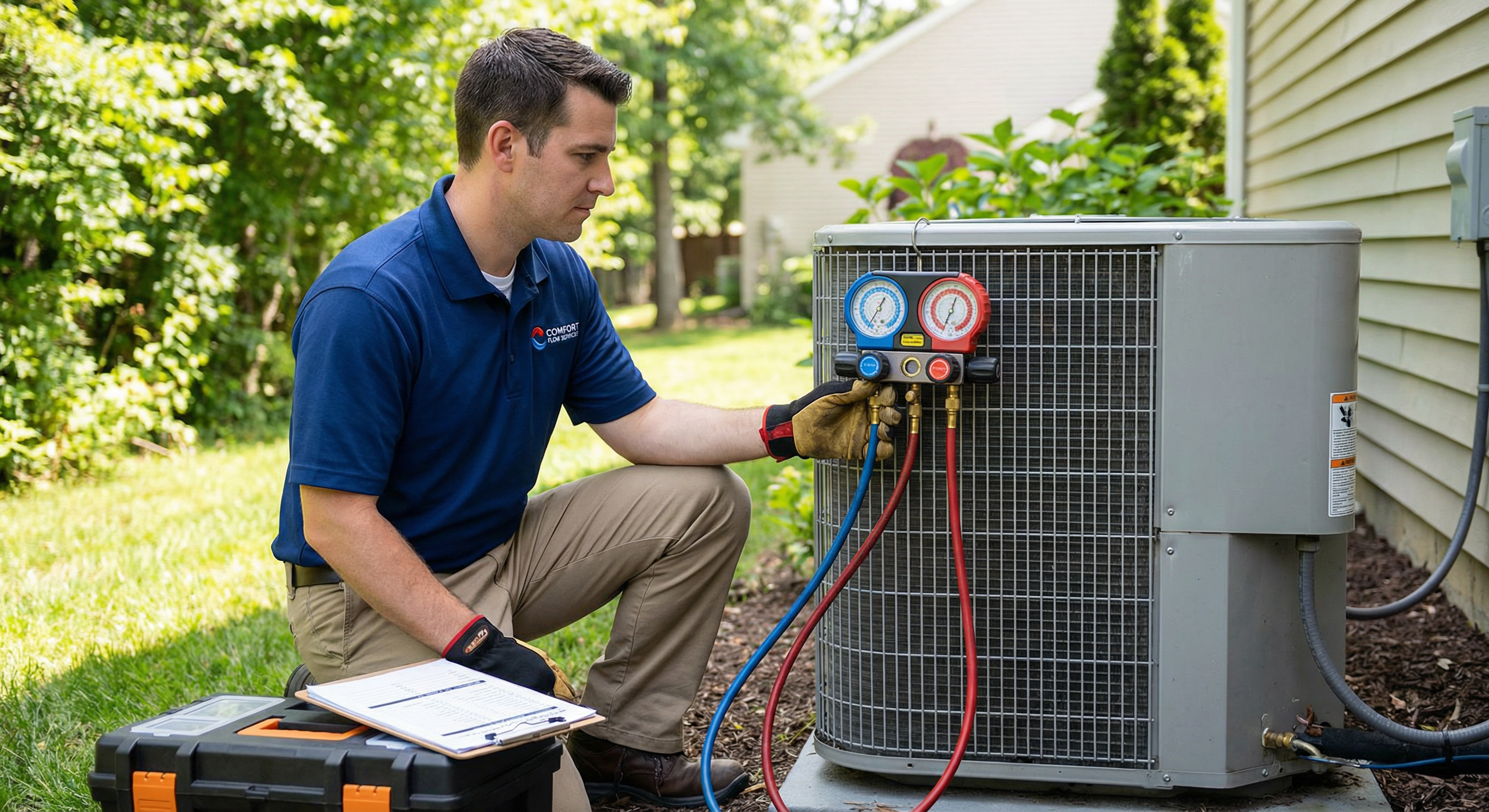
Testing a capacitor – the #1 cause of AC failures in Denver
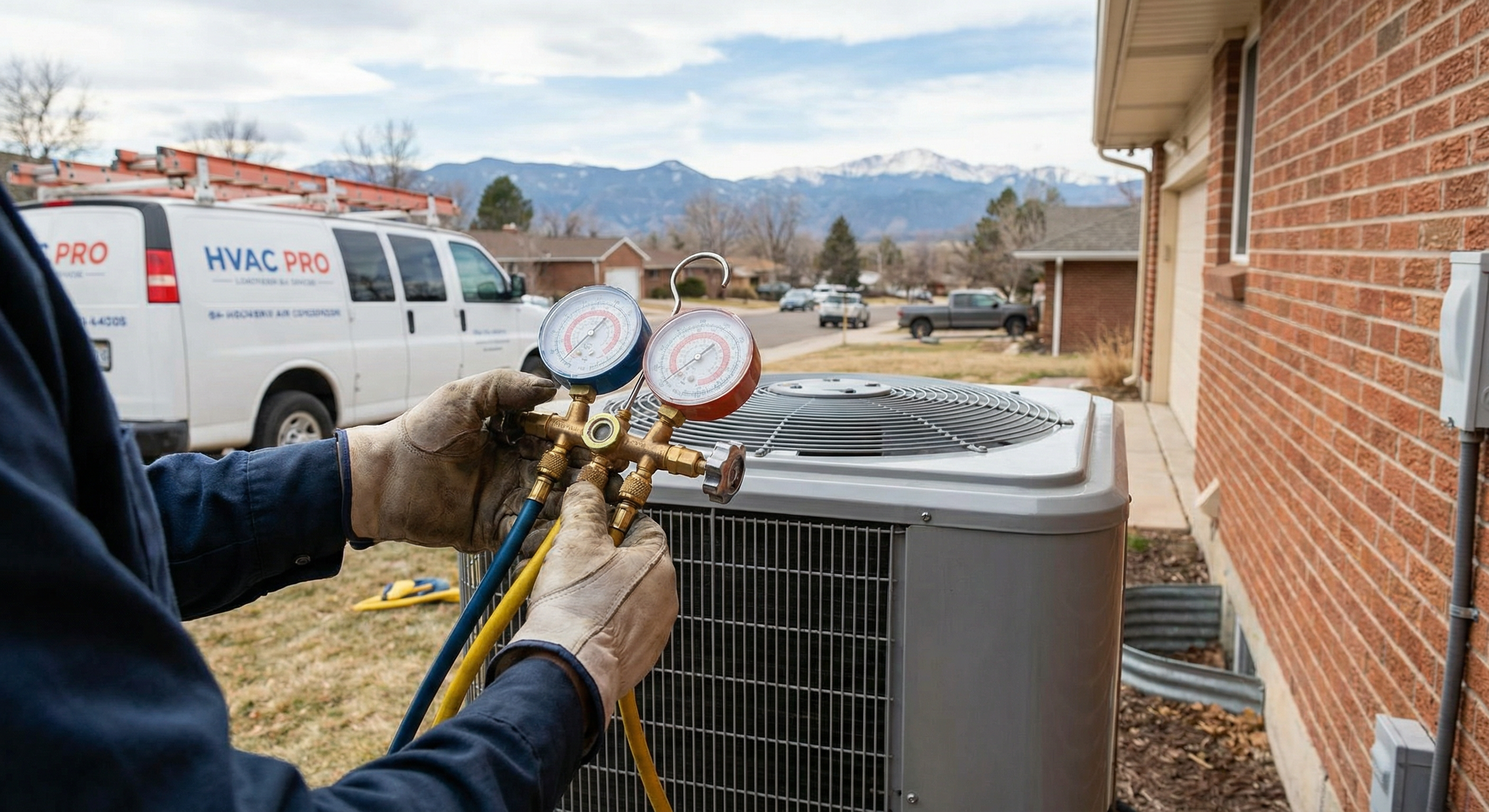
Refrigerant recharge costs $400-600 in Denver metro
Compressor replacement is a major repair (
Quick Answer
In the Denver metro area, AC repair typically costs between $150-$600 depending on the issue. Simple fixes like capacitor replacement run around $325, while compressor repairs can reach $1,500-$2,500. At Blue Collar Heating & Air, we’ve handled hundreds of AC repairs across Northglenn, Thornton, and Westminster – here’s exactly what you can expect to pay.
,500-2,500)
Professional AC repair with transparent pricing
Introduction
Professional capacitor diagnosis – typical $325 repair
When your AC stops working in the middle of a Denver summer, the first question on your mind is usually “how much is this going to cost?”
After 20+ years fixing air conditioners at altitude in the Denver metro, I’ve learned that repair costs vary widely based on the specific problem, the age of your system, and whether you need emergency service. The good news is that most AC repairs fall into a predictable range, and I’m going to break it all down for you.
In today’s article, I’ll walk you through the typical costs for common AC repairs in the Denver area, explain what affects pricing, and share the $5,000 rule we use to help homeowners decide whether to repair or replace their systems.
Average AC Repair Costs in Denver
Here’s what you can expect to pay for AC repairs in the Denver metro area:
Most Common Range: $150-$600
Major Repairs: $1,500-$2,500
Diagnostic Fee: $150 (waived with repair)
National averages typically range from $129 to $4,600, but here in Denver, we’re looking at slightly different pricing due to altitude-related factors. At 5,280 feet, your AC works harder than it would at sea level, which means components wear faster and refrigerant charges need altitude adjustments.
One thing I always tell homeowners is this: if you’ve got a system that is x amount of years old and the repair is going to be x amount of money, how do we figure out whether it makes sense to repair or replace that system? That’s where the $5,000 rule comes in, which I’ll explain later in this article.
Cost Breakdown by Repair Type
Here’s a detailed look at what specific AC repairs typically cost in the Denver area:
Simple Fixes ($150-$400)
Capacitor Replacement
Typical repair time: 30-45 minutes | Most common AC repair
$325
Thermostat Issues
Repair time: 30 minutes to 1 hour
$150-$300
Coil Cleaning
Should be done annually
$150-$250
Mid-Range Repairs ($400-$800)
Refrigerant Recharge
R-410A standard | Leak repair adds $200-$800
$400-$600
Contactor Replacement
Controls power to compressor
$250-$400
Fan Motor Replacement
Indoor or outdoor motor
$400-$650
Major Repairs ($1,500-$2,500)
Compressor Replacement
Heart of your AC system – most expensive component
$1,500-$2,500
Evaporator Coil
Labor-intensive replacement
$1,000-$1,800
Factors That Affect AC Repair Cost
Several factors influence the final price you’ll pay for AC repair in Denver:
System Age and Condition
Older systems often require more expensive repairs because parts become harder to find and labor increases. In Northglenn and Westminster, where home ages average 30-40 years, we frequently see systems that are 15-20+ years old approaching their end of life.
Warranty Status
If your AC is still under manufacturer warranty (typically 5-10 years on parts), you’ll only pay for labor. We offer a 1-year labor warranty on all our repairs at Blue Collar Heating & Air.
Complexity of Repair
Some repairs require extensive disassembly or specialized tools. Compressor work involves high voltage and refrigerant handling, which requires EPA certification and adds to labor costs.
Emergency vs. Scheduled Service
During our regular hours (6 AM – 9 PM, 7 days a week), we offer same-day service at standard rates. Emergency calls outside these hours include a $150 surcharge.
Denver Altitude Stress
At 5,280 feet, your compressor works harder to achieve the same cooling effect. This increased stress leads to faster component wear, especially on capacitors and contactors.
The $5,000 Rule: Repair vs Replace
Refrigerant recharge costs $400-$600 in Denver
Here’s a simple formula we use to help homeowners make the repair-or-replace decision:
Formula
Age of System × Repair Cost = Decision Factor
If over $5,000: Consider replacement
If under $5,000: Repair makes sense
Real Examples
Example 1: 5-year-old system needs $1,200 compressor repair
5 × $1,200 = $6,000 Result: Above $5,000 – consider replacement
Example 2: 5-year-old system needs $600 refrigerant repair
5 × $600 = $3,000 Result: Below $5,000 – repair makes sense
Example 3: 10-year-old system needs $600 repair
10 × $600 = $6,000 Result: Above $5,000 – consider replacement
This rule helps you avoid putting money into a system that’s near the end of its useful life. When you factor in energy efficiency gains, utility savings, and available rebates, sometimes replacement is the smarter long-term investment.
How to Save Money on AC Repairs
Invest in Regular Maintenance
Annual maintenance runs $150-$200 but can prevent $1,000+ repairs. We catch small issues before they become expensive problems.
Schedule During Off-Season
September through April typically offers better pricing and faster service. You’ll avoid the rush of that first heat wave in late May or early June.
Catch Issues Early
Don’t ignore warning signs like strange noises, weak airflow, or higher utility bills. Small problems turn into expensive repairs when left unaddressed.
Compare Quotes (But Beware Low-Ball Scams)
Getting a second opinion is smart, and reputable contractors like Blue Collar Heating & Air encourage it. Red flag: high-pressure sales tactics or prices that seem too good to be true.
Ask About Financing
We offer financing options to help spread the cost of unexpected repairs over time.
When to Call Blue Collar Heating & Air
If your AC isn’t working properly, don’t wait until you’re sweltering in a 95°F Denver summer. We serve Northglenn, Thornton, Westminster, Broomfield, Brighton, Firestone, Dacono, Arvada, Commerce City, Erie, and Longmont.
Our transparent pricing means no surprises – the $150 diagnostic fee is waived if you proceed with the repair. We’re available 7 days a week from 6 AM to 9 PM, with emergency service available when you need it most.
Call (303) 351-1667 or fill out the form below to schedule your AC repair today.
What Our Customers Say
Compressor replacement: $1,500-$2,500
“Lance was awesome, he was able to come out day of to fix our AC unit. He didn’t sell us on replacing a whole unit but was able to repair a leak in the line in a single afternoon. I really appreciate his professionalism and friendliness. I would absolutely recommend!”
— Will Z., Denver Metro
Google Review | 2025 | Click to see all 67 reviews
FAQ: AC Repair Cost Questions
Professional AC service with transparent pricing
Is the diagnostic fee refundable?
Our $150 diagnostic fee is waived when you proceed with the repair. This covers the technician’s time, expertise, and the cost of identifying your AC problem.
How long does AC repair typically take?
Simple repairs like capacitor replacement take 30-45 minutes. Mid-range repairs run 1-2 hours. Major repairs like compressor replacement can take 3-4 hours or require a return visit if special parts need ordering.
Do you offer warranties on repairs?
Yes, we provide a 1-year labor warranty on all repairs. Parts typically carry a manufacturer warranty of 5-10 years depending on the component.
What payment options do you accept?
We accept cash, check, credit cards, and offer financing options for larger repairs. Payment is due upon completion of service.
Should I repair or replace my AC?
Use the $5,000 rule as a starting point: multiply your system’s age by the repair cost. If it’s over $5,000, replacement might make more sense. We’ll walk you through the math and help you make an informed decision.
Conclusion
AC repair costs in Denver typically range from $150-$600 for common issues, with major repairs reaching $1,500-$2,500. The key is getting an accurate diagnosis from a trusted HVAC professional who can explain your options without high-pressure sales tactics.
At Blue Collar Heating & Air, we’ve been serving the Denver metro area for over 20 years with transparent pricing and honest recommendations. Whether it’s a simple capacitor replacement or a major compressor repair, we’ll help you make the best decision for your home and budget.
Ready to get your AC fixed? Call us at (303) 351-1667 or fill out the form below for same-day service.
How Much Does a New AC Cost? (Denver HVAC Expert Explains)
Quick Answer: A new central air conditioner in Denver costs $6,000-$14,000 installed, depending on size, efficiency, and features. Entry-level systems (14 SEER) run $6,000-$8,500 for a 2-3 ton unit. Mid-range (16-18 SEER) costs $8,500-$11,000. High-efficiency (20+ SEER) systems reach $11,000-$14,000. At Denver’s 5,280-foot elevation, properly sizing your AC is critical – undersized units work 30% harder and fail faster. Blue Collar Heating & Air has installed hundreds of AC systems across Northglenn, Thornton, and Westminster, and we’ll walk you through exactly what you’ll pay and why.
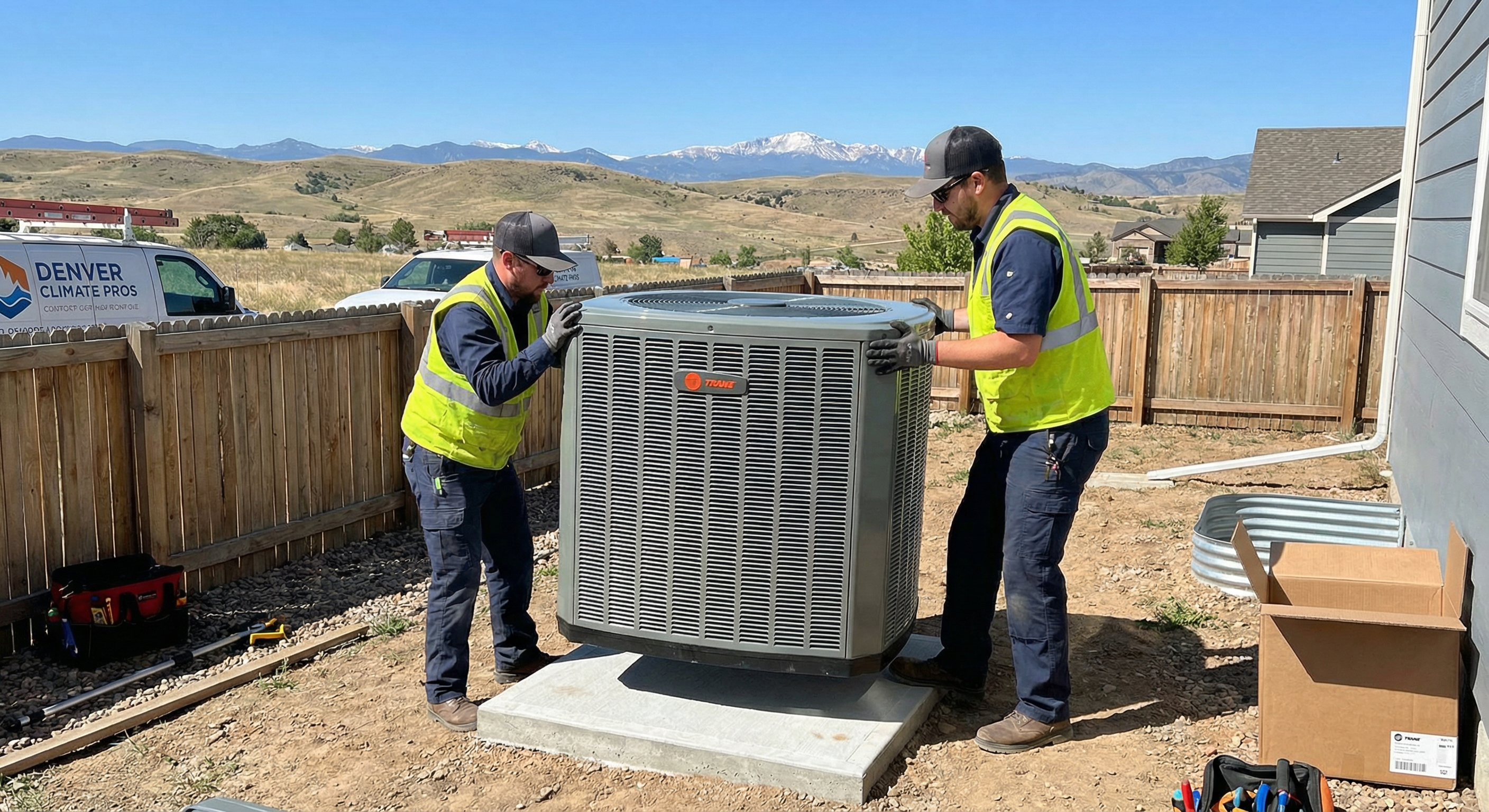
Professional AC installation in Denver metro
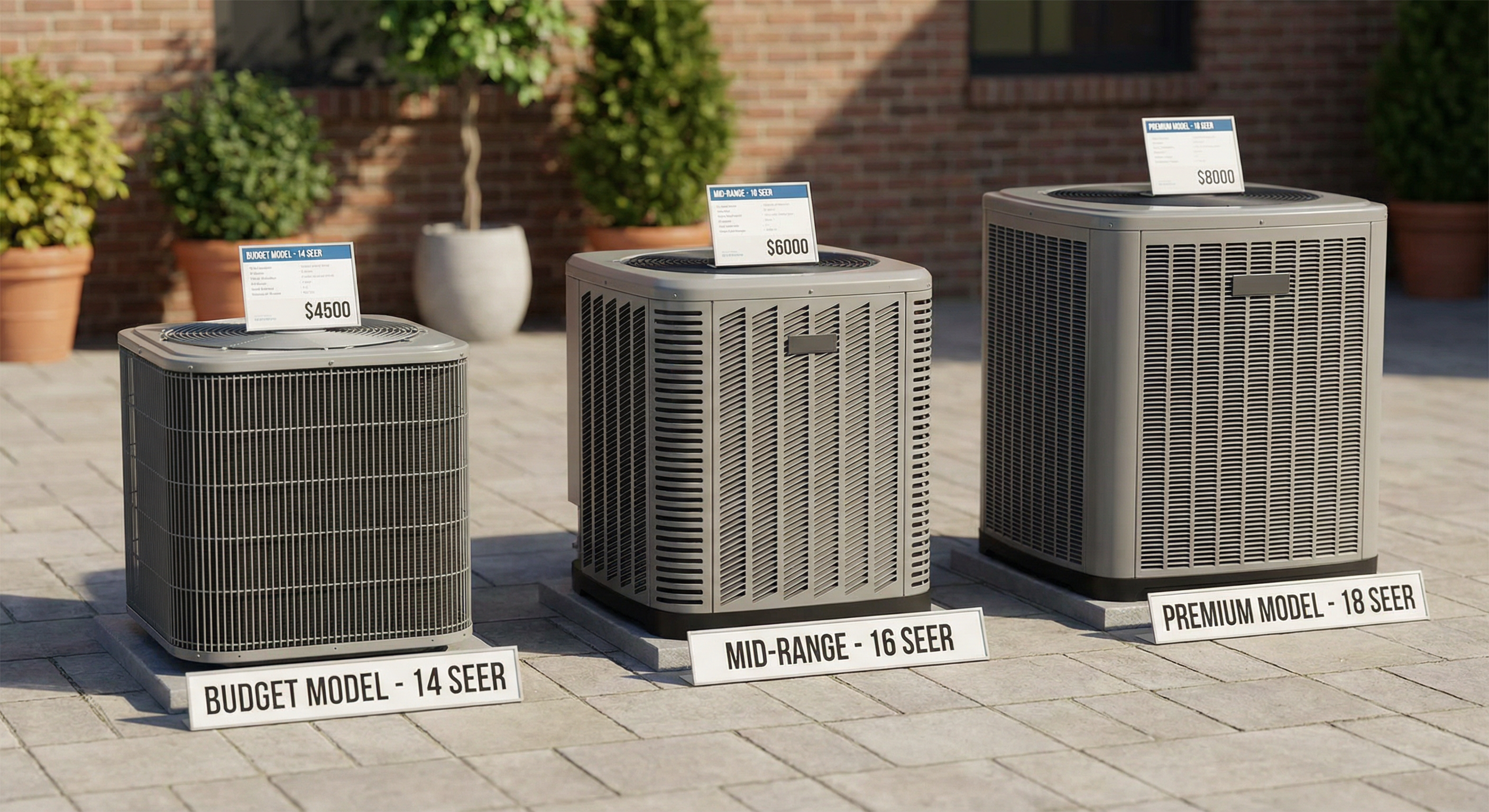
Higher SEER = better efficiency and lower bills
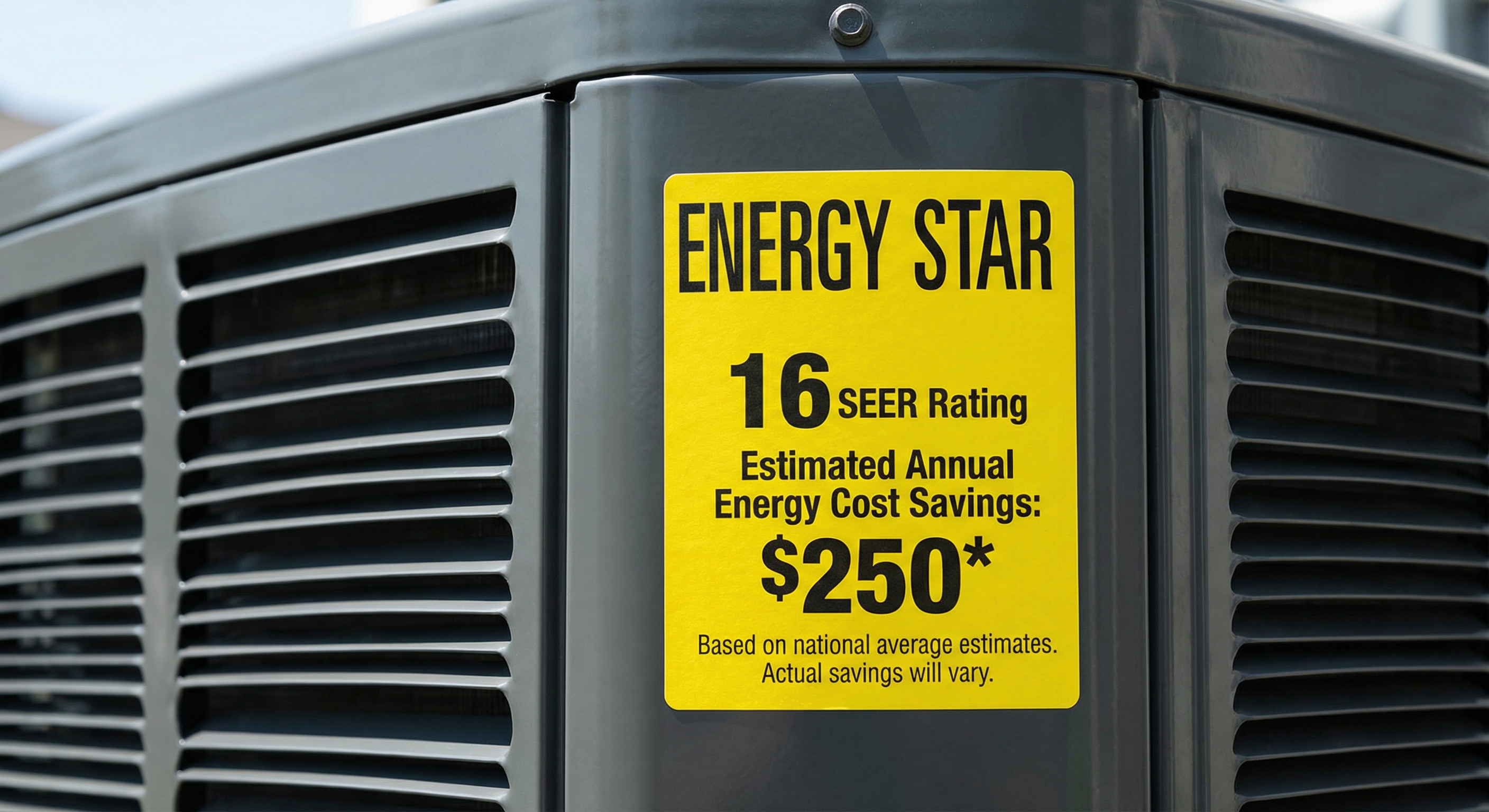
ENERGY STAR certification ensures quality and efficiency
Proper sizing is critical for Colorado altitude
Experience: 20+ years serving Denver metro | 400+ AC installations at altitude
Last Updated: February 27, 2026 | Reading Time: 8 minutes
Service Area: Northglenn, Thornton, Westminster, Broomfield, Brighton, Arvada, CO
What Determines New AC Costs in Denver?
When homeowners call asking “how much for a new AC,” I always start with the same answer: “It depends on what your home needs.” I’ve seen identical 2,000-square-foot homes require completely different systems based on insulation, sun exposure, and how they’re built.
In the Denver metro, your new AC cost breaks down into three main categories:
Equipment (50-60% of total cost): The outdoor condenser, indoor evaporator coil, refrigerant lines, and thermostat. A basic 2.5-ton, 14 SEER system costs $3,500-$4,500 in equipment alone. Step up to a 16 SEER two-stage unit, and you’re looking at $5,000-$6,500. High-efficiency variable-speed systems (20+ SEER) can run $7,000-$9,000 just for the equipment.
Labor & Installation (30-40% of total cost): Professional installation typically runs $2,000-$4,000 depending on complexity. This includes removing your old system, installing the new one, running refrigerant lines, electrical connections, testing, and startup. At altitude, we also adjust refrigerant charge – something generic installers often miss, leading to efficiency loss.
Additional Work (10-20% of total cost): Many homes need upgrades during installation. Older homes might need electrical panel upgrades ($800-$1,500), new thermostat wiring ($200-$400), or ductwork modifications ($500-$2,000). Denver’s freeze-thaw cycles can damage concrete pads, requiring replacement ($300-$500).
The Denver Altitude Factor
One thing you won’t hear from out-of-state HVAC companies: altitude matters. At 5,280 feet, air is 17% thinner than at sea level. Your AC has to work harder to achieve the same cooling. This means:
Sizing is critical: An undersized unit that “works fine” in Texas will struggle here. I’ve replaced countless units that were installed by companies that didn’t account for altitude.
Refrigerant adjustment: Factory refrigerant charges are for sea level. We adjust charge based on altitude and outdoor temperature for optimal efficiency.
Component stress: Compressors work 15% harder at elevation, which is why we recommend higher-quality units for longer lifespan.
AC System Price Breakdown: Entry, Mid, and High-End
New AC installation: $4,500-$8,500 in Denver
Entry-Level Systems: $6,000-$8,500
Best for: Budget-conscious homeowners, rental properties, or homes you plan to sell within 5 years.
What you get:
14-15 SEER rating (minimum required by federal law)
Single-stage compressor (100% on or 100% off)
Basic 5-year parts warranty
Standard thermostat
2-3 ton capacity for average 1,200-1,800 sq ft homes
Real talk: These units work. They’ll keep you cool on Denver’s hot summer days. But they’re less efficient (higher electric bills), noisier, and don’t dehumidify as well as higher-end models. Expect to pay $150-$200/month in cooling costs during peak summer.
Popular brands at this tier: Goodman, Amana, Rheem Classic series
Mid-Range Systems: $8,500-$11,000
Best for: Homeowners planning to stay 7+ years who want comfort and efficiency.
What you get:
16-18 SEER rating (30-40% more efficient than entry-level)
Two-stage compressor (runs at low speed 80% of the time for consistent comfort)
10-year parts warranty
Programmable or WiFi thermostat included
2-5 ton capacity for 1,500-2,500 sq ft homes
Better humidity control (critical for Denver’s dry climate)
Real talk: This is the sweet spot. Two-stage operation means the unit runs longer at lower power, removing more humidity and maintaining even temperatures. You’ll notice the difference – no more hot/cold zones or that clammy feeling when the AC kicks on. Summer electric bills drop to $120-$150/month.
One thing I always tell homeowners: the $2,000-$3,000 premium over entry-level pays back in 3-4 years through lower energy costs. After that, you’re saving $400-$600 annually.
Popular brands at this tier: Lennox Merit, Carrier Performance, Trane XR series
High-End Systems: $11,000-$14,000+
Best for: Forever homes, homeowners with high comfort standards, or those who want maximum efficiency and features.
What you get:
20-24 SEER rating (50-60% more efficient than minimum)
Variable-speed compressor (adjusts output 1-100% for precise control)
10-year parts warranty + extended labor coverage options
Advanced smart thermostat with zoning capability
2-5 ton capacity with superior dehumidification
Whisper-quiet operation (60 dB or less – quieter than normal conversation)
Advanced diagnostics and self-monitoring
Real talk: These systems are impressive. Variable-speed operation means they run at 30-40% capacity most of the time, delivering perfect comfort while sipping electricity. Summer bills drop to $90-$120/month even in large homes. They’re so quiet you forget they’re running.
Hidden Costs and Add-Ons to Budget For
Electrical Upgrades ($800-$1,500)
Older Denver homes (pre-1990s) often have 100-amp electrical panels. Modern high-efficiency ACs draw significant power, and you might need a panel upgrade or dedicated circuit. Not optional – it’s a code requirement and a safety issue.
Ductwork Repairs ($500-$2,000)
If your ducts are leaking (common in Denver’s older homes), you’ll lose 20-30% of your cooled air into attics or crawlspaces. We test duct leakage during installation, and most homes need at least minor sealing. Major duct replacement can run $3,000-$5,000, but it’s rare.
Thermostat Upgrades ($200-$500)
Entry-level systems come with basic thermostats. Upgrading to a WiFi model (Nest, Ecobee, Honeywell) costs $200-$350 installed and saves 10-15% on cooling costs through smart scheduling.
Financing Your New AC: What You Should Know
Here’s reality: a $10,000 AC replacement is a major expense. Most families don’t have that sitting in savings. That’s why financing exists, and manufacturers incentivize it heavily.
0% APR for 12-24 months: Common promotional offers, especially in spring/fall (shoulder seasons). You’ll need good credit (700+), but it’s genuine 0% – no catch.
60-84 month payment plans: For high-efficiency systems, manufacturers offer longer terms at low rates (3-7% APR). A $12,000 system at 5% for 60 months = $226/month. That’s often less than the electric bill savings.
One thing I always recommend: Don’t finance an entry-level system at high interest. If you can’t afford better upfront, save for a few months. Financing a premium system that saves you $500+/year makes sense. Paying 12% APR on a basic unit doesn’t.
When Replacement Beats Repair: The $5,000 Rule
14 SEER vs 16 SEER vs 18 SEER efficiency comparison
Not every failing AC needs replacement. Use the $5,000 rule:
System age × Repair cost = Decision point
If your AC is 12 years old and repair costs $500: 12 × $500 = $6,000 → Replace
If your AC is 8 years old and repair costs $400: 8 × $400 = $3,200 → Repair
Other factors:
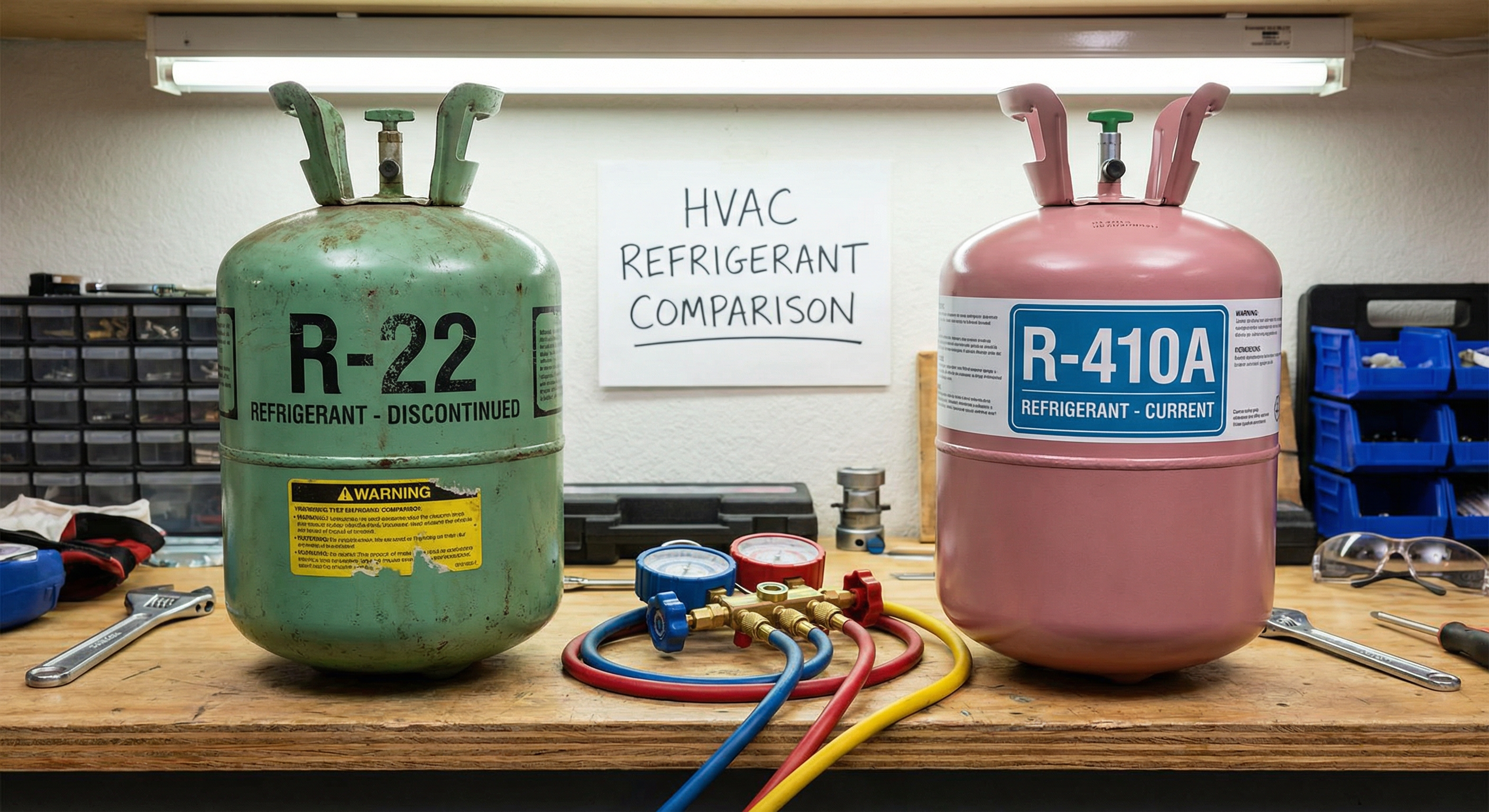
R-22 refrigerant: If your system uses R-22 (phased out in 2020), replacement is smart. R-22 now costs $150/pound and rising.
Frequent breakdowns: If you’re calling for repairs yearly, that’s a sign.
Efficiency: Pre-2010 systems run at 10-12 SEER. New 16 SEER systems cut cooling costs by 30-40%.
What Our Customers Say
Proper sizing is critical at 5,280 ft elevation
“Lance did a great job installing a new furnace at our place. He is super responsive and always follows up with customer needs. He is great guy and dedicated technician that I would highly recommend!”
— Daniel O., Denver Metro
Google Review | 2024 | Click to see all 67 reviews
FAQ: New AC Cost Questions
Look for 16+ SEER for best efficiency in Denver
What size AC do I need for my Denver home?
Most homes need 1 ton of cooling per 500-600 square feet, but Denver’s altitude, sun exposure, insulation quality, and ceiling height all affect sizing. A proper Manual J load calculation is essential. Undersized units run constantly and fail early. Oversized units short-cycle, waste energy, and don’t dehumidify properly.
Are high-efficiency AC systems worth the extra cost in Denver?
Yes, especially if you plan to stay 5+ years. A 16 SEER system costs $2,000-$3,000 more than 14 SEER but saves $400-$600 annually in electricity. It pays back in 3-5 years, then you’re pocketing the savings. Higher SEER also means better humidity control and quieter operation.
Can I install just the outdoor unit and save money?
Technically yes, but it’s a bad idea. Mixing old and new components voids warranties, reduces efficiency, and often leads to early failure. If you’re replacing a system over 10 years old, replace everything – outdoor unit, indoor coil, and refrigerant lines. You’ll get a matched system with full warranty coverage.
How long does AC installation take?
Most standard replacements take 6-8 hours (one day). Complex jobs with electrical upgrades, ductwork modifications, or multi-zone systems can take 1.5-2 days. We’ll give you an exact timeline during the estimate.
What’s the best time of year to buy a new AC?
Spring (April-May) and fall (September-October) offer the best deals. We’re not slammed with emergency calls, manufacturers run promotions, and you can take time to compare options. Summer replacements (June-August) cost 10-15% more due to demand, and wait times stretch to 1-2 weeks.
Conclusion
A new central AC in Denver costs $6,000-$14,000 depending on efficiency, features, and your home’s specific needs. Entry-level systems ($6,000-$8,500) work fine for basic cooling. Mid-range two-stage units ($8,500-$11,000) deliver the best value for long-term homeowners. High-efficiency variable-speed systems ($11,000-$14,000+) maximize comfort and minimize operating costs.
At Blue Collar Heating & Air, we’ve been helping Denver metro families choose the right AC system for over 20 years. We’ll provide honest recommendations, transparent pricing, and quality installation – no high-pressure sales tactics, ever.
Ready for a free estimate? Call us at (303) 351-1667 or fill out the form below. We’ll assess your home, explain your options, and give you an exact price – same day or next day service available.
How Much Does Water Heater Replacement Cost?
Quick answer: In the Denver metro, replacing a standard residential tank water heater commonly falls in a rough range of roughly $1,800–$3,800 installed for common 40–50 gallon gas or electric units, depending on tank size, fuel type, venting, code upgrades, and access. Tankless conversions often run higher upfront because of gas line, venting, and labor complexity. The only accurate number is a written quote after we see your existing installation and local code requirements.
What drives the price
Equipment
Tank size (40 vs 50 vs 75 gallon)
Efficiency tier and brand
Electric vs gas — Electric tanks cost less for the appliance but may need panel/wiring work; gas needs combustion safety and venting right.
Installation labor
Like-for-like swap in an open basement is faster than a tight closet, attic, or crawl replacement.
Code updates — Expansion tanks, gas shutoffs, venting, seismic strapping, drain pan requirements—jurisdictions and inspectors vary.
Hidden gotchas (common in older Colorado homes)
Corroded dielectric unions and stuck connections
Non-compliant vent or undersized gas line discovered at changeout
Hard water scale that masked a slow leak until removal
Tank vs tankless (cost snapshot)
Tank: Lower installed cost for most straight swaps; predictable hot water; standby loss.
Tankless: Higher equipment + labor; excels for space savings and long-run hot water when sized correctly; gas upgrades and flush maintenance matter.
We size tankless by peak flow (fixtures that can run at once), groundwater temperature, and gas availability—not by square footage alone.
Permits and safety
Many replacements require a permit and inspection. We handle code-compliant installs—not shortcuts that risk CO with gas appliances or scalding with improper mixing valves.
Is repair ever better than replace?
If the tank is young, the issue is a replaceable component (element, thermostat, gas valve, anode strategy), repair can win. If the tank is past typical life, leaking from the shell, or inefficient and undersized for your family, replacement is usually smarter.
FAQ
How long does replacement take?
Many swaps are same day; complex vent or gas work can extend.
Do you haul away the old tank?
Yes—that is standard in our quotes.
Will a bigger tank fix running out of hot water?
Sometimes; other times the fix is recovery (burner/electrical), mixing valve, or usage pattern—see our related article.
Do you offer financing?
Ask when you call—we can review current options.
Why do quotes vary so much?
Different code interpretations, warranty length, component quality (valves, pans), and ducting of combustion air all move price.
Contact Blue Collar Heating & Air at (303) 351-1667 for an on-site water heater assessment and firm pricing.
Same-day service available in Northglenn, Thornton, Westminster, and surrounding areas.
How Often Should AC Be Serviced? (Denver HVAC Expert Explains)
Quick Answer: Your AC should be professionally serviced once per year, ideally in April or May before cooling season starts. In Denver’s dusty, high-altitude climate, some systems benefit from twice-yearly service (spring and fall). Annual maintenance costs $150-$250 and prevents 80% of common breakdowns. DIY monthly tasks include filter changes and outdoor unit cleaning. Blue Collar Heating & Air has maintained hundreds of systems across Northglenn, Thornton, and Westminster for 20+ years – proper maintenance extends AC lifespan from 12-15 years to 18-22 years and saves $300-$500 annually in energy costs.
Annual spring service prevents 80% of breakdowns
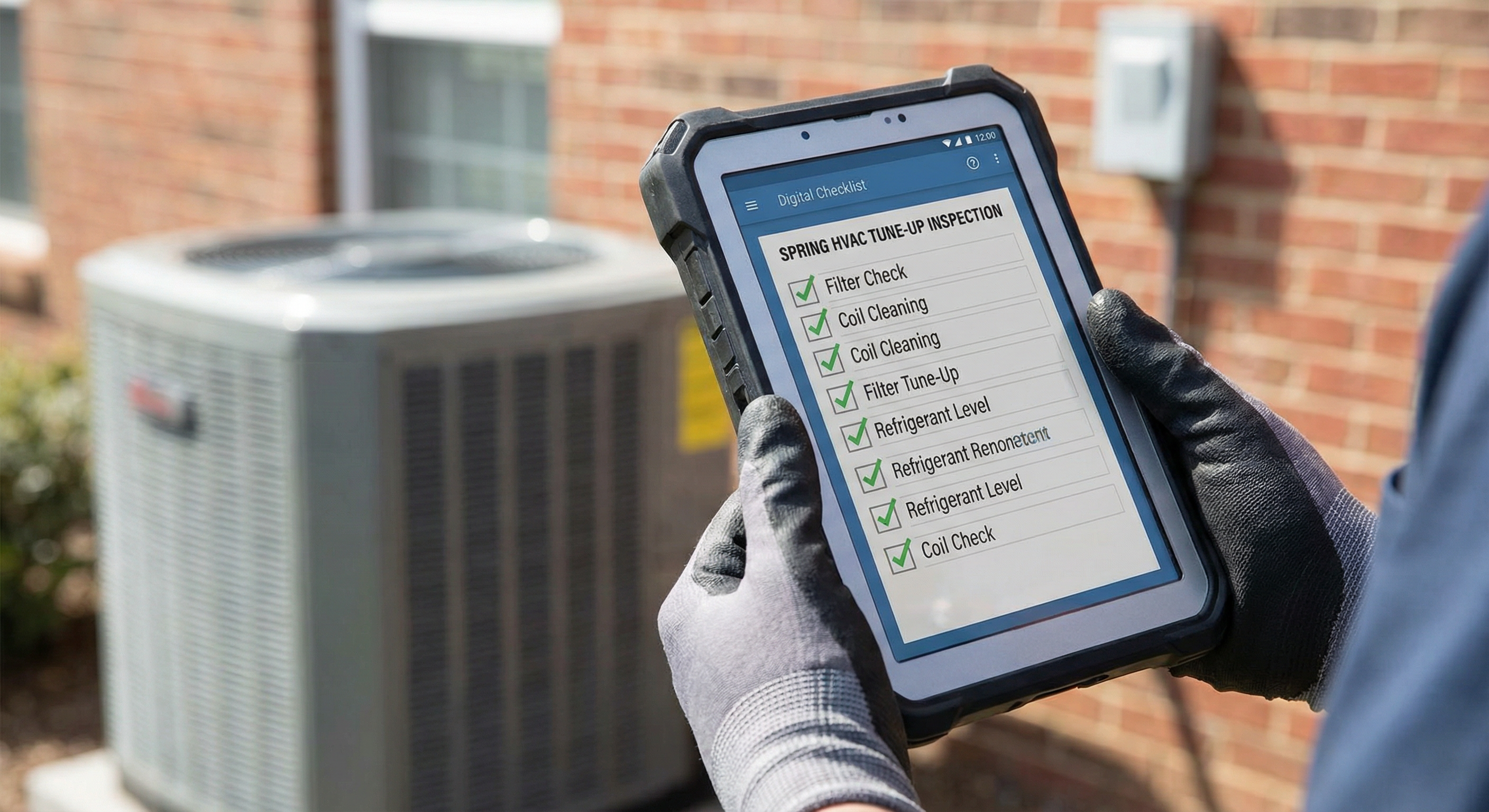
Professional maintenance includes 20+ point inspection
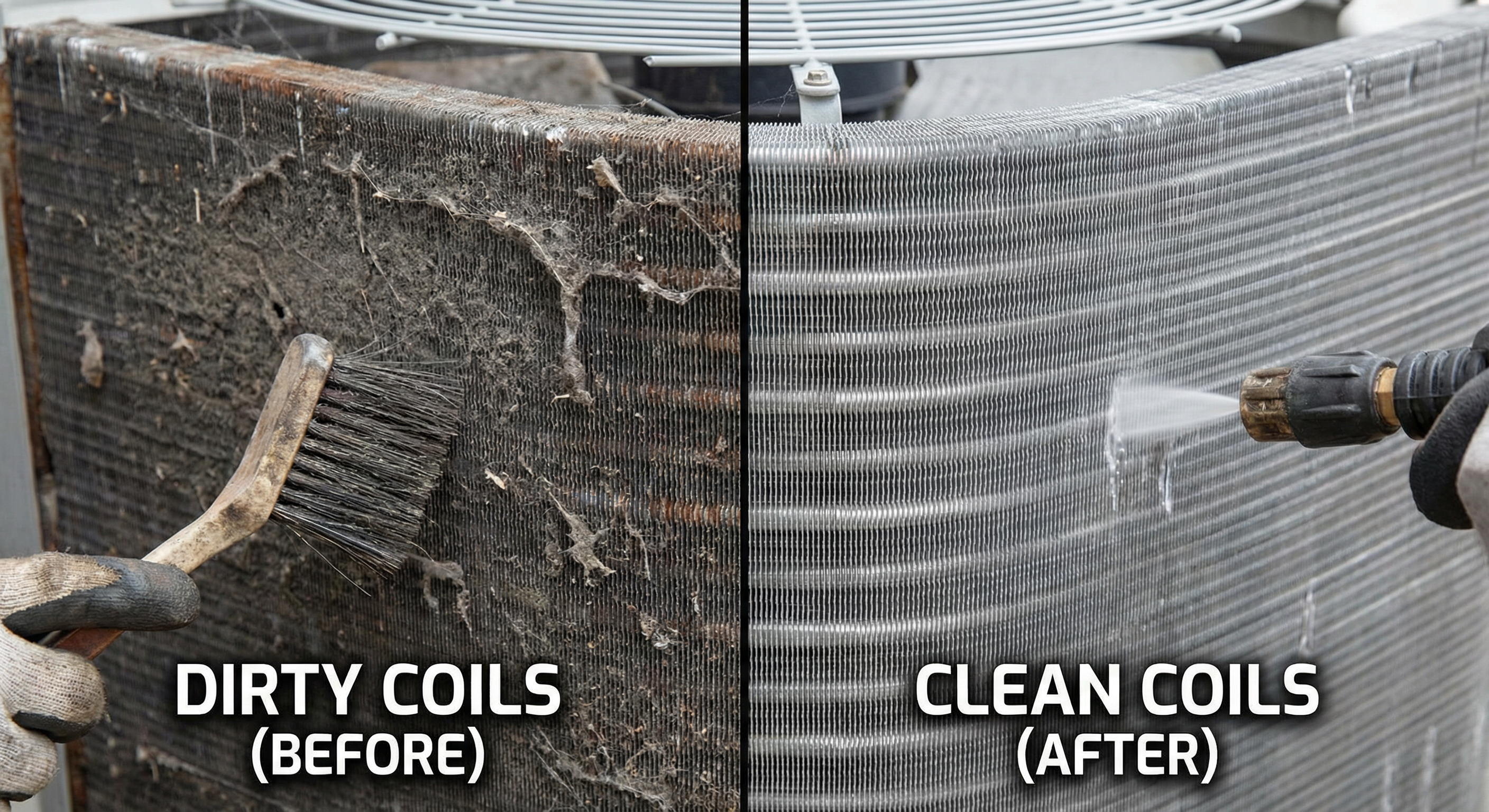
Clean coils improve efficiency by 15-20%
Refrigerant check ensures proper cooling capacity
Experience: 20+ years serving Denver metro | 800+ annual maintenance visits
Last Updated: February 27, 2026 | Reading Time: 7 minutes
Service Area: Northglenn, Thornton, Westminster, Broomfield, Brighton, Arvada, CO
The Real Cost of Skipping AC Maintenance
I get this question constantly: “Do I really need annual AC service if it’s working fine?”
Here’s what 20 years of data tells me: Homeowners who skip maintenance spend 3-4x more on repairs over 10 years than those who maintain annually.
Example from last summer: Two identical homes in Thornton, both with 10-year-old Carrier systems.
House A: $2,000 spent on annual maintenance over 10 years ($200/year). System still runs great.
House B: $0 maintenance for 8 years, then $2,800 compressor replacement in year 9, plus $450 coil cleaning, plus $200 capacitor. Total: $3,450. System now needs replacement.
The math is clear: Spending $200/year saves thousands long-term.
What Professional AC Service Includes
Annual spring tune-up prevents 80% of breakdowns
When you pay $150-$250 for annual service, here’s what you should get:
Checking refrigerant pressures during summer tune-up
“Lance and his team installed a new furnace and relocated it so it doesn’t block our entire basement anymore.”
— Bernadette A., Denver Metro
Google Review | 2022 | Click to see all 67 reviews
FAQ: AC Maintenance Questions
22-point inspection during professional tune-up
Can I skip maintenance if my AC is still under warranty?
Actually, no. Most manufacturer warranties require proof of annual professional maintenance. If your compressor fails and you can’t show service records, your warranty claim will be denied. Keep all receipts.
How much does AC maintenance cost in Denver?
$150-$250 for standard visit. Expect $200-$300 if refrigerant needs topping off (common at altitude). Avoid “$59 tune-ups” – they’re upselling traps or incomplete service.
Should I service my AC in spring or fall?
Spring is ideal (April-May before cooling season). Fall works too. For optimal protection, do both – costs $300-$400/year total but maximizes lifespan.
Can I do AC maintenance myself?
You can handle monthly filter changes and coil cleaning, but professional service includes refrigerant pressure checks, electrical testing, and diagnostics requiring specialized tools. DIY monthly + professional annual is best combo.
Conclusion
Service your AC once per year in spring (April-May). In Denver’s dusty climate, twice-yearly service provides extra protection. Annual maintenance costs $150-$250 but prevents 80% of breakdowns, extends lifespan by 5-7 years, and saves $300-$500 annually in energy costs.
At Blue Collar Heating & Air, we provide comprehensive AC maintenance that goes beyond basic “tune-ups.” We test every component, adjust for altitude, and catch issues before expensive breakdowns.
Ready to schedule your AC service? Call (303) 351-1667. We offer same-week scheduling in spring, annual service plans, and upfront pricing with no hidden fees.
Mini Split vs Central Air: Which Should You Choose?
Quick answer: Choose central air when you already have good ductwork and want whole-home cooling from one system. Choose mini splits when ducts are missing or terrible, you need true zoning, or you are solving one or two rooms cost-effectively. Hybrid approaches—keeping central air and adding a mini split for a problem zone—are common in Denver metro homes with hot second floors or new additions.
Central air (ducted)
Best for
Existing forced-air homes with adequate supply/return design
Homeowners who want one thermostat and even whole-house behavior (when ducts cooperate)
Tradeoffs
Duct leakage in hot attics wastes money—we see it constantly in older Colorado homes.
Single-zone central cannot fix solar imbalance between floors without zoning, duct fixes, or supplemental equipment.
Mini splits (ductless / slim duct)
Best for
Additions where extending ducts is destructive or expensive
Rooms that never keep up despite a “healthy” central system
Net-zero or tight homes wanting very efficient variable-capacity cooling (and often heating)
Tradeoffs
Indoor aesthetics—wall heads are visible (ceiling cassettes cost more).
Multiple heads = multiple filters to maintain.
Upfront cost can exceed central-only if you duplicate capacity for the whole house.
Denver climate angle
Our dry summers favor evaporative comfort at slightly higher thermostat setpoints, but second-story rooms still bake from roof load. Mini splits decouple those rooms from downstairs duct limitations.
At altitude, any cooling system should be selected with local design conditions—not a rule-of-thumb from sea-level marketing charts.
Cost framework (non-binding)
New central replacement vs whole-home mini split is not a fair fight on price—compare scope (same comfort coverage?). Often the value play is repair/replace central for the majority of the home and target a mini split where ducts fail.
FAQ
Can I mix central and mini split?
Yes—very common for master suites and bonus rooms.
Are mini splits noisy?
Modern inverter units are typically quieter than window ACs; outdoor units should be placed with neighbor and bedroom window placement in mind.
Which is more efficient?
High-quality variable mini splits can be extremely efficient at part load; new central with matching coil and tight ducts also performs well. Bad ducts sink central efficiency.
What about resale?
Permitted, professional installs with clean line hide and service access usually add appeal; DIY line sets hurt.
Blue Collar Heating & Air helps Denver metro families choose between central, ductless, and hybrid comfort solutions. (303) 351-1667
Same-day service available in Northglenn, Thornton, Westminster, and surrounding areas.
Quick answer: A professional AC tune-up is a structured inspection, test, and cleaning of your cooling system—indoor coil and blower area, electrical and refrigerant checks on the outdoor unit, condensate drainage verification, and often a measured temperature split between return and supply air. The exact checklist varies by equipment type (split, packaged, heat pump), but the goal is the same: safe operation, rated efficiency, and fewer surprise breakdowns on the hottest days.
Why tune-ups matter in Denver
Cooling season here stresses equipment: high UV, dust, hail and debris around outdoor units, and large day–night temperature swings. A clean condenser and correct refrigerant charge matter more than most people realize. A tune-up catches weak capacitors, dirty coils, and drain issues before they become water damage or a 95°F day emergency.
What we typically do indoors (air handler / furnace cabinet)
Thermostat operation — Accurate temperature call, wiring integrity when accessible.
Filter review — Size, fit, and change interval guidance (we may replace if you provide a filter).
Temperature split — Supply vs return dry-bulb comparison under known conditions; informs airflow and charge conversations.
Evaporator coil — Visual assessment for loading that hurts capacity; recommend cleaning when needed.
Blower wheel — When accessible, check for dirt that reduces airflow (major capacity killer).
Condensate drain — Flush or verify flow; check pan and safety devices when present.
Refrigerant lines — Insulation and obvious oil staining (leak indicators) where visible.
Electrical — Connections and components we can safely access without disassembly overload.
What we typically do outdoors (condenser)
Disconnect and high-voltage — Safe operation, correct fusing where applicable.
Compressor and fan — Amperage trends when measured, listening for bearing noise.
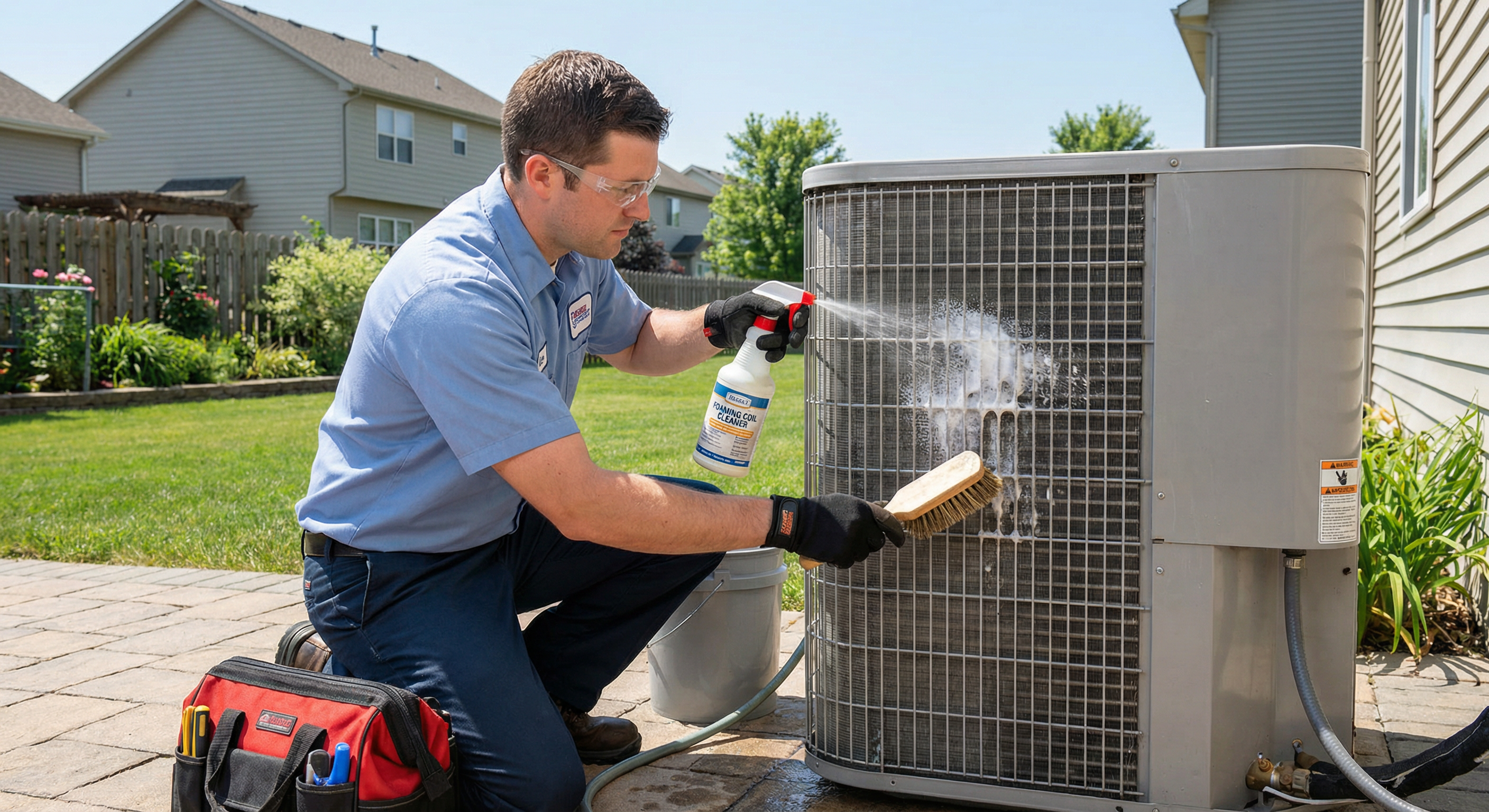
Coil cleaning — Manufacturer-appropriate washing; some micro-channel coils cannot take aggressive chemicals.
Refrigerant assessment — Per superheat/subcool or company procedure; adjustments only by EPA-certified techs.
Pad, line set, vibration — Obvious physical damage from weather or animals.
Packaged or rooftop units get the same logical coverage in different layouts.
What a tune-up is not
It is not a guarantee you will never need a repair—parts still age.
It is not a substitute for duct leakage testing or full Manual J if you are solving comfort complaints in specific rooms.
It should not be a bait-and-switch: you deserve a clear explanation of findings vs recommendations.
How often?
Once per cooling season is standard for Colorado residential systems. Homes with pets, remodeling, or cottonwood-heavy yards may benefit from mid-season filter checks and earlier condenser attention.
FAQ
How long does an AC tune-up take?
Often 45–90 minutes, more if coil cleaning or repairs are needed.
Do I need a tune-up on a new system?
Yes—warranty terms from many manufacturers expect documented maintenance; it also establishes a performance baseline.
Will you top off refrigerant “just because”?
No. Charge corrections follow measurement and leak ethics; we do not guess with refrigerant.
Is coil cleaning always included?
Many companies include a standard wash when safe; heavily fouled coils may need a separate scope and price.
What should I do before you arrive?
Clear 6 feet around the outdoor unit, ensure attic/closet access, and know your thermostat model.
Blue Collar Heating & Air performs AC tune-ups across the Denver metro. Call (303) 351-1667 to schedule.
Same-day service available in Northglenn, Thornton, Westminster, and surrounding areas.
What Is the Best AC Brand? (Denver HVAC Expert’s 2026 Rankings)
Quick Answer: The “best” AC brand depends on your priorities. For reliability and value, Carrier and Trane lead (15-20 year lifespan, strong warranties). For efficiency, Lennox and Mitsubishi offer 24+ SEER systems. For budget-friendly quality, Rheem and Goodman provide solid performance at lower cost. In Denver’s altitude and climate, we recommend Carrier Infinity or Trane XV series for their proven performance at 5,280 feet and superior humidity control. Blue Collar Heating & Air has installed hundreds of systems from all major brands across Northglenn, Thornton, and Westminster – here’s what actually performs best in real-world Denver conditions.
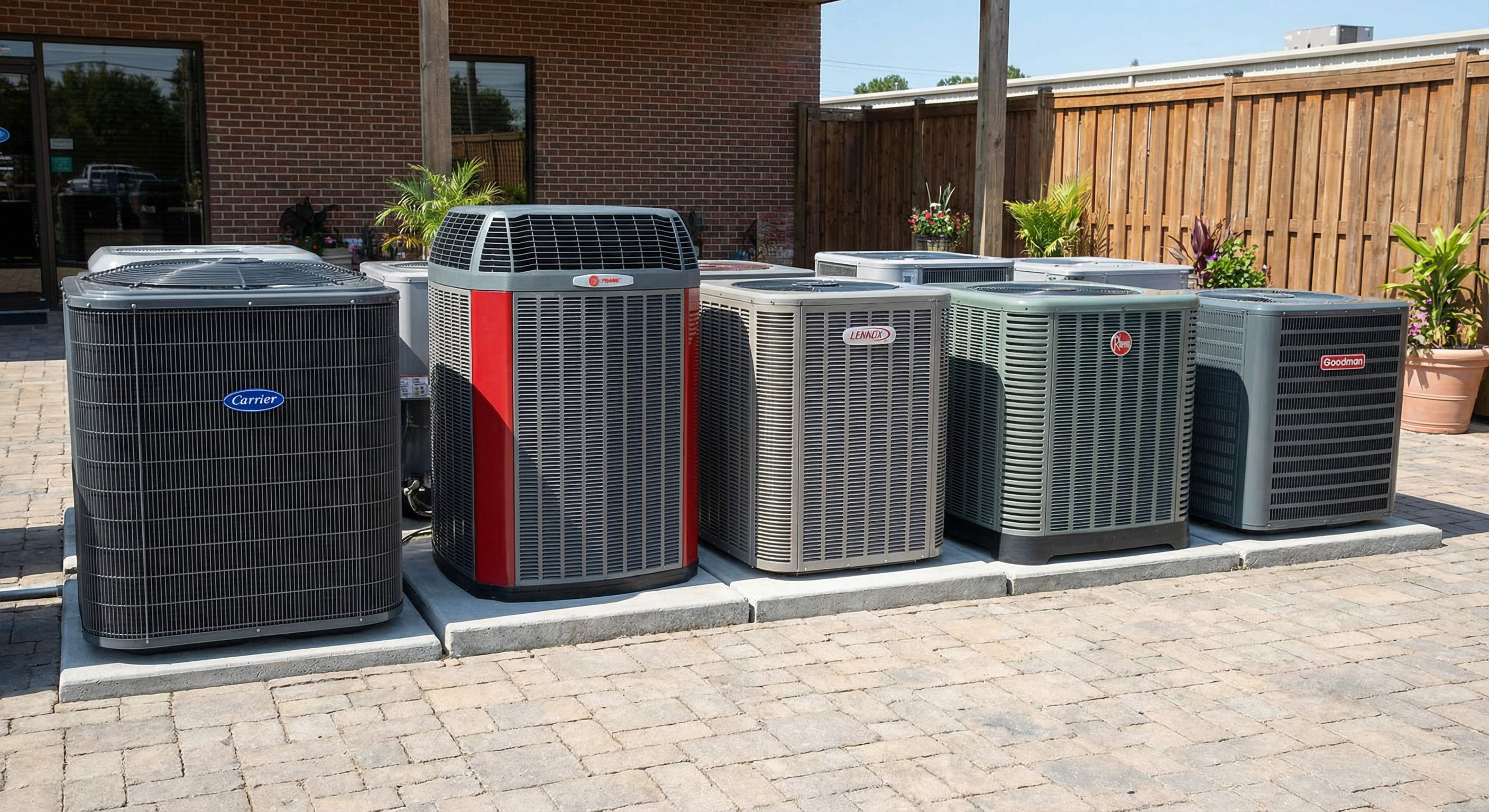
Top AC brands tested at Denver altitude
Premium brands offer better warranties and efficiency
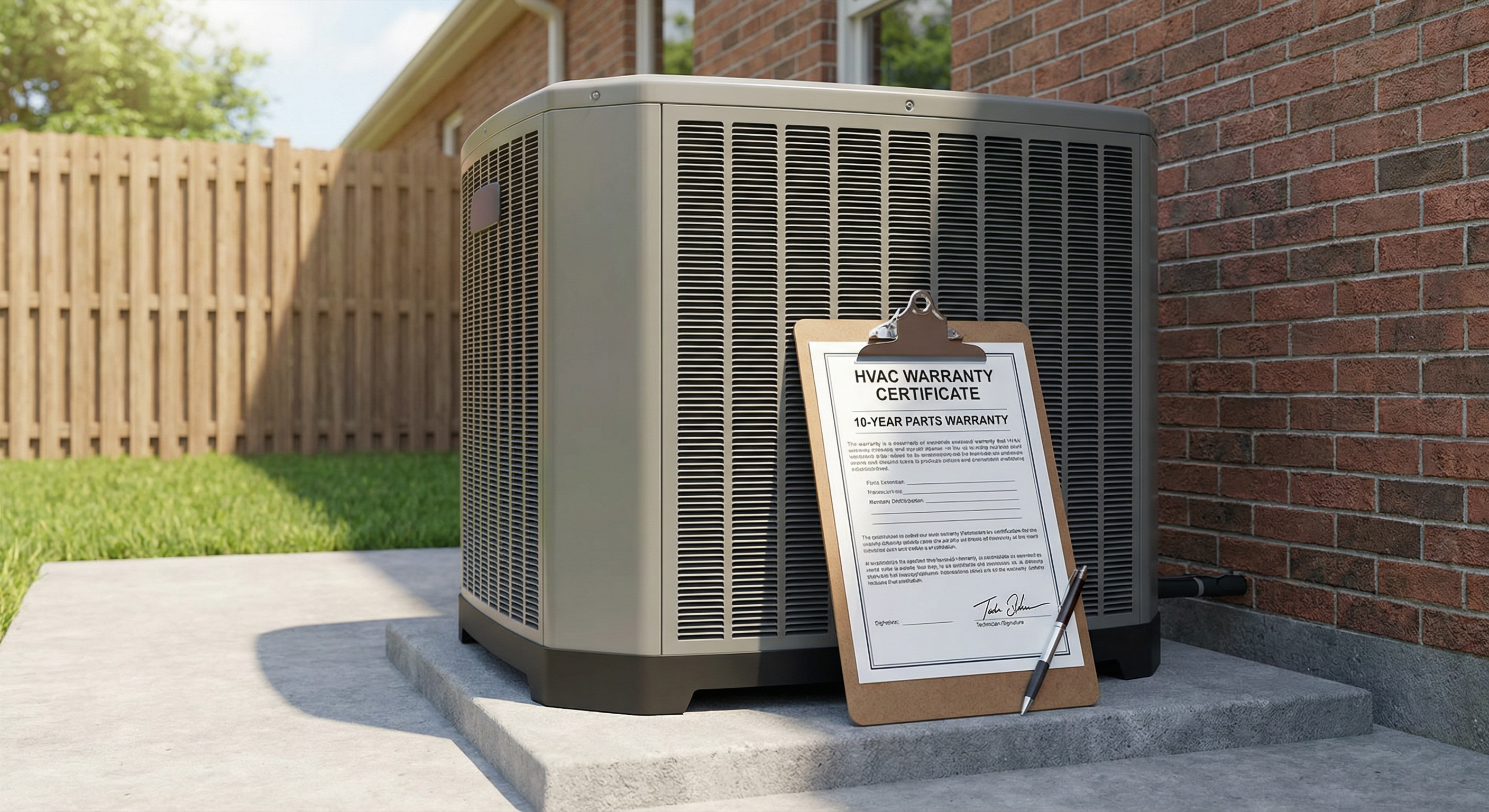
Warranty coverage varies by brand and installer
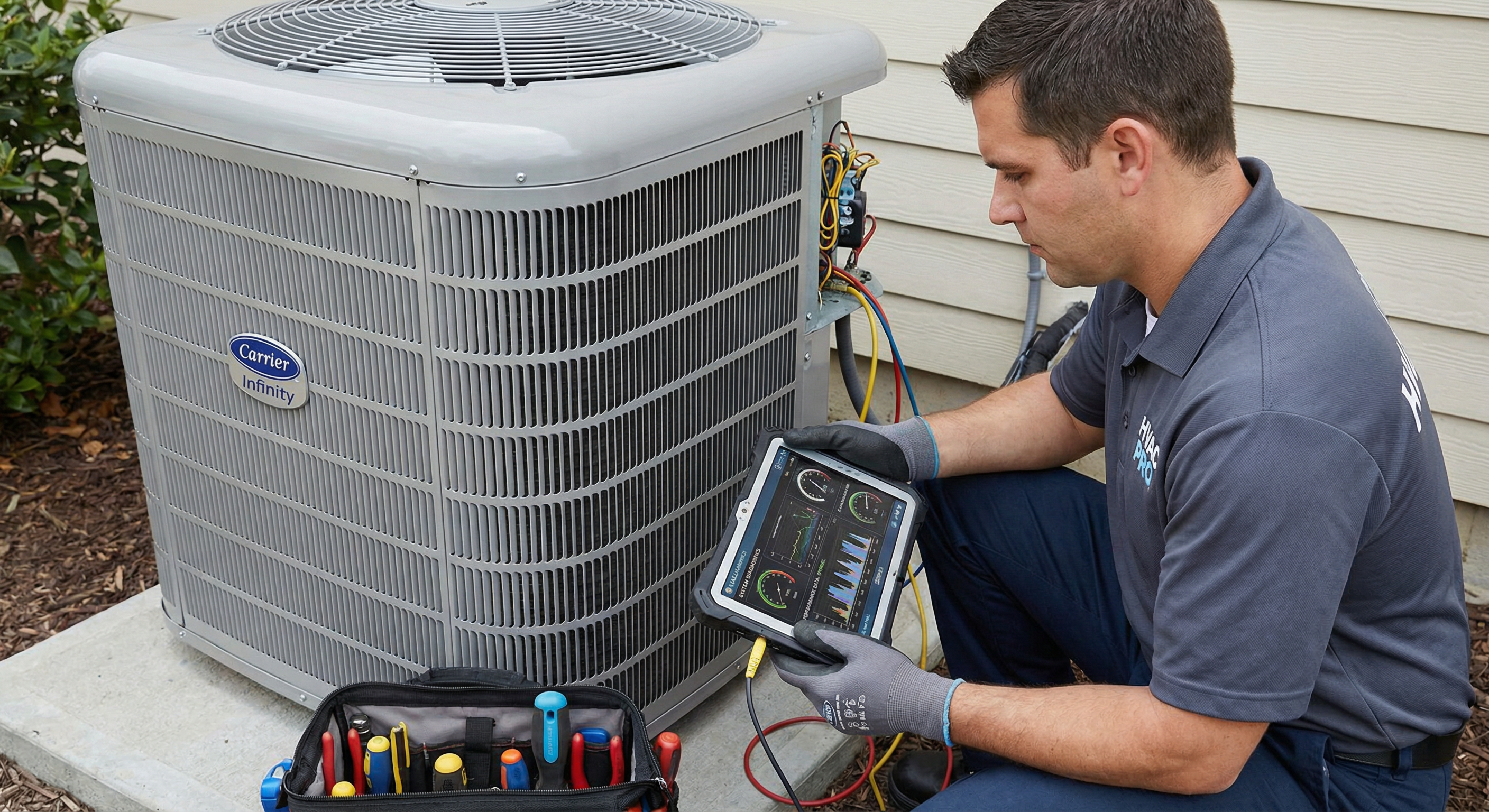
Smart diagnostics help catch problems early
Experience: 20+ years serving Denver metro | 400+ brand comparisons at altitude
Last Updated: February 27, 2026 | Reading Time: 9 minutes
Service Area: Northglenn, Thornton, Westminster, Broomfield, Brighton, Arvada, CO
Why “Best Brand” Is the Wrong Question
After 20 years installing and servicing AC systems in Denver, here’s what I’ve learned: asking “what’s the best brand?” is like asking “what’s the best car?” The answer is: it depends on what you need.
A Porsche is “best” if you want performance. A Honda is “best” if you want reliability and low maintenance. Same goes for AC brands.
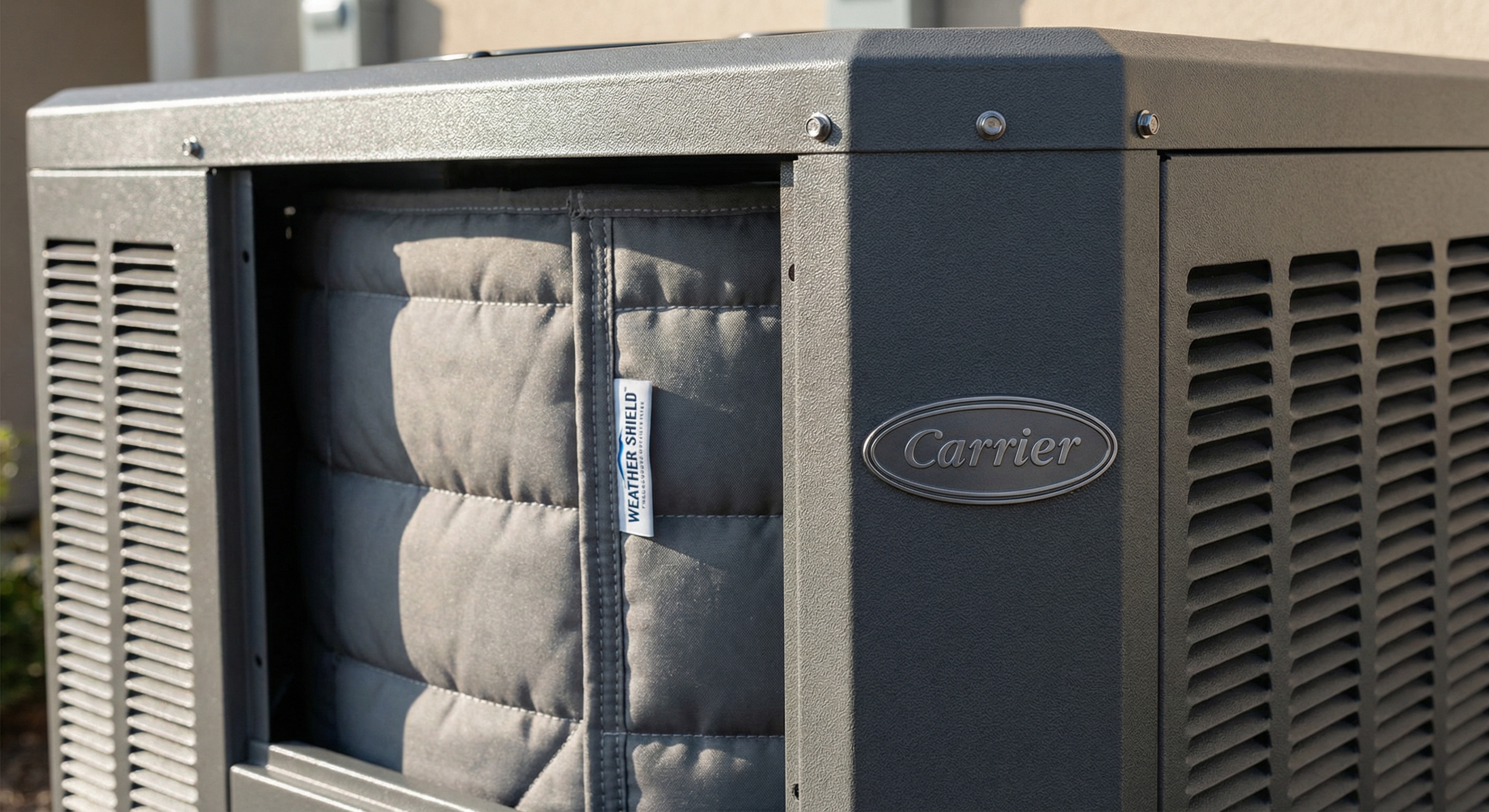
WeatherGuard top design prevents debris/water entry
“Built like a tank” durability – 20+ year old units still running
Excellent dealer network in Denver metro
Price range: $8,500-$14,000 installed Who they’re for: Homeowners staying 10+ years who want reliability
Best for Efficiency: Lennox
Why they lead: Highest SEER ratings (up to 26 SEER).
Lennox strengths:
Dave Lennox Signature Collection offers 23-26 SEER
SunSource solar-ready option
Precise Comfort technology (variable-speed)
iComfort smart thermostat included
The catch: Higher complexity = more things that can fail. Repair costs 20-30% higher than Carrier/Trane.
Price range: $9,000-$15,000+ installed Who they’re for: Energy-conscious homeowners, high cooling costs
Best Budget Brand: Rheem & Goodman
Rheem: Mid-tier pricing with solid reliability. 16-20 SEER options, 10-year warranty, good parts availability.
Goodman: Lowest entry price. Owned by Daikin (improved quality since acquisition). 14-18 SEER range.
Real talk: They’ll cool your home, but expect 12-15 year lifespan vs. 18-20 for premium brands. Noisier operation and less precise temperature control.
Uncomfortable truth: A mid-tier system installed perfectly outperforms a premium system installed poorly.
I’ve seen $15,000 Lennox systems fail in 5 years because installer didn’t adjust refrigerant for altitude, ducts were undersized, or electrical connections were loose.
Meanwhile, $8,000 Rheem systems installed 15 years ago run great because installer did everything right.
What to look for in installer:
Licensed and insured
Factory-certified for brand you’re buying
5+ years Denver metro experience (altitude knowledge)
Best for typical 1,500-2,000 sq ft Denver home:
Carrier Performance 16 SEER or Trane XR16
$9,000-$11,000 installed
Best for high-efficiency buyers:
Lennox SL25XPV or Carrier Infinity 24
$12,000-$14,000 installed
Best for budget-conscious:
Rheem Classic Plus 16 SEER
$7,000-$9,000 installed
Best for ductless needs:
Mitsubishi M-Series or P-Series
$10,000-$15,000 installed
What Our Customers Say
10-year parts warranty – look for this in top brands
“Wendy F. did a great job installing my high efficiency furnace and central air. Easy to work with.”
— Wendy F., Denver Metro
Google Review | 2023 | Click to see all 67 reviews
FAQ: AC Brand Questions
Smart diagnostics on premium Lennox/Carrier systems
How long do AC systems typically last in Denver?
Premium brands (Carrier, Trane, Lennox): 18-22 years with maintenance. Mid-tier (Rheem, American Standard): 15-18 years. Budget brands (Goodman, York): 12-15 years. Denver’s altitude reduces lifespan by 10-15% vs. mild climates.
Does brand really matter, or is installation more important?
Both matter, but installation is slightly more important (60/40 split). A premium brand with bad installation will fail early. A mid-tier brand with excellent installation can outlast it.
Should I buy the highest SEER rating available?
Not necessarily. Diminishing returns after 18-20 SEER. Going from 14 to 18 SEER saves $400-$600/year. Going from 20 to 24 SEER saves additional $150-$250/year but costs $3,000-$5,000 more upfront.
Can I mix brands (outdoor unit + indoor coil)?
Technically possible, but strongly discouraged. You’ll void both warranties, efficiency drops 15-20%, reliability suffers. Always use matched systems from same manufacturer.
Conclusion
The “best” AC brand depends on your priorities. Carrier and Trane offer best overall reliability and support. Lennox leads in efficiency. Mitsubishi excels at cold-climate performance. Rheem and Goodman provide budget-friendly options.
In Denver, prioritize brands with proven altitude performance and strong local dealer networks. At Blue Collar Heating & Air, we’re factory-certified for Carrier, Trane, Lennox, and Mitsubishi.
Ready to discuss which brand fits your needs? Call (303) 351-1667 for a free consultation. We’ll assess your home, explain your options, and provide transparent pricing – no sales pressure, ever.
What Temperature Should I Set My Thermostat to for AC in Summer?
Quick answer: For most Denver-area homes, 74–78°F while you are home and 80–85°F while away is a practical balance of comfort, humidity removal (when the coil runs long enough), and energy use. There is no single “perfect” number—your home’s insulation, solar gain, and system sizing matter—but aggressive “icebox” setpoints strain equipment and often do not feel better in our dry climate.
Comfort is more than the number on the wall
Dry air at altitude makes evaporative cooling from your skin work well—so a 78°F house here often feels like a 72°F house at the beach. That is why local setpoints run a few degrees higher than national averages without complaints.
What actually drives comfort:
Runtime — Very short cycles may cool air quickly but handle latent load (humidity) poorly when moisture is present (monsoon weeks, cooking, lots of plants).
Airflow balance — Hot rooms are often duct or solar issues, not thermostat magic.
Equipment health — Dirty coils or weak airflow force you to crank the stat down to feel okay.
Sensible summer programs
Home and awake: Try 76°F for a week. If you feel fine, you save money. If not, nudge 1° at a time.
Away 8+ hours:+4 to +8°F setback saves meaningful energy; modern equipment recovers in reasonable time if the system is sized correctly.
Sleep: Many families go +2 to +4°F overnight with ceiling fans on low (fans cool people, not rooms—turn them off when you leave the room).
Extreme heat days: If the system is right-sized, it may run near continuously during late-afternoon peaks. That can be normal. If it never reaches setpoint, you may have a maintenance or sizing issue—not a thermostat issue.
What not to do
Do not set the stat to 60°F hoping to “cool faster”—AC delivers cooling at roughly its designed rate; super-low setpoints increase wear and can contribute to coil icing when combined with other problems.
Do not close too many registers trying to “force” one room—backpressure can harm ducts and blower.
Smart thermostats
Geofencing and schedules help if you actually maintain them. If your schedule is chaotic, a simple consistent program often outperforms a smart stat that fights you.
FAQ
What is the “best” AC temperature for sleeping?
Whatever lets you sleep—often 72–76°F locally; add bedding instead of overcooling the whole house.
Does every degree matter?
Roughly each 1°F upward in summer setpoint saves a few percent on cooling energy (your mileage varies with equipment and home).
Should I turn the AC off when I am gone all day?
Large setbacks yes; full off in a heat wave can mean hours to recover and may stress some systems—moderate setback is usually better.
Why does my AC struggle at 95°F outside?
Design conditions, dirty condenser, refrigerant issues, or undersizing—we can measure performance and tell you which it is.
Blue Collar Heating & Air helps Denver metro homeowners tune comfort and efficiency. Call (303) 351-1667.
Same-day service available in Northglenn, Thornton, Westminster, and surrounding areas.
When to Replace Your AC Unit? (Denver HVAC Expert Explains)
Quick Answer: Replace your AC if it’s 12+ years old, requires frequent repairs ($500+ in 2 years), has efficiency under 13 SEER, or fails during peak summer. Denver’s 5,280-foot altitude causes AC units to work 15% harder than sea level, shortening lifespan to 10-14 years (vs. 15-20 at sea level). Use the $5,000 Rule: Age × Repair Cost > $5,000 = Replace. Blue Collar Heating & Air provides free replacement estimates across Northglenn, Thornton, and Westminster – we’ll assess your current system, explain your options, and help you decide repair vs. replace.
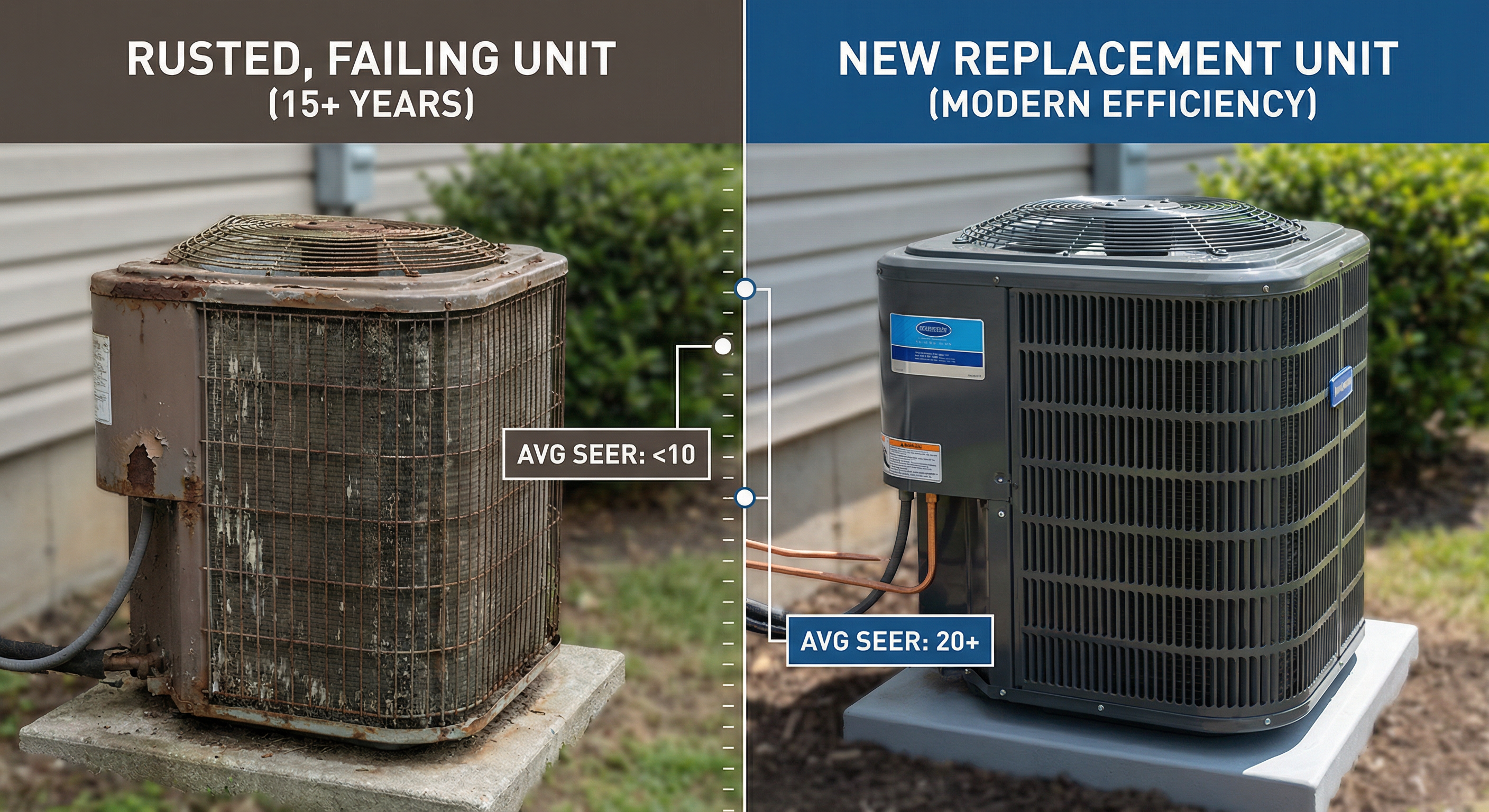
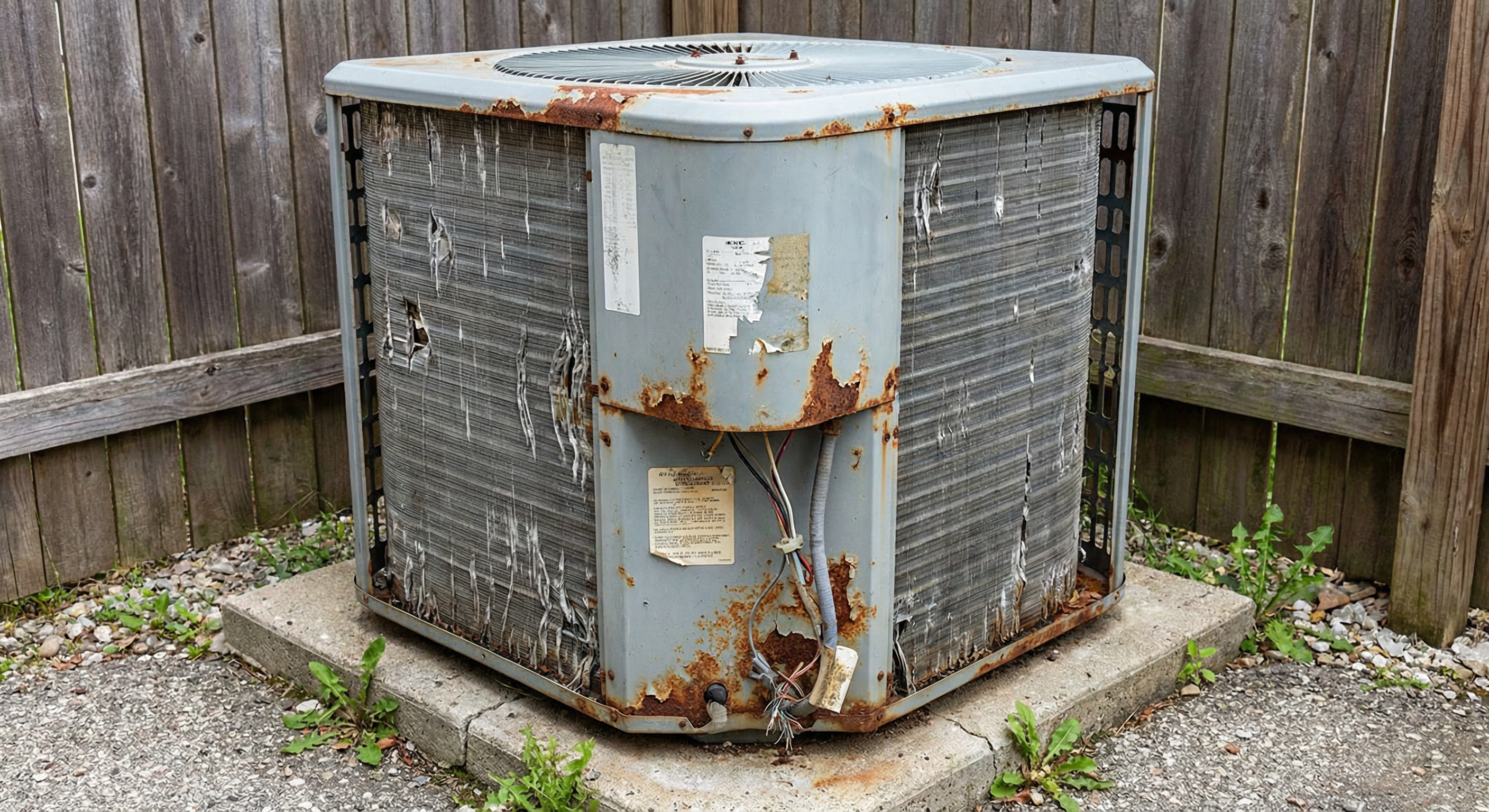
AC units over 12-15 years show visible deterioration
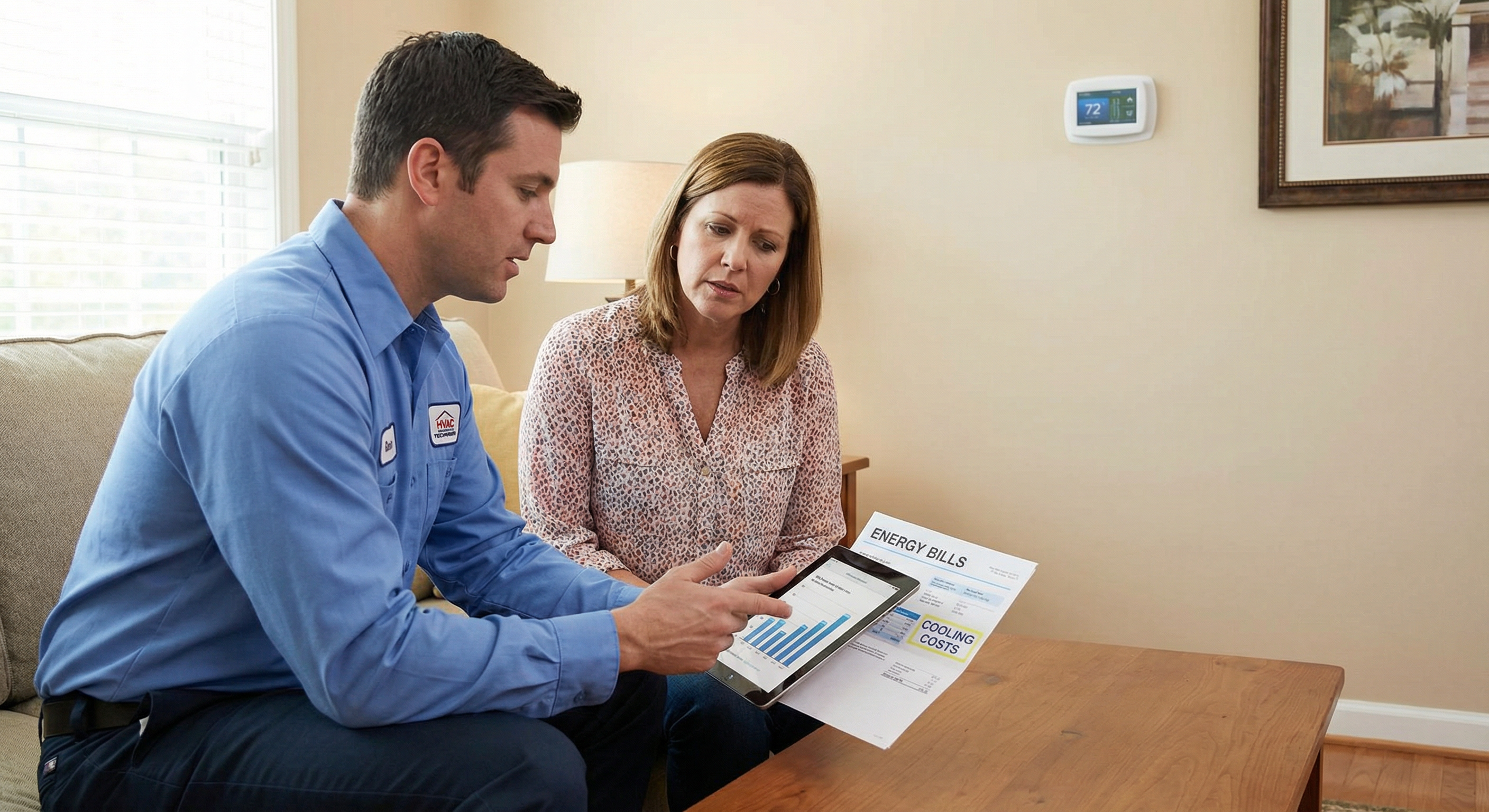
Rising energy bills indicate declining AC efficiency
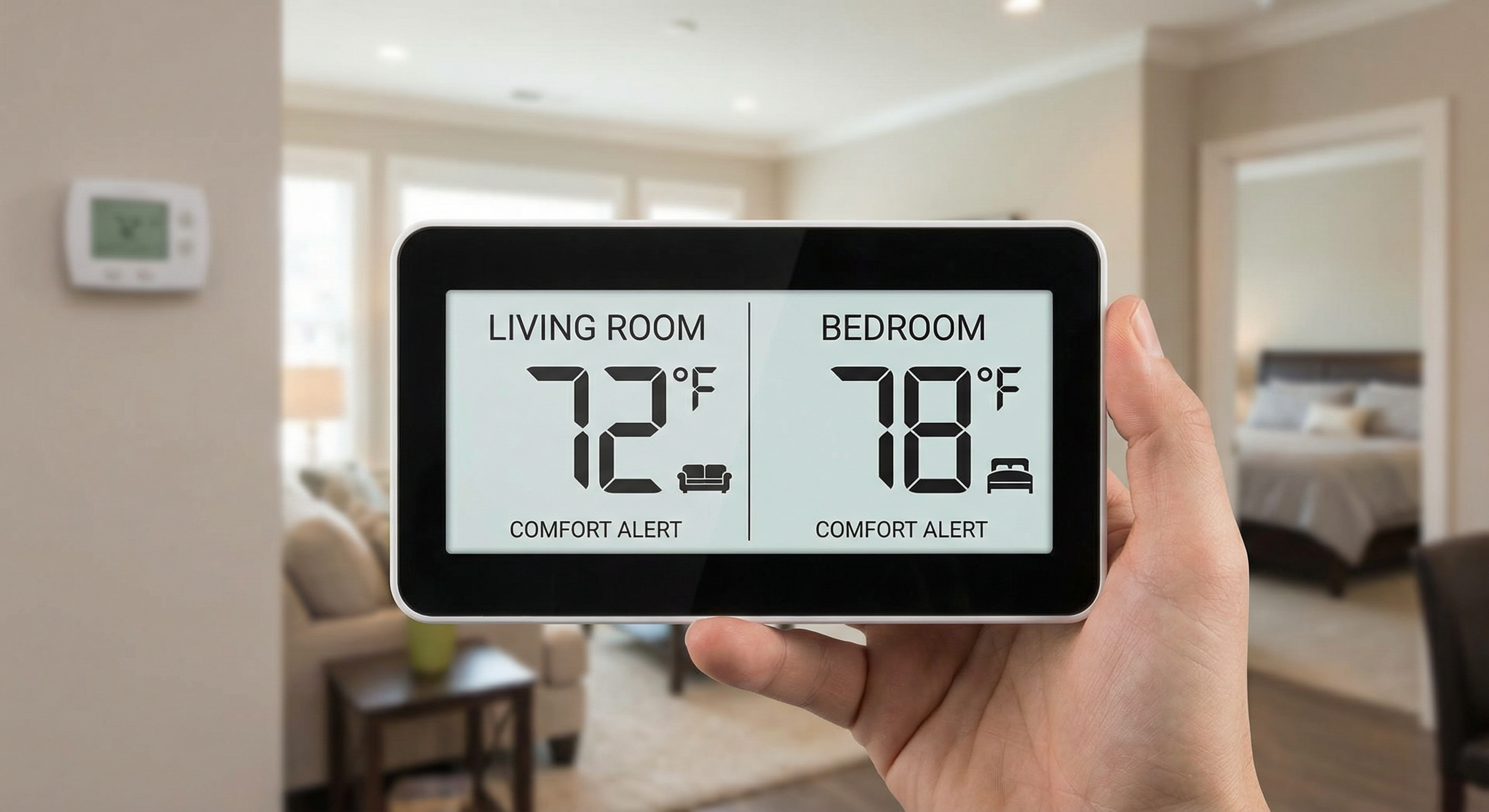
Uneven cooling is a sign of AC capacity loss
R-22 phase-out makes repairs expensive after 2020
Compare your summer electricity bills year-over-year. If cooling costs increased 20%+ (and usage didn’t change), your AC is losing efficiency.
Example: 2023 summer avg: $180/month. 2025 summer avg: $240/month. That’s a 33% increase – likely an aging AC compressor or refrigerant leak.
4. Uneven Cooling
Master bedroom 68°F, living room 76°F? This indicates undersized equipment, ductwork issues, or failing components. If your AC is 10+ years old, replacement often makes more sense than duct repairs.
5. Uses R-22 Refrigerant (Phased Out)
R-22 (Freon) was banned for new production in 2020. If your AC uses R-22 and has a refrigerant leak, recharge costs are $100-$150/lb (vs. $50/lb for R-410A). A typical recharge is 3-5 lbs = $300-$750.
If your AC is 10+ years old and making these noises, replacement beats repair.
7. AC Can’t Keep Up on 90°F+ Days
Denver summers hit 95°F. If your AC runs constantly but can’t cool below 75°F indoors, it’s either undersized, failing, or both. Replacing with properly sized equipment solves this permanently.
AC Lifespan at Denver’s Altitude
15+ year old AC – time to replace
Sea-level AC lifespan: 15-20 years Denver altitude (5,280 ft): 10-14 years
Why altitude shortens AC lifespan:
Thinner air = less heat dissipation from condenser coils
Higher refrigerant pressures stress compressor
Longer cooling season (Denver gets 90°F+ days June-September)
Maintenance extends lifespan: Annual tune-ups add 3-5 years. Skip maintenance? Expect 8-10 years max.
Repair vs. Replace Cost Analysis
Common Repair Costs
Capacitor: $250-$400
Contactor: $200-$350
Refrigerant recharge (R-410A): $400-$600
Blower motor: $400-$800
Compressor: $1,500-$2,500
New AC Installation Costs (Denver)
14 SEER: $4,500-$6,500
16 SEER: $5,500-$7,500
18+ SEER: $6,500-$8,500
Decision Matrix
Repair if:
AC under 8 years old
Repair under $500
Only 1-2 repairs total lifetime
Efficiency still above 13 SEER
Replace if:
AC 12+ years old
Repair over $1,000
3+ repairs in 2 years
Uses R-22 refrigerant
Efficiency under 13 SEER
Modern Efficiency Standards
Energy bills up 20%+ year-over-year? Replace your AC
Payback period: If upgrading from 10 SEER to 16 SEER costs $6,000 installed, savings of $420/year = 14-year payback. But you also get reliability, warranty, and modern features (variable-speed, smart thermostats).
What Our Customers Say
Inconsistent cooling = undersized or failing AC
“Needed some warranty work done on a Mitsubishi AC I purchased through Blue Collar. He offered to come out and take care of it. Kept me updated with his Arrive time and was able to finish the work that very day. Highly recommend.”
— Tom M., Denver Metro
Google Review | 2025 | Click to see all 67 reviews
FAQ: When to Replace AC Unit
R-22 phased out – replacement requires new system
What is the $5,000 Rule for AC replacement?
Multiply your AC’s age by the repair cost. If the result exceeds $5,000, replace instead of repair. Example: 12-year-old AC, $500 repair = 12 × $500 = $6,000 → Replace.
Should I wait until my AC completely fails?
No. Replacing during spring/fall (off-peak) saves $500-$1,000 on installation, gets you better availability, and avoids emergency pricing. Plus, you can research and compare quotes instead of panic-buying.
Is it worth upgrading from 13 SEER to 16 SEER?
Yes, if you’re staying 10+ years. A 16 SEER AC saves $300-$500/year in Denver vs. 13 SEER. Premium cost is $1,000-$1,500, so payback is 3-5 years. After that, it’s pure savings.
Can I just replace the outdoor unit (condenser)?
Technically yes, but not recommended. Mixing old indoor coil with new outdoor condenser voids warranty, reduces efficiency 15-25%, and causes premature failure. Replace both for matched performance.
Conclusion
Replace your AC if it’s 12+ years old, requires frequent repairs ($500+ in 2 years), uses R-22 refrigerant, or has efficiency under 13 SEER. Denver’s altitude shortens AC lifespan to 10-14 years (vs. 15-20 at sea level) due to harder working conditions.
Use the $5,000 Rule: Age × Repair Cost. If the result exceeds $5,000, replacement makes financial sense.
At Blue Collar Heating & Air, we provide free replacement estimates, transparent pricing, and help you navigate the repair vs. replace decision with no sales pressure.
Need help deciding? Call (303) 351-1667 for a free assessment. We’ll inspect your current AC, explain your options, and provide exact pricing for both repair and replacement – same day or next day service available.
Family-Owned, Community-Trusted
Verified On
Not ready to call? We'll reach out to you.
Fill out the form and we'll get back to you as soon as possible during business hours. Free quote, no obligation.