In This Article
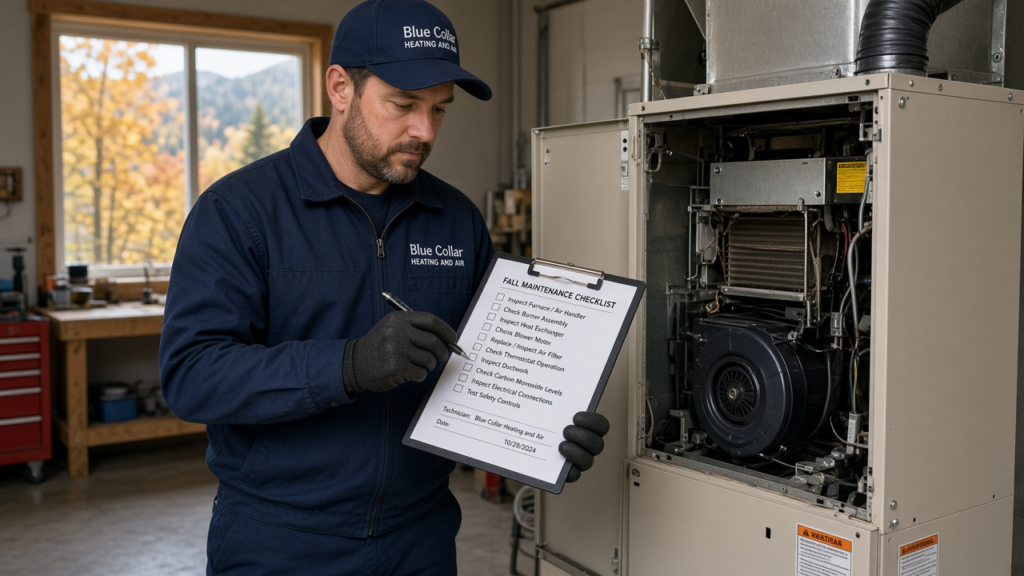
Every October, our phones start ringing with the same problem: a furnace that hasn’t run since March suddenly won’t start on the first cold morning of the season. Nine times out of ten, a 20-minute fall checkup would have caught it. After 20+ years servicing homes across the Denver metro, I’ve put together the exact checklist we use before every heating season — the same one our techs run through on fall tune-up calls.
⚡ Quick Answer: Fall HVAC Checklist
Why Fall Prep Matters More in Denver
Denver’s shoulder season is short and unpredictable. We can have 80°F afternoons in late September and a hard freeze by the second week of October. That compressed timeline means homeowners often don’t realize their furnace has a problem until the first genuinely cold night — right when every other HVAC company in town is also slammed with no-heat calls.
There’s also an altitude-specific reason fall prep matters here. At 5,280 feet, furnaces work with roughly 17% less oxygen-dense air than at sea level, which means ignition systems, gas valves, and flame sensors are already operating closer to their tolerance limits. A furnace that would limp along fine at sea level with a slightly dirty flame sensor may fail outright in Denver. Catching that in September, when it’s a quick cleaning, beats discovering it in November as an emergency no-heat call.
The 10-Item Fall HVAC Checklist
1. Replace Your Air Filter
Start here — it’s the single highest-impact, lowest-cost thing you can do. A clogged filter restricts airflow across the furnace’s heat exchanger, which can trigger high-limit shutoffs and reduce efficiency by 15% or more. In Denver’s dry, dusty climate, change your filter every 60-90 days, not the 90-day default most filters recommend.
2. Test Your Thermostat Before You Need It
Switch your thermostat from COOL to HEAT and let it run for 10-15 minutes while the weather is still mild. This is the single best way to catch a dead thermostat battery, a wiring issue, or a stuck relay before you actually need heat. Doing this on a 70°F September afternoon is a lot less stressful than discovering it on a 25°F morning.
3. Clear Debris From the Outdoor AC Unit
Before you stop thinking about your AC for the season, give the outdoor condenser one last cleaning. Clear leaves, cottonwood debris, and grass clippings, and trim back any vegetation to at least 2 feet clearance. Debris left over winter attracts rodents looking for shelter, which can chew through wiring.
4. Check and Vacuum Supply and Return Vents
Walk through your home and make sure no vents are blocked by furniture, rugs, or curtains. Vacuum the vent covers themselves — dust buildup here restricts airflow and is one of the most overlooked contributors to uneven heating.
5. Inspect Exposed Ductwork
In basements, attics, and crawl spaces, look at any exposed ductwork for disconnected joints, crushed sections, or torn insulation. Even small gaps can leak 20-30% of your heated air into unconditioned spaces, directly inflating your gas bill all winter.
6. Schedule a Professional Furnace Tune-Up
This is the one item on this list that genuinely needs a licensed technician. A proper tune-up includes a full combustion analysis, flame sensor cleaning, gas pressure check, igniter inspection, heat exchanger crack check, and a carbon monoxide safety test. This is also the step that catches an aging component before it fails in January.
7. Test Your Carbon Monoxide Detectors
If you don’t already have CO detectors near sleeping areas and on every level of your home, fall is the time to install them — before your furnace starts running daily. Test existing units and replace batteries even if they’re not due yet.
8. Check Your Humidifier (If You Have One)
Denver’s winter air is brutally dry — often under 20% relative humidity indoors once the furnace is running regularly. If you have a whole-home humidifier, replace the water panel/pad before the season starts. If you don’t have one, fall is worth considering it; dry winter air contributes to static shock, cracked woodwork, and dry sinuses.
9. Reverse Ceiling Fans to Clockwise
Most ceiling fans have a switch that reverses the blade direction. In winter, running fans clockwise at low speed pushes warm air (which rises and collects at the ceiling) back down into the living space — a free, zero-cost way to improve comfort and reduce how hard your furnace has to work.
10. Locate Your Furnace Shutoff and Breaker
Know where your furnace’s gas shutoff valve and electrical breaker are before you need them in an emergency. If you ever smell gas or suspect a problem, being able to shut the system down immediately matters.
What You Can DIY vs. What Needs a Professional
When to Start: Timing It Right in Denver
The ideal window is early-to-mid September, before the rush. By early October, HVAC companies across the metro are booked solid with tune-ups and emergency no-heat calls, and scheduling flexibility drops fast. Booking in September also means if your tune-up reveals a part that needs ordering, there’s still time to get it installed before you actually need the furnace running overnight.
Real Job: Westminster, October 2025
A homeowner in Westminster called us on the coldest morning of the season with no heat. During the inspection, we found a flame sensor so corroded it was barely making contact — a 15-minute, $95 fix once we were there, but it meant one freezing night and a family working around space heaters. They told us they’d been meaning to schedule a fall tune-up “sometime” but never got around to it. We’ve since set them up on an annual fall reminder.