In This Article
Standing pilot lights are becoming less common as older furnaces get replaced with modern electronic ignition systems, but we still service plenty of them across the Denver metro, especially in older homes. A pilot light that won’t stay lit is one of the most common complaints on these systems, and the cause is almost always one of a few specific, well-understood issues.
⚡ Quick Answer: Pilot Light Keeps Going Out
How a Standing Pilot Light System Works
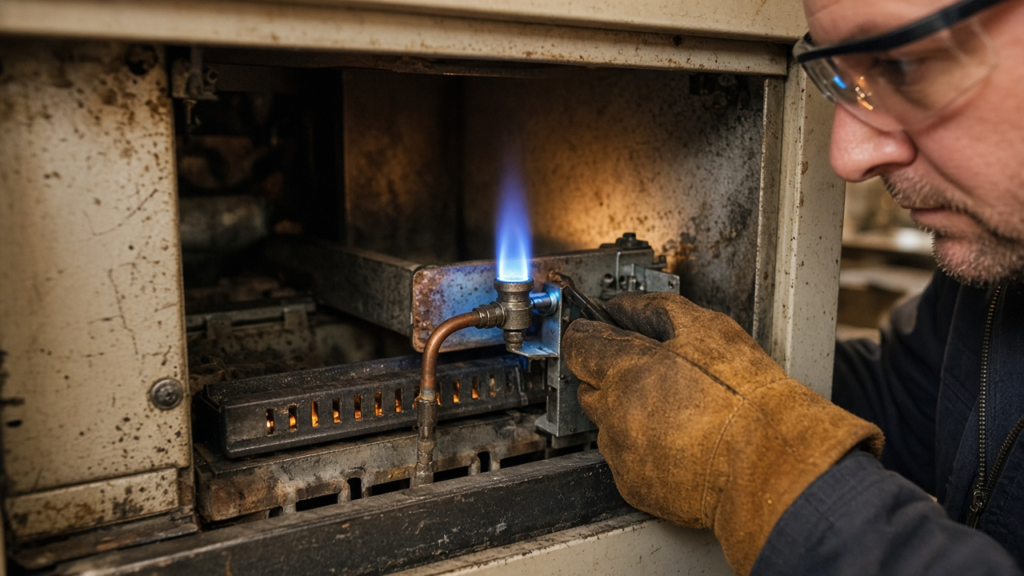
A standing pilot light is a small, continuously burning flame that stays lit at all times (not just during a heating cycle) and ignites the main burners when the thermostat calls for heat. A component called a thermocouple sits in the pilot flame and generates a tiny electrical current as long as it senses heat from the flame — this current keeps the gas valve open to both the pilot and (when called for) the main burners. If the thermocouple stops sensing heat (because the pilot went out, or the thermocouple itself has failed), it shuts the gas valve as a safety measure, which is exactly why the pilot won’t relight and stay lit on its own.
Most Common Causes
1. Worn or Failing Thermocouple
This is, by far, the most common cause of a pilot light that relights fine but won’t stay lit. Thermocouples wear out gradually over years of use — the metal degrades and eventually can’t generate a strong enough signal to keep the gas valve open, even with a seemingly normal-looking flame. If you relight the pilot and it goes out again within a minute or two of releasing the gas control knob, this is the most likely cause.
2. Draft Blowing Out the Flame
Pilot lights are genuinely fragile, and a draft from a nearby window, a basement door, or even strong wind affecting the furnace’s air intake/exhaust path can blow the small flame out. If the pilot stays lit fine except during windy conditions or when a specific door/window is open, this points to a draft issue rather than a component failure.
3. Dirty Pilot Orifice or Tube
Dust and debris can partially clog the small pilot gas orifice over time, causing a weak, unstable flame that’s more easily extinguished and may not properly heat the thermocouple even when lit. This often shows up as a pilot flame that looks smaller, more yellow (rather than blue), or flickers unusually.
4. Failing Gas Valve
Less commonly, the gas control valve itself can fail in a way that affects pilot stability, though this is a less frequent cause than a worn thermocouple and typically requires professional diagnosis to confirm versus rule out the more common causes first.
How to Relight a Pilot Light Safely
Most furnaces have relighting instructions printed on a label inside the furnace access panel. The general process:
- Turn the gas control knob to “OFF” and wait at least 5 minutes for any residual gas to clear
- Turn the gas control knob to “PILOT”
- Press and hold the control knob while lighting the pilot (via a built-in igniter button or a long lighter, per your furnace’s instructions)
- Continue holding the knob for 30-60 seconds after the flame is lit, to allow the thermocouple to heat up sufficiently
- Release the knob and confirm the pilot stays lit on its own
- Turn the gas control knob to “ON” and set your thermostat to call for heat
When It Makes Sense to Upgrade
If you find yourself relighting the pilot repeatedly (more than once every few weeks) and a thermocouple replacement doesn’t resolve it, or your furnace is old enough that standing pilot systems are becoming a sign of its overall age, it may be worth discussing whether continued repair makes sense versus planning for eventual replacement with a modern electronic ignition furnace — which eliminates standing pilot issues entirely and is also meaningfully more efficient, since a standing pilot burns gas continuously, 24/7, even when no heat is called for.