
Quick answer: Yes—ductless mini splits are often the best technical and comfort fit for single rooms that are hard to serve from central ductwork (additions, upstairs bonus rooms, home offices) and for detached or attached garages if the space is insulated and air-sealed enough to hold cooling. A bare metal garage in full Colorado sun will bleed BTUs; you may still gain comfort, but expect higher operating cost and realistic setpoints unless you improve the envelope.
Why mini splits work well for one zone
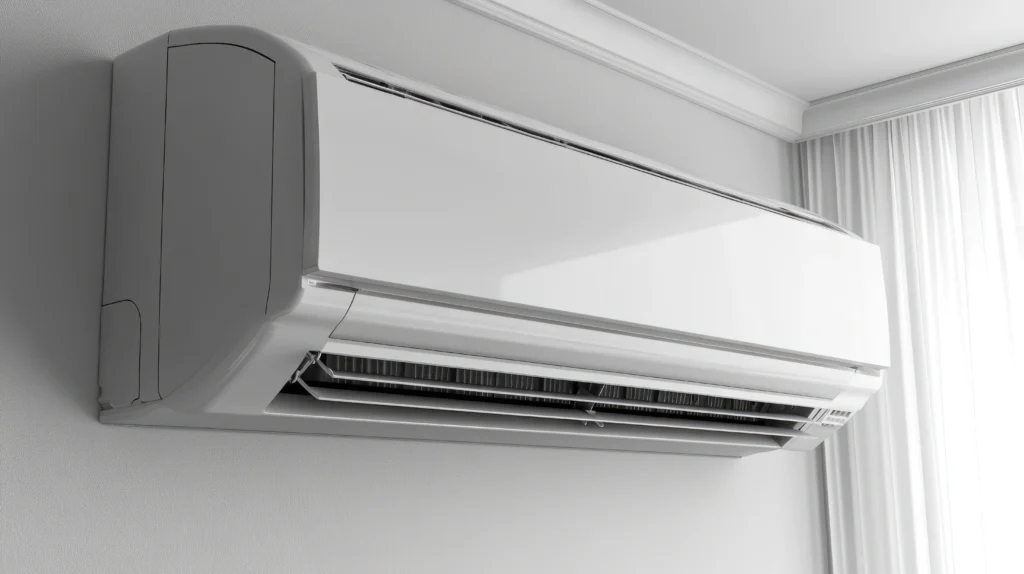
A mini split pairs an outdoor condenser with an indoor head (wall, ceiling cassette, or slim duct). You get:
- No new duct runs through finished spaces
- Variable-speed comfort and quiet operation on many models
- Zoned control—independent of the rest of the house
For a single uncomfortable bedroom while the central system is fine elsewhere, a one-to-one mini split is a common fix.
Garages: plan the envelope first
Denver-area garages face intense solar gain on west/south exposures. Before we size equipment, we ask:
- Insulation in walls and garage door?
- Air leakage (gaps at slab, panel joints, doors)?
- How you use the space—occasional workouts vs full-time shop with dust control needs?
Cooling an uninsulated garage is like air conditioning the driveway—you can install equipment, but performance per dollar improves sharply with insulation, weatherstripping, and sometimes radiant barrier on the door.
Sizing and placement
Oversizing causes short cycling and poor dehumidification during humid weeks; undersizing never reaches setpoint on peak days. We size from heat load, not guesses.
Line set length, sun exposure, and indoor head location (avoid blowing directly on a workbench full of papers) all go into design.
Codes, permits, and best practices
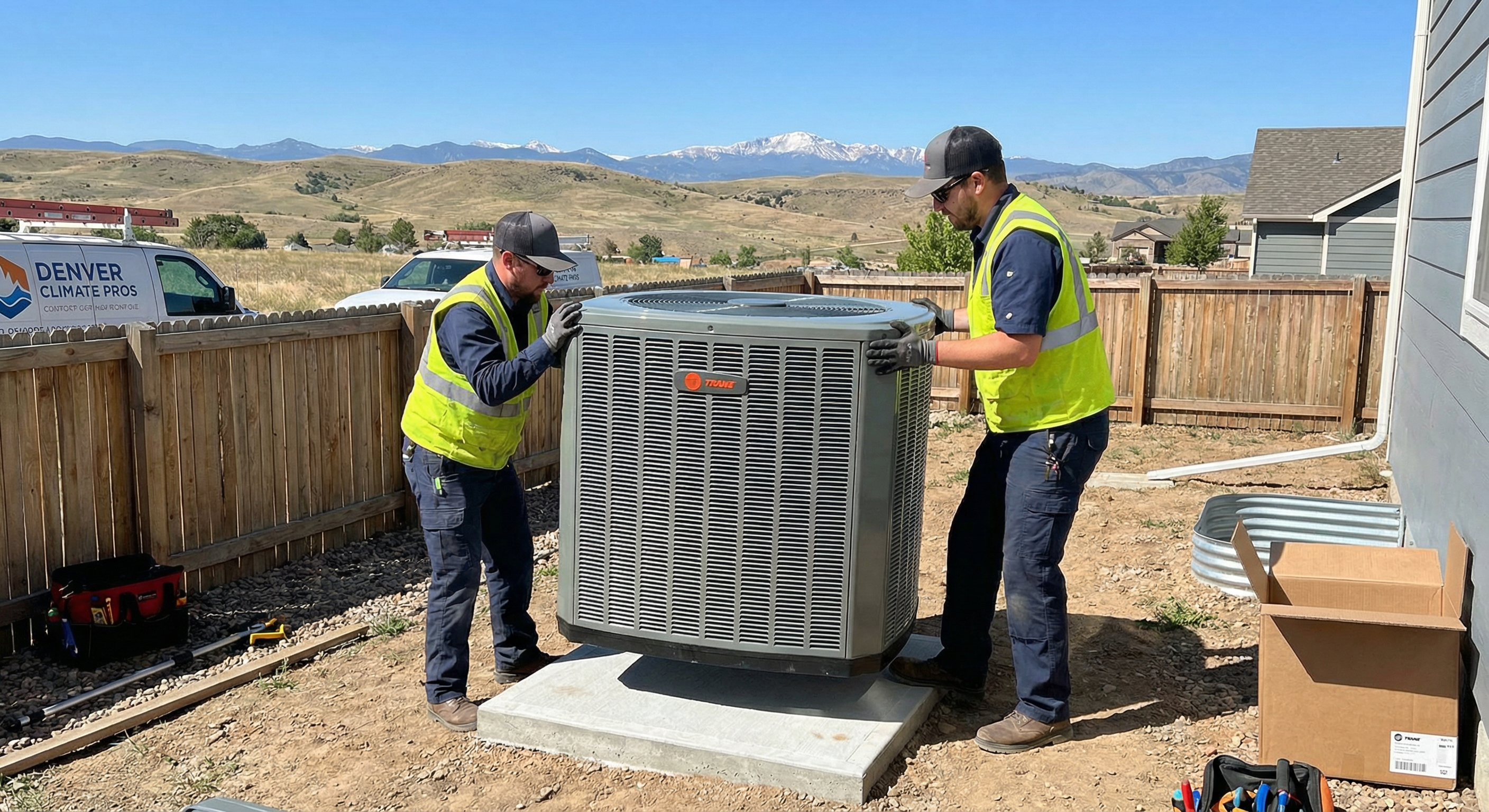
Electrical disconnect, condensate management for high-wall heads, and local amendments matter. We install to manufacturer spec and inspector expectations—important for warranty and resale.
Ready to Fix Your HVAC Issue?
Call Blue Collar Heating & Air for expert service in the Denver Metro area. Same-day appointments available.
FAQ
Can one outdoor unit feed the garage and a room?
Yes with multi-zone condensers when loads are compatible—design matters.
Will a portable AC work instead?
For tiny spaces, maybe; for real comfort and noise control, mini splits usually win.
Do mini splits heat too?
Many are heat pumps—excellent for shoulder season garage use; extreme cold performance depends on model.
What about dust in a wood shop?
Filtration and air quality strategy—sometimes a ducted slim head or dedicated filtration helps.
Blue Collar Heating & Air designs and installs mini splits for Denver metro homeowners. (303) 351-1667