
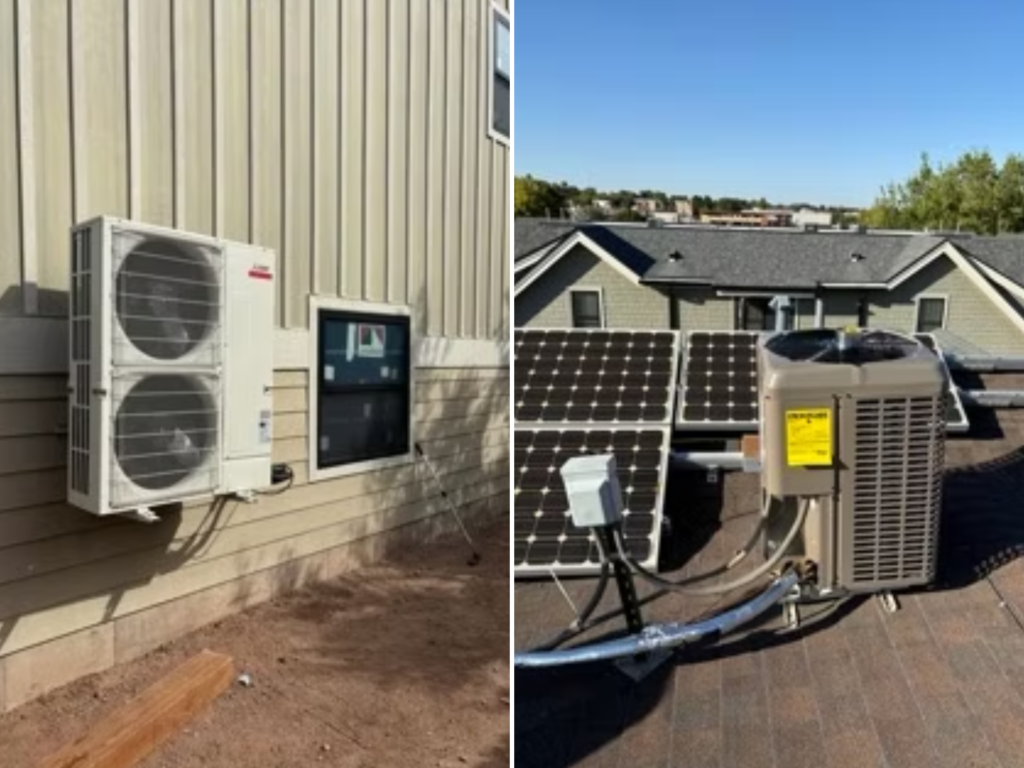
Quick answer: Choose central air when you already have good ductwork and want whole-home cooling from one system. Choose mini splits when ducts are missing or terrible, you need true zoning, or you are solving one or two rooms cost-effectively. Hybrid approaches—keeping central air and adding a mini split for a problem zone—are common in Denver metro homes with hot second floors or new additions.
Central air (ducted)
Best for
- Existing forced-air homes with adequate supply/return design
- Homeowners who want one thermostat and even whole-house behavior (when ducts cooperate)
Tradeoffs
- Duct leakage in hot attics wastes money—we see it constantly in older Colorado homes.
- Single-zone central cannot fix solar imbalance between floors without zoning, duct fixes, or supplemental equipment.
Mini splits (ductless / slim duct)
Best for
- Additions where extending ducts is destructive or expensive
- Rooms that never keep up despite a “healthy” central system
- Net-zero or tight homes wanting very efficient variable-capacity cooling (and often heating)
Tradeoffs
- Indoor aesthetics—wall heads are visible (ceiling cassettes cost more).
- Multiple heads = multiple filters to maintain.
- Upfront cost can exceed central-only if you duplicate capacity for the whole house.
Denver climate angle
Our dry summers favor evaporative comfort at slightly higher thermostat setpoints, but second-story rooms still bake from roof load. Mini splits decouple those rooms from downstairs duct limitations.
At altitude, any cooling system should be selected with local design conditions—not a rule-of-thumb from sea-level marketing charts.
Cost framework (non-binding)
New central replacement vs whole-home mini split is not a fair fight on price—compare scope (same comfort coverage?). Often the value play is repair/replace central for the majority of the home and target a mini split where ducts fail.
Ready to Fix Your HVAC Issue?
Call Blue Collar Heating & Air for expert service in the Denver Metro area. Same-day appointments available.
FAQ
Can I mix central and mini split?
Yes—very common for master suites and bonus rooms.
Are mini splits noisy?
Modern inverter units are typically quieter than window ACs; outdoor units should be placed with neighbor and bedroom window placement in mind.
Which is more efficient?
High-quality variable mini splits can be extremely efficient at part load; new central with matching coil and tight ducts also performs well. Bad ducts sink central efficiency.
What about resale?
Permitted, professional installs with clean line hide and service access usually add appeal; DIY line sets hurt.
Blue Collar Heating & Air helps Denver metro families choose between central, ductless, and hybrid comfort solutions. (303) 351-1667