
✓ Licensed & Insured ✓ 20+ Years Experience ✓ Same-Day Service ✓ Family Owned

How to Protect Your Outdoor AC Unit From Winter Weather

📖 Table of Contents ▾

In This Article

  1. Quick Answer
  2. What Your AC Is Already Built to Handle
  3. The Real Risks Worth Addressing
  4. Common Myths About Winterizing AC Units
  5. Snow Removal: Do’s and Don’ts
  6. FAQ

Written by Lance Fredrickson — ICC Certified HVAC Specialist | EPA 608 Universal

20+ years serving the Denver metro • Blue Collar Heating & Air, Northglenn CO

Every fall we get the same question: “Do I need to do something special to protect my AC unit from the snow?” The honest answer is that your outdoor condenser is engineered to sit outside year-round in all conditions — but a few genuine risks are worth addressing, and a few popular “protective” measures actually do more harm than good.

⚡ Quick Answer: Winter AC Protection

Snow on the unit — Generally not harmful, no need to constantly clear itLow risk
Ice dams from gutters — Can direct water/ice directly onto the unitReal risk
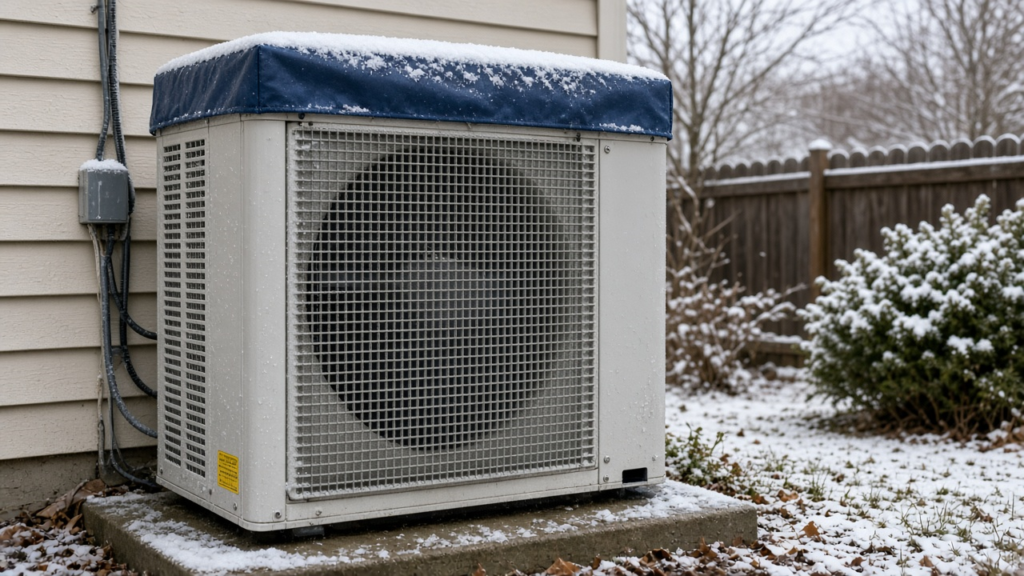
Full plastic wrapping — Traps moisture, promotes rust/rodentsAvoid
Top-only cover — Reasonable, protects from debris/heavy snowOptional, fine

What Your AC Unit Is Already Built to Handle

Outdoor AC condensers are manufactured and tested to operate in outdoor conditions across the full range of U.S. climates, including regions that see far more severe winters than Denver. The cabinet, coils, and internal components are weatherproofed by design. Snow sitting on top of the unit, cold temperatures, and routine freeze-thaw cycles are all within normal operating expectations — this is not a fragile piece of equipment that needs babying through winter.

The Real Risks Worth Actually Addressing

Ice Dams and Gutter Runoff

If your outdoor unit sits directly beneath a roofline or gutter, ice dams can direct a concentrated stream of melting ice and water directly onto or into the unit during freeze-thaw cycles — this is a genuine risk, unlike general snowfall. If this describes your unit’s location, consider a top cover specifically for this reason, or address the ice dam issue at the roofline itself.

Rodent Nesting

A warm, sheltered outdoor unit is an attractive nesting spot for mice, especially once temperatures drop. Keeping debris cleared from around and inside the unit’s base reduces this risk. Mice chewing through low-voltage control wiring is one of the more common spring “AC won’t turn on” calls we get, and it traces directly back to a unit that sat untouched and debris-filled all winter.

Snow Load From Shoveling/Plowing

The most common actual winter damage we see isn’t from natural snowfall — it’s from snow being shoveled, blown, or plowed and piled directly against or on top of the unit. A large compacted snow pile holds moisture against the cabinet for weeks and can physically stress the unit’s frame if heavy enough. Keep shoveled snow away from the unit when clearing your driveway or walkways.

Common Myths About Winterizing AC Units

Myth: You should fully wrap your AC unit in plastic for winter. This is one of the most persistent and counterproductive pieces of advice out there. Fully sealed covers trap moisture inside, which promotes internal rust and creates an ideal dry shelter for rodents. We see more winter damage from over-covering than from units left completely exposed.
Myth: You need to shut off the breaker to protect the unit. Many compressors rely on a small internal crankcase heater that needs continuous power through winter to keep refrigerant oil properly warmed. Cutting power can cause compressor damage on spring startup. Leave the breaker on unless specifically told otherwise.
Myth: You need to clear every snowfall immediately. Routine snow accumulation on an idle, unused AC unit isn’t harmful and doesn’t need to be cleared after every storm. Focus your effort on keeping large piles and ice dam runoff away rather than constant snow-brushing.

Snow Removal: What to Actually Do

  • Gently brush off heavy, wet accumulation if it’s piling several inches deep on top of the unit
  • Never use a shovel or hard tool directly against the coils or fins — use a soft brush
  • Keep driveway/walkway snow piles at least a few feet away from the unit
  • Check after major ice storms that ice dams aren’t directing water onto the unit
  • Clear the area around the base once in late winter before spring startup
  • Ready to Fix Your HVAC Issue?

    Call Blue Collar Heating & Air for expert service in the Denver Metro area. Same-day appointments available.

    ✓ Licensed & Insured ✓ 20+ Years Experience ✓ Transparent Pricing

    Frequently Asked Questions

    Do I need to cover my AC unit for winter in Denver?

    It’s optional. A top-only cover can help with heavy snow and debris, but a full wrap is not recommended since it traps moisture and can lead to rust or rodent problems. Many homeowners leave their units completely uncovered without issue.

    Is snow sitting on my AC unit harmful?

    Generally no. Outdoor AC units are built to handle normal snowfall and winter conditions. The bigger risks come from large shoveled snow piles against the unit or ice dam runoff from gutters directly above it, not natural snowfall itself.

    Should I turn off the breaker to my AC for winter?

    In most cases, no. Many compressors have a crankcase heater that needs continuous power to prevent damage. Leave the breaker on unless a technician has specifically told you your system doesn’t need it.

    What actually causes the most winter damage to AC units?

    In our experience, the most common issues are rodents nesting in debris-filled units and chewing through wiring, and physical stress or moisture buildup from large snow piles shoveled directly against the unit — not the cold or snowfall itself.

    When should I check on my outdoor AC unit during winter?

    A quick visual check after major snowstorms or ice events is reasonable, mainly to confirm no large snow piles have accumulated against it and no ice dam runoff is directed onto it. Routine, frequent checking isn’t necessary.


    Free estimates • Licensed & Insured • ICC Certified

    Table of Contents

    Family-Owned, Community-Trusted

    Verified On

    Not ready to call? We'll reach out to you.

    Fill out the form and we'll get back to you as soon as possible during business hours. Free quote, no obligation.

    Family Owned Licensed & Insured Same-Day Service

      Call Now Schedule