
In This Article
Every HVAC company will tell you fall is a good time for maintenance, and it can sound like a sales pitch. But there’s real, practical reasoning behind it that has nothing to do with upselling you — it’s about availability, diagnosis quality, and avoiding the exact week everyone else in Denver also needs help.
⚡ Quick Answer: Why Fall Works Best
The Scheduling Advantage
HVAC demand is seasonal and predictable, which means fall (specifically September and early October) is a genuine lull between AC season ending and heating season demand peaking. Appointment availability during this window is at its best all year — you can typically get a convenient same-week appointment, choose a specific time window, and avoid the rush.
Compare that to the first genuinely cold snap of the year, usually sometime in November, when every HVAC company in the metro gets flooded with no-heat calls simultaneously. Wait times for a non-emergency tune-up during that window can stretch 1-2 weeks, and even emergency no-heat calls get prioritized by severity, meaning a “my furnace is a little weak” call waits behind a “my furnace won’t turn on at all and it’s 15°F” call.
Catching Problems Before They’re Emergencies
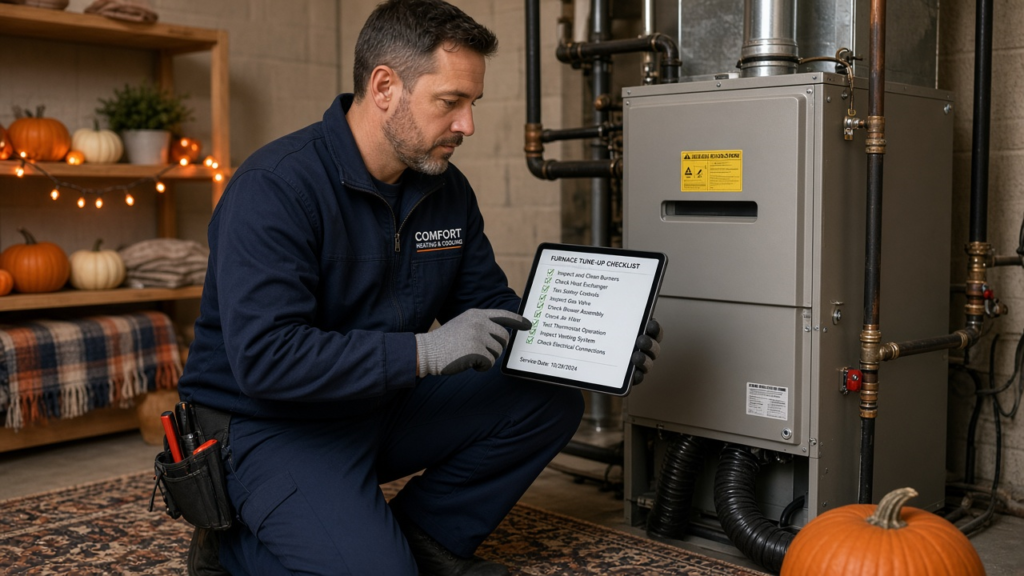
A fall tune-up done with time to spare means if a technician finds a worn igniter, a failing inducer motor, or a cracked heat exchanger, there’s time to order the part, schedule the repair, and get it resolved before you’re actually counting on the furnace to keep your house warm overnight. Compare that to finding the same issue during an emergency no-heat call in January, where you might be without heat for a day or two while parts are sourced — a much bigger problem when it’s actually cold.
Does Timing Actually Affect Pricing?
Standard maintenance pricing (the tune-up itself) generally doesn’t change based on season — a tune-up costs what it costs regardless of when you book it. Where timing does affect your wallet is in two indirect ways: first, catching a developing problem in fall is almost always cheaper to fix than letting it fail completely and become an emergency repair (which may also carry after-hours or weekend emergency rates if it fails at an inconvenient time). Second, avoiding an emergency no-heat situation means avoiding the cost of space heaters, potential pipe-freeze risk if heat is out for an extended period, and the simple cost of discomfort and disruption.
What Gets Missed When You Wait Until Winter
Technicians performing an emergency no-heat repair in the middle of winter are, understandably, focused on getting the specific failure resolved and your heat back on — not necessarily doing the full proactive inspection that a scheduled fall tune-up includes. That means slow-developing issues (a slightly degraded heat exchanger, a flame sensor getting close to failure, a blower motor bearing starting to wear) are more likely to be caught during an unhurried fall visit than during a stressed, time-pressured emergency call where the goal is simply restoring heat as fast as possible.