
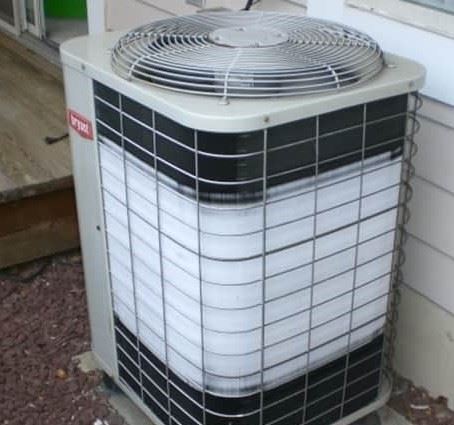
Quick answer: Ice on the copper lines or outdoor unit almost always means the evaporator coil is colder than it should be while not enough heat is crossing the coil (restricted airflow, blower problems) or the refrigerant pressure/temperature is too low (often low charge, sometimes metering device or airflow issues). Turn the AC off and run the fan only to thaw; running a frozen system risks compressor damage and water damage when it melts.
What ice is telling you
A healthy AC removes heat from indoor air at the evaporator coil. Water condenses and drains away. When coil temperature drops below freezing, that water becomes ice. Ice insulates the coil, airflow drops further, and the problem snowballs until lines outside frost over.
Think in two buckets:
1. Not enough air across the indoor coil (most common homeowner-fixable category).
2. Refrigerant side problems (low charge, restriction, failed metering)—licensed technicians required.
Causes we see most often
Restricted airflow
- Clogged filter — Replace on schedule; more often during remodel dust or pet-heavy homes.
- Closed or blocked supplies/returns — Furniture, boxes, or accidentally covered grilles.
- Dirty evaporator coil — Bypassed filters or years without maintenance allows matting on the coil underside.
- Blower not moving enough air — Weak motor, wrong speed tap, or bad capacitor on the indoor blower (depending on equipment).
Thermostat habits
Running the AC with an unrealistically low setpoint (for example, trying to pull a hot house to the low 60s°F in one afternoon) can drive coil temperature too low for the load. Most residential equipment is not designed for extreme setpoints.
Low refrigerant
When charge drops, evaporating temperature in the coil falls. Past roughly 32°F, condensate freezes. This is not a DIY recharge—leak location, repair, and correct weigh-in matter, especially at Denver altitude.
Other (less common) causes
Plugged or stuck metering device, contaminated refrigerant, or severe liquid-line restriction—diagnosed with gauges, temperature measurements, and experience.
What to do right now if you see ice
1. Switch the thermostat to Off for cooling.
2. Set the fan to On (not Auto) so warm air circulates and speeds thawing.
3. Protect floors near the furnace or air handler—meltwater sometimes misses the drain pan.
4. Change the filter if it is dirty.
5. Do not chip ice off the coil; you can bend fins and cause leaks.
After everything is dry, a single restart is reasonable if you fixed obvious airflow issues. If ice returns within hours, stop using cooling and schedule service.
Colorado-specific notes
Dry Front Range air can still produce plenty of condensate on a cold coil during monsoon humidity spikes. Cottonwood, dust, and hail can foul the outdoor coil and upset pressures, which sometimes shows up as frosting at the outdoor section when combined with other issues. Seasonal maintenance catches many of these before they ice.
Ready to Fix Your HVAC Issue?
Call Blue Collar Heating & Air for expert service in the Denver Metro area. Same-day appointments available.
FAQ
Will a frozen AC fix itself if I keep running it?
No. You risk compressor damage and often make the ice thicker.
How long does thawing take?
Anywhere from a few hours to a day, depending on ice mass and indoor temperature.
Is a frozen line always low refrigerant?
No. Filter and airflow causes are extremely common; proper diagnosis distinguishes them.
Can I prevent freezing?
Regular filter changes, keeping grilles clear, annual tune-ups, and avoiding extreme thermostat demands all help.
Does Blue Collar offer emergency service?
Yes—call (303) 351-1667 for AC emergencies in our service area.
Educational content only; not a remote diagnosis. For in-home evaluation, contact Blue Collar Heating & Air.